Why 2015 is THE Year of Emerging and Empowered Female Leadership

(Business Lady Showing Thumbs Up. Artist: imagerymajestic. Freedigitalphotos.net. Published on 28062012).
     

Many people, in a number of cultures, have prejudices towards female leaders, very often subconsciously. This is due to a number of reasons, including the fact that women do not always even support one and another in business life, of course depending upon the organization. In many cultures stereotypes are more than strong, leaving a woman either having to adapt to the local culture and manners, or giving her the choice to become a catalyst for change, an emancipated woman driving changes both in her personal and professional lives. 


Stereotypes and cultural manners are not easily changed, since everything starts from early childhood, where small girls are often dressed in pink color and expected to behave in a certain way. If you are a girl, or a woman, behaving differently from what has been expected from you, you are often regarded as being either a complicated personality, or simply difficult. Even by other women. Being different, and driving change, is not easy, but it is possible.


I come from a culture where women have equal rights with men, which is not self-evident in most cultures in the world. In Finland, a woman has the freedom to do anything she wants to, just like men. We had a female president, Tarja Halonen, from 2000-2012. Women have also been eligible to vote since 1906, as the 2nd country in the world after New Zealand. However, on a global basis, 80 % or more of all poor people worldwide are still women. Even in Scandinavia, and Finland, domestic violence and an abuse of women is still high, among other injustices that women worldwide, unfortunately, have to deal with on a daily basis. 


As a woman, and a man, what can you do to improve the global conditions of women?


1. Check out organizations supporting and empowering women, and female leadership. For example, UN Women is campaigning for a more equal world through the empowerment of men to support women in its “He for She-campaign”. 


2. As a woman, make sure to support other women and their aspirations. Too often, women are said to act as wolves against each other, although many women support each other as well. You lose nothing by supporting other people, and individuals of the same gender. 


3. Leadership is not about gender, but considering the current state of the world, there is definitely a need for more balance between genders in regard to leadership, and decision-making in societies.


4. We have many strong and competent female leaders worldwide. Yet, the current situation is not enough. More women need to take action, responsibility, and step into leadership. 


5. As a woman – believe in yourself. We are biologically somewhat different from men, which does not make us lesser from males. What male leaders have not managed to achieve, is “left over”, or possible, for women to manage and to take care of. The potential is huge.


6. As long as gender is an issue, and people are not being treated equally, there is work to do, both for men and women. 

“Any woman who understands the problems of running a home will be nearer to understanding the problems of running a country”. (Margaret Thatcher).

Merry Christmas to everyone, and a blessed & successful year 2015!

What a Bumpy Bus Ride in Cambodia Taught Me about Leadership

untitled-presentation-2

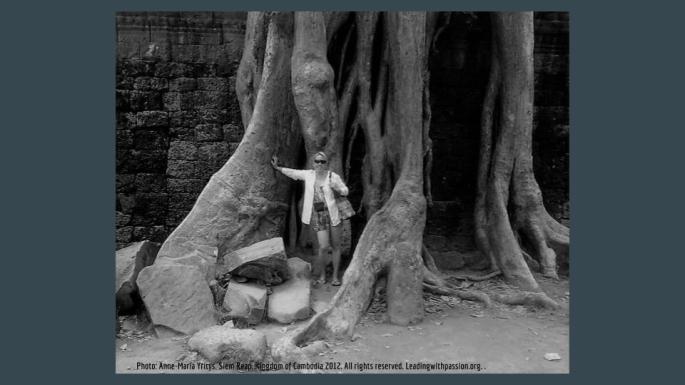
In 2012, I quite spontaneously decided to book a flight to Phnom Penh, the capital of the Kingdom of Cambodia in South East Asia, also known as the Pearl of Asia. The reactions of people close to me, as they heard about my upcoming trip, were quite astonished and anxious, with comments such as “How do you dare to travel so far away alone?”, and “What will you do there in the month of July, is not it a rainy month in that part of the world?”. The first leadership lessons I learned through my own actions, as well as through the reactions of people around me were: wow, I am fortunate to have the opportunity to travel, I am courageous enough to do so (on my own), and, I can listen to people around me yet I am the one who decides what to do with my life. 

I have to admit myself that traveling to Asia by myself for a month was something that made me feel very excited, especially after hearing the concerned comments of those closest to me. I do not even remember why I decided to go on the trip in the first place, but I guess it was the adventurer and explorer in me that needed to get away from the daily routines and to expand my knowledge about the world. It was not my first time in Asia, since I had traveled to Thailand many times; although never before alone. I had also read about Cambodia beforehand, and borrowed some travel books in my local library in Finland to plan my tour. I was going to tour around not only Cambodia, but also the neighboring countries Laos and Vietnam. The preparation also required a visit to the doctor who wrote me a prescription for malaria medication. Vaccinations against hepatitis and other diseases I already had from earlier trips. 

My anxiety vanished as soon as I arrived at the airport in Phnom Penh. Instantly, I met another woman, who had arrived with the same connecting flight from China. While waiting for our luggage, we started an interesting conversation. She told me that she had been in Nepal with her mother prior to her arrival in Phnom Penh. Since we were both heading in the same direction, we decided to share a taxi. Arriving at the hotel I had booked for the first two nights, everything was dark. It was about 2 a.m., so I had to ring a doorbell. I had informed the hotel staff about my late arrival, so it was no surprise for them. Soon after ringing the bell, someone came to open the door, checked me in, and gave me the key to my room. After a long journey, I slept very tight that night, and felt relieved as I woke up to the sunlight and tropical weather the next morning. 

After spending a day and another night in Phnom Penh, I took a local bus to Sihanoukville. There are no railways in Cambodia, so the only way of traveling from a place to another is either by bus or by taxi. Sihanoukville is a small town located in the very south of Cambodia, directly at the Gulf of Thailand. After two days of diving in the waters surrounding Sihanoukville, I left this backpackers paradise and headed towards Siem Reap. The local bus trip from Sihanoukville to Siem Reap was supposed to take eight hours, but the reality was very different. We left early in the morning, driving through Phnom Penh again, and from Phnom Penh to Siem Reap. A few days before another tourist that I had met had told me about his travel experiences, and suggested that I under no circumstances would take the bus to Vientiane (Laos), due to the fact that the roads are very bumpy, and the number of mosquitos in the bus was everything but pleasant. I took his words seriously, especially when personally experiencing the bumpy bus trip from Sihanoukville to Phnom Penh. Despite of making acquaintance with interesting people during the bus ride, I was exhausted as we arrived in Siem Reap late that night. The bus ride had taken about 13 hours, instead of the eight hours indicated on the schedule, with most of the ride being extremely bumpy (the roads in Cambodia are not in excellent condition, at least not in 2012). At this point I realized that taking the bus from Siem Reap to Vientiane would take ages, and the only reasonable way to get there would be to fly directly from Siem Reap. This, however, is another story, or a continuation of the same story, perhaps to be told at a later point. 

On the way to Takeo/Siem Reap. Photo by Anne-Maria Yritys. 2012.

The journey to Indochina, including the bumpy bus ride, taught me many things about myself, and about leadership:

  • If you never step out of your comfort zones, you will never grow as an individual/as a leader.  
  • To become a better leader, learn how to handle and respect yourself first.
  • Leadership is hard work. If you want to grow as a leader, you have to be prepared to “get your hands dirty”.
  • Whenever you meet new people remember, we all have a personal story to share. Instead of judging others, be compassionate and try to understand the other person.
  • Not everyone has to travel across the world to become a good leader, yet, seeing different countries and learning about other cultures is a learning experience, and great leaders never stop learning/growing! Traveling is an eye-opener. If you do not have the possibility to travel in “reality”, there are other ways of learning about different cultures, e.g. by reading and/or watching documentaries.
  • Pushing your personal boundaries will be worth the effort. Always do something to overcome your fears. However, never do anything that would harm you or anyone else!
  • Leadership is not only an external journey, but also a willingness to go inward, into your own mind, without fears. I met a local man on the bus ride, who had been a monk for some time before returning back to “normal” life. Hearing his story was fascinating. There are times for solitude. Never be afraid of being alone and tapping into your inner wisdom.
  • Great leaders are great listeners and observers.
  • Always be open for surprises and for changes. Planning is important, yet, the only thing that is constant is change. Do not fear change, instead, embrace it! It will make life much more pleasant for both you, and those around you. Great leaders are always willing to lead change.
  • Success is about overcoming your fears, and losing unnecessary boundaries. Leadership always requires some risk-taking and being capable of tapping into unknown territories. Brave leaders are both open and willing to expand their horizons.
  • You are never alone in this world, and the possibility of traveling is also a possibility of personal development, and growth. The more you know and understand about the world, different cultures, and people, the more abundant you become. I was surprised at noticing how many people travel alone in South East Asia. These countries are a paradise for backpackers, many of whom are very young and traveling even for months alone.
  • Always do some research before “jumping” into something. This applies to everything: business, relationships, traveling. Use your common sense, and learn from those with more experience. If there is no time for research, listen to your INTUITION. Your intuition will know what is the right thing to do. And, if you feel insecure about your intuition, do use ethical and moral codes before jumping into any conclusion/decision.
  • Always respect different people, and cultures, and be willing to adapt to local conditions.
  • Be grateful and thankful for all the experiences that life gives you. Hardships and obstacles are usually our best teachers.
  • Great leaders have patience. And if not, they exercise patience.
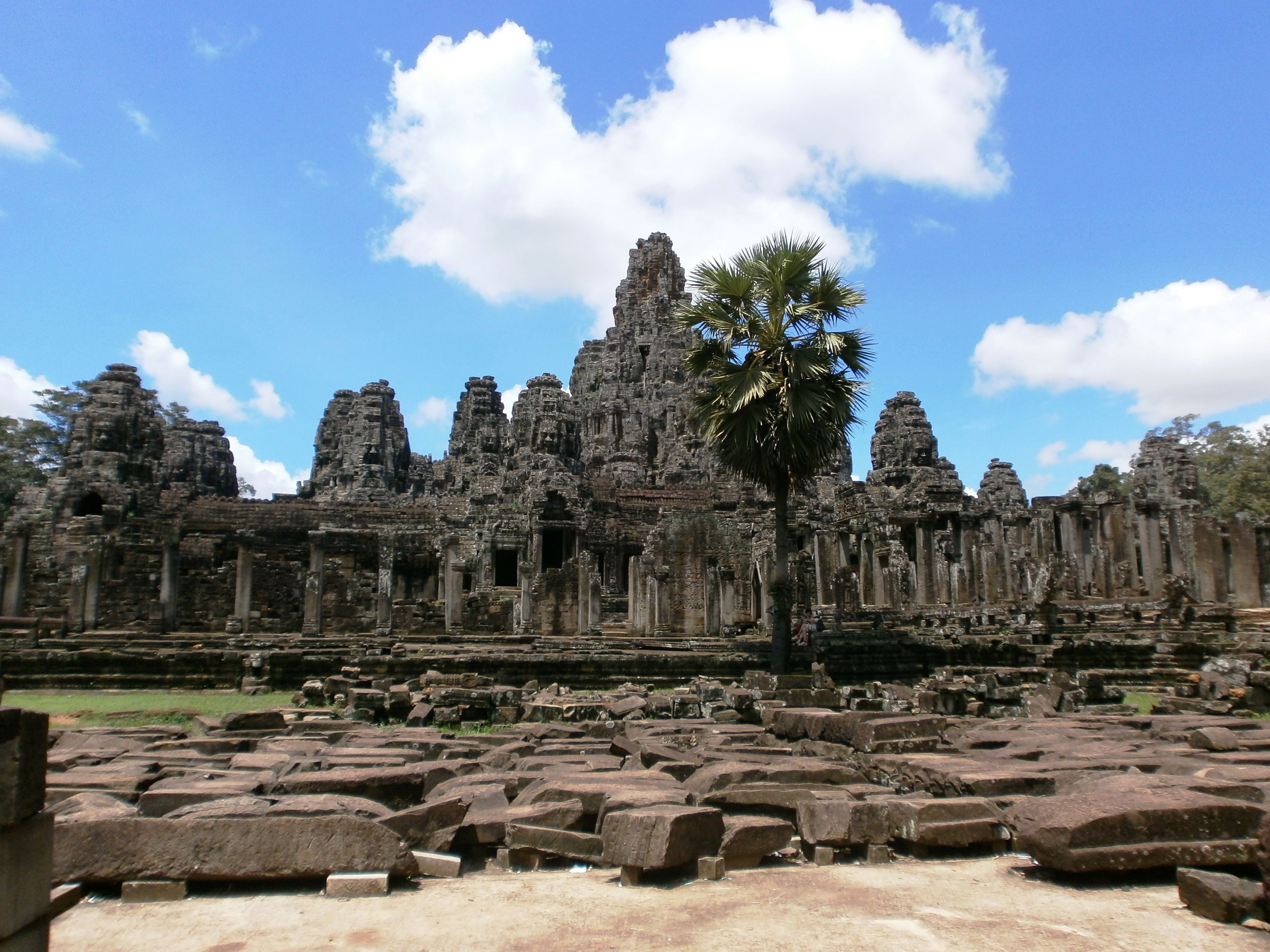
One of many temples in Siem Reap. Photo by Anne-Maria Yritys. 2012.

“A journey of a thousand miles begins with a single step”

(Lao Tzu)

How Can Women Be Empowered and Gender Gaps in Economies and Societies Be Narrowed Down?

Majority of poor people worldwide are women. The reasons for this are manifold, with large regional differences, starting with a global illiteracy rate of 17 %. Two thirds of all illiterates are women, which makes gender equality even more difficult to achieve. 37 % of all 775 million illiterates worldwide are Indian, followed by China, Pakistan, Bangladesh, Nigeria, Ethiopia, Egypt, Brazil, Indonesia, and the Democratic Republic of Congo. Three regions predominate in illiteracy rates: South Asia, West Asia, and Sub-Saharan Africa. 

In addition to the illiteracy problem, women continue to face many barriers in entering labor markets, holding not only women back, but also being an obstacle for economic growth and development in countries with large gender gaps.

Worldwide, between 2002 and 2007, women’s employment-to-population ratio remained constant at about 49 %, compared to about 73 % for men. On a global level, differences are large, with regional narrowings in the Developed Economies and European Union, Latin America, Caribbean, and in the Middle East. Only Central and Eastern Europe, and East Asia increased their gender gaps in employment.  

Furthermore, a lack of knowledge, together with deeply rooted cultural traditions and expectations as well as a complexity of the labor market, are general reasons for gender inequality – affecting and hindering women from having equal access to the labor market. 

Whereas conventional economic analysis is a comprehension of economic actors in mainstream economics, it excludes much of unpaid work, and sees people simply as labor inputs to production processes. Even in developed countries, most unwaged (home)work is still done by women – more than 60 BILLION hours per year including childcare, and women providing 59 % of unpaid services. In general, women ́s home work is ignored, classically “feminine” jobs are poorly paid, and of low status. 

A number of local and global organizations, either independently or/and in co-operation with the private and public sectors, are driving changes in order to improve women’s lives worldwide, and to narrow down gender gaps, including UN Women as perhaps the most widely known.

Gender equality is more than a matter of social justice – it is a fundamental human right, making good economic sense. Women having equal access to education, and women participating fully in business and economic decision-making, are a key driving force against poverty. Women with equal rights are better educated, healthier, and have greater access to land, work, and financial resources. The enhancement of women ́s control over decision-making in households, gender equality also leads to better prospects and greater well-being of children, reducing poverty of future generations. (UNDP. Gender and Poverty Reduction. 23.10.2014).

Women need to drive these changes, but equally, strong support from men is relevant, including an understanding of why gender equality is so important for humanity in the first place. 

Sources (quoted 23.10.2014): 

Coe, N., Kelly, P., Yeung, H.W.C. Economic Geography: A Contemporary Introduction. 2007.

Elborgh-Woytek, K. & al. IMF Staff Discussion Note. Women, Work, and the Economy: Macroeconomic Gains from Gender Equity. September 2013.

ILO. Global Employment Trends for Women. 2012.

Mapsofworld.com. World Illiteracy Map.

UNDP. Gender and Poverty Reduction.

Unesco. Statistics on Literacy. 

UNFPA. State of World Population 2002. Poverty and Gender. 

UNWOMEN.ORG. Economic Empowerment. 

world.time.com. 29.1.2014. 37 % of All the Illiterate Adults in the World Are Indian. 


UN Millennium Development Goals: III. Promoting Gender Equality and Empowering Women

The third UN MDG (Millennium Development Goal) is concerned with promoting gender equality and empowering women. As sad as it sounds, on both global and national levels, we are far from having reached this goal. On the current agenda, however, the empowerment of women around the world is in a key position.

The goal, in general, means:

-Improving girl ́s participation in education around the world

-Increasing the amount of women in work life

-Increasing the amount of women in parliaments

Currently, two-thirds of all illiterates globally are girls or women. Child mortality numbers are highest in countries where girl ́s educational levels are at their lowest.

  • The human rights declaration guarantees equal rights for both women and men.
  • Gender differences in primary schooling have narrowed down, however, gender equality at all educational levels worldwide has still not been reached.
  • Women account, on a global level, for about 40 % of all workforce involved in other than agricultural work.
  • The major part of unpaid household work, worldwide (even in developed countries), is taken care of by women.
  • 70 % of all poor worldwide are women.
  • Only 1 % of all wealth worldwide is currently in the hands of women.
  • Under 20 % of all leading positions worldwide are held by women.
  • The number of women in parliament is about 20 % worldwide => large regional differences.
  • At whole, the situation is at its worst in Southern and Western Asia and in Africa.

(Source: UNA of Finland. Printed material. 2014).

In order to accelerate the promotion of gender equality worldwide and the empowerment of women everywhere, the UN General Assembly created UN Women in 2010. UN Women comprises:

– Division for the Advancement of Women (DAW)

– International Research and Training Institute for the Advancement of Women (INSTRAW)

– Office of the Special Adviser on Gender Issues and Advancement of Women (OSAGI)

– United Nations Development Fund for Women (UNIFEM)

and its main roles are:

– Supporting inter-governmental bodies

– Helping member states in the implementation of these standards

– Holding the UN system accountable for its own commitments

Despite of the hard work and the progress in improving the lives of women worldwide, there is still a huge amount of work ahead in helping women all over the world e.g. in getting access to decent work and in abolishing violence and discrimination.

(UN Women. Quoted 7.5.2014).

According to Helsingin Sanomat (25.10.2013) and the World Economic Forum (Quoted 7.5.2014), the world’s most equal countries (top 10) are currently:

  1. Iceland
  2. Finland
  3. Norway
  4. Sweden
  5. Philippines
  6. Ireland
  7. New Zealand
  8. Denmark
  9. Switzerland
  10. Nicaragua

(World Economic Forum. The Global Gender Gap Report 2013. Quoted 7.5.2014).

According to the WEF Global Gender Gap Report 2013, progress in gender equality has been made in 80 % of the 136 countries researched. The top most equal countries are, however, still 20 % behind from full gender equality. Indicators include: participation in politics, economic equality, rights to participate in education and access to healthcare. Progress in equality was not made in the Middle-East and North Africa: especially in Yemen the situation for women, according to the WEF, is bad. (Helsingin Sanomat 25.10.2013. Quoted 7.5.2014).

Global Finland, the platform for development communication of the Foreign Ministry of Finland, indicates that development does not take place without gender equality. Women are needed throughout societies in order to operate with full efficiency. Educating and employing women enhances the welfare of families and accelerate the growth of prosperous societies. Scary enough, more women between the ages 15-44 get killed and become disabled by violence than by cancer, malaria, traffic accidents and wars together. 80 % of all human trafficking victims are women, and they usually end up becoming sex slaves or prostitutes. (Global Finland. Quoted 7.5.2014).

There are enormous problems, sometimes deeply rooted in cultural behavior, that still need to be solved before the world is fully equal for both sexes. Luckily, the UN, many other organizations and people work hard to enhance gender equality.

  • Can you think of ways to improve conditions on a regional and national level?
  • What actions can you take to make sure that this basic human right of gender equality is fulfilled?

WHEN EACH ONE OF US (BOTH MEN AND WOMEN) COMMITS TO TAKING THE NECESSARY ACTIONS TOWARDS REACHING GENDER EQUALITY, WE WILL REACH THE GOAL. 


Female Leadership and Gender Equality

“I never pay attention to age or gender. There are just too many other more important things to consider.” (Martha Stewart, Founder, Martha Stewart Living Omnimedia).

If everyone thought like Martha Stewart, we wouldn´t need any further discussions about the state of female leadership or about its future. But in reality, we are far from gender equality in leadership worldwide.

Currently, only a good four percent of all Fortune 500 CEO´s are female. This is, however, an increase from the two percent in 2007.

How can this be explained? According to some research/ers, women seeking leadership roles face persistent and pervasive barriers, including gender bias in leadership opportunities, gender inequalities in family responsibilities, inflexibility in workplace structures, and inadequacies in social policies. (Kellerman, B. and Rhode, D.L. 2007).

There is, however, evidence of strong female leadership in history. The eldest proof of female leadership comes from Egypt: Queen Cleopatra, who reigned 51-30 BC, was not the only Egyptian female pharaoh, but the last and probably the best known. She first ruled jointly with her father and later with her brothers, but became eventually a sole ruler.

Other strong female leaders throughout history are Joan of Arc (leader of the French Army 1412-1431), Isabella I of Castile (Queen of Spain 1451-1504), Catherine de Medici (Queen of France 1519-1589), Mary Queen of Scots (1542-1587), Elizabeth I (Queen of England 1533-1603), Amina (Nigerian Queen 1560-1610), Mbande Nzinga (Angolan Queen 1582-1663), Catherine the Great (Empress of Russia 1729-1796), Victoria (Queen of England 1819-1901), Tsu-hsi (Empress of China 1835-1908), Liliuokalani (Last Monarch of Hawaii 1838-1917), Golda Meir (Prime Minister of Israel 1898-1978), Indira Gandhi (Prime Minister of India 1917-1984), and Margaret Thatcher (Prime Minister of England 1979-1990). (http://www.womeninworldhistory.com/rulers.html 20.10.2013).

Many of these women were born into monarch families and thus did not have to work their way to influential and powerful positions.

Today, the number of powerful women across the world is larger than ever. The most powerful woman, according to Forbes´ ranking, is Germany´s Chancellor Angela Merkel (http://www.forbes.com/power-women/#page:1_sort:0_direction:asc_search: 20.10.2013), followed by Dilma Rousseff, President of Brazil, Melinda Gates, Michelle Obama, Hillary Clinton, Sheryl Sandberg and many others. It is interesting that so many of the 100 most powerful women worldwide are actors, entrepreneurs and musicians, including Beyonce Knowles, Lady Gaga, Angelina Jolie, Oprah Winfrey and J.K. Rowling.

In the Nordic countries, the proportion of female leaders is higher than in most other parts of the world. Why?

Gender equality is at core of the Nordic identity. We share many common features simultaneously with varying gender equality policies. To enhance gender equality in the Nordic region, the Nordic countries share and learn from each other´s experiences through political discussions and test most effective strategies in order to achieve common goals.

Despite of decades of work in this sector, the labor market and educational sector in the Nordic countries remain more or less gender divided, characterized by men still holding most leading positions, and women having the main responsibility on the home front. Prostitution and (domestic) violence against women and children still remain two major unsolved problems. (http://www.norden.org/en/about-nordic-co-operation/areas-of-co-operation/gender-equality/gender-equality-in-the-nordic-countries 20.10.2013).

Finland was the third country in the world to grant women the right to vote in 1906. Finland also had a female president for twelve years (2000-2012), Tarja Halonen, who was re-elected in 2006. Today, 85 of the 200 seats (42,5 %) in Finnish parliament are occupied by women. Nine of 19 ministers are female.

In Finland, the number of women in leadership and management roles has grown in the past years in both private and public sectors. Women are also higher educated than men. In some industries, however, the proportion of women is clearly smaller, and there is a tendency of a higher ratio of women leaders in industries already dominated by women. Women leaders are on the average higher educated than their male counterparts. On a European level, Finland has one of the highest numbers of female leaders. In the number of female c-level executives, however, Finland ranks as the third last country in whole Europe.

On a European level, women account for about a third of all director and chief executive roles. In whole Europe, about 30 per cent of all public companies have one or several women at executive group level, compared to 90 per cent in the United States. In the past year, the number of women in board´s has slightly grown in the past years. The European Commission has appealed to European firms in order to speed up the change. Some European countries, e.g. Norway, use contingencies for board members. Although these contingencies have increased the number of women as board members in Norway, the number of women in middle management or at executive level remains the same. Of all board members in Europe only about 12 per cent are female. In Finland and Sweden the same number is about 26 per cent. In Finland this can perhaps be explained by a corporate governance recommendation from 2010 according to which a company board must be represented by both genders. This CG recommendation has led to an increase in the amount of firms in Finland that have both genders represented on board level, from 50 to 80 per cent.

Board members are, however, selected according to knowledge, competence and experience – not by gender. Board members are expected to have deep knowledge in their field of business and experience from different operative roles, usually gained through leadership and management roles in that specific organization. Thus, the more women represented in an industry – the more women in leadership roles. Equality improves work welfare and advances productivity. (http://www.ek.fi/ek/fi/tyomarkkinat_ym/tyoelama/tasa_arvo/naiset_miehet/naisten_osuus_johtotehtavissa.php 20.10.2013).

As stated by UN Women Executive Director Phumzile Mlambo-Ngucka on October 18th 2013 in New York, women´s leadership is central to peacebuilding. (http://www.unwomen.org/en/news/stories/2013/10/ed-speech-on-women-peace-security 20.10.2013).

UN Women is the leading organization promoting gender equality, women´s rights and women´s empowerment. Its Sustainable Development Goals addresses following three target areas of gender equality, women’s rights and women’s empowerment:

–          Freedom from violence against women and girls

–          Gender equality in the distribution of capabilities – knowledge, good health, sexual and reproductive health and reproductive rights of women and adolescent girls; and access to resources and opportunities, including land, decent work and equal pay to build women’s economic and social security.

–          Gender equality in decision-making power in public and private institutions, in national parliaments and local councils, the media and civil society, in the management and governance of firms, and in families and communities. (http://www.unwomen.org/~/link.aspx?_id=981A49DCB34B44F1A84238A1E02B6440&_z=z 20.10.2013.)

Violence, both physical and psychological, is the most comprehensive abuse of human rights, taking place in all countries globally. One third of all women worldwide have experienced either physical or psychological (or both) violence at some point in their lives.

“Violence against women and girls tend to increase at times of crisis and instability, notably during and after periods of upheaval and displacement associated with armed conflict and natural disasters, but also when people are dealing with uncertainty. There can be increased domestic violence when men are unemployed, even if (sometimes especially if) women are bringing in income. Insecurity that results from high levels of organized crime in societies may also be associated with increased levels of violence against women or higher rates of femicide. In some situations of armed conflict, violence against women is widespread and systematic – for instance, where forms of sexual violence such as rape, forced prostitution, or sex trafficking are used by armed groups as a tactic of warfare to terrorize or displace civilians or to benefit parties to the conflict”. (http://www.unwomen.org/~/media/Headquarters/Attachments/Sections/Library/Publications/2013/10/UN%20Women%20post-2015%20position%20paper%20pdf.pdf 20.10.2013).

More about these important issues in UN Women´s publication “A transformative stand-alone goal on achieving gender equality, women’s rights and women’s empowerment: Imperatives and key components” (http://www.unwomen.org/~/link.aspx?_id=981A49DCB34B44F1A84238A1E02B6440&_z=z 20.10.2013).

What are your thoughts about female leadership and gender equality?

How are these issues dealt with in your country?