What is Sustainable Economic Development?

Reading this analytical, reflecting article “The demise of the nation state“, written by Rana Dasgupta and published in The Guardian on April 5th 2018, can be helpful in understanding the broader context of various earthly concerns, including anthropogenic climate change and its undeniable fact of being a global problem with a lack of respect for any inter/national borders.

Hence, every action taken by any nation around the world regardless of its geographical size or amount of population plays a crucial role in creating a healthier and more sustainable future. Countries that invest heavily in sustainable development, including renewable and environmentally friendly energy sources, are now pioneers and role models for less environmentally conscious and unsustainable states.

What makes your home country a pioneer of sustainable economic development? Please comment and share this post to increase awareness of the importance of sustainable economic development worldwide. Anne-Maria Yritys

What is Sustainable Economic Development to You?

Reading this analytical, reflecting article “The demise of the nation state“, written by Rana Dasgupta and published in The Guardian on April 5th 2018, can be helpful in understanding the broader context of various earthly concerns, including anthropogenic climate change and its undeniable fact of being a global problem with a lack of respect for any inter/national borders.

Hence, every action taken by any nation around the world regardless of its geographical size or amount of population plays a crucial role in creating a healthier and more sustainable future. Countries that invest heavily in sustainable development, including renewable and environmentally friendly energy sources, are now pioneers and role models for less environmentally conscious and unsustainable states.

What makes your home country a pioneer of sustainable economic development? Please comment and share this post to increase awareness of the importance of sustainable economic development worldwide. Anne-Maria Yritys

Geoengineering

How Acceptable Is Geoengineering?

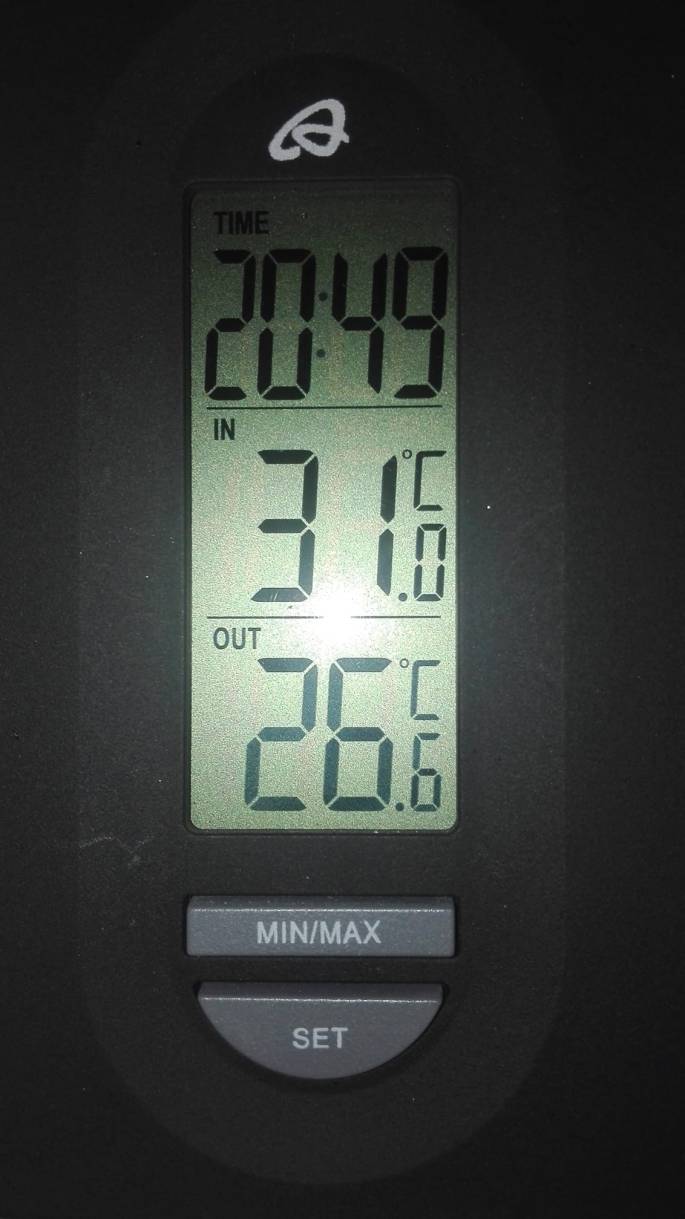
A few more tropical days in Finland, with hot days and evenings marked by thunderstorms, and then it looks like we’re getting back to normal finnish temperatures, around +20 degrees celsius during summer months.
 
How much of the heatwave is a consequence of geoengineering, artificially manipulated weather patterns by human beings in countries like China and the USA, remains unknown.
 
I would like to know your opinions and thoughts about GEOENGINEERING.
 
Acceptable?
 
Ethical?
 
Long-term consequences?
 
Short-term consequences?
 
Let me know.
 
Thanks.38234401_10155544810847093_6886575331482796032_o

Why Are You Throwing Your Waste into the Environment?

I currently live in Finland, which is one of the world´s most sparsely inhabited countries with a total population of 5.5 million. Finland is a country that can be proud of many things, including how for instance wastewater is being managed; purified and treated. Finland is actually one of the few countries in the world that does treat wastewater before dumping it back into the environment: the reason why Finnish tap water is clean and safe to drink.

Finland is also a country where recycling works very well: according to Statistics Finland, only around 10% of all municipal waste ends up in landfills. This is thanks to efficient recycling and waste recovery, for instance in the form of energy production. Finland now even has a National Waste Plan – towards a recycling society.

Dumping hazardous waste into the environment is an environmental crime in Finland. Learn more about the definition of environmental crimes here. Nonetheless and despite of well-organized recycling and waste management practices in the country, a part of the population seems to think that throwing garbage and waste into the environment is normal human behavior.

I am personally, as one of the world’s most networked female leaders and women (on social media), cleaning up at least 15 pieces of plastic and waste from the environment, 365 days a year. Waste thrown into our environment by children, teens and adults who do not know better than to harm the environment and to waste other people’s efforts and time.

No one pays me for cleaning up. I do it on a voluntary basis, because I feel ashamed for how stupid people pollute and damage our environment. If I can afford to spend my time cleaning up the environment after PIGS, you can do the same. At least do not throw your shit into the nature so I (and other people) do not have to clean up after you.

There are actually a number of movements and projects around the world to clean up for instance ocean plastic and ocean trash, an example of which is The Ocean Cleanup. In addition to similar large-scale projects, a number of grassroot activists such as PADI divers have a habit of cleaning up both beaches and seas on diving trips. Why not do the same on land, in forests and in cities?

The harsh truth is: if ALL people were smart enough not to dump their waste into the environment, we would not need to clean up after ignorant human beings. There are even countries such as Singapore, where throwing any waste into the environment is forbidden. Why not impose similar legislation around the world, just to ensure that we do not soon drown in garbage such as plastic on this planet?


How Can Circular Economies Protect The Earth From Destruction?

Our world is literally drowning in GARBAGE. Or, to express it with more elegance: our planet is overburdened with the consumption of human beings: Garbage, litter, waste, pollution, toxins, and chemicals. Although the annual growth rate of world population is slightly decreasing, it is expected to reach 9.2 billion by 2050, and 11.2 billion by 2100, from the roughly 7.6 billion in 2017, 4.4 billion in 1980, three (3) billion in 1960, and 1.65 billion in the early 20th century. 

Our consumption habits are overloading Earth. According to calculations, citizens in many countries consume at a rate that is unbearable for our planet and its ecosystem. The WWF states that the average ecological footprint for instance in Sweden suggests that we would need 3.8 Earths to accommodate the current level of consumption. The countries with the largest ecological footprint per person are Kuwait, Australia, United Arab Emirates, Qatar, United States of America, Canada, Sweden, Bahrain, Trinidad and Tobago, and Singapore. However, it is not as simple as that – some countries “export” their ecological footprints to others, but ultimately it all comes back to us. We cannot afford to continue exporting our national environmental problems to other countries. 

How can circular economies help us protect our planet from further damage and perhaps even complete destruction? We have already managed to cause perhaps irreversible damage to our Earth within the past century alone, through improper management of natural resources, insufficient waste management and recycling practices, air, soil and water pollution through industrial activities, causing anthropogenic climate change through excess greenhouse gas emissions into Earth’s atmosphere, which end up polluting our environment, animals and ourselves as a species. Majority of wastewater worldwide ends up back in our environment without any treatment or purification, leading to extreme pollution and toxins both in our air, land, and water sources.

It is uncertain whether we can save ourselves and our planet from more environmental damage. However, creating and maintaining circular economies where damage to the environment and all that lives on this planet can be minimized with an increasingly much efficient usage of natural resources, including the improvement of energy efficiency, better wastewater management, increased recycling, and the reduction of harmful and toxic (greenhouse gas) emissions is already known to be beneficial and reduces costs in all areas of life. As with any other activity, legislation and policies play a significant role in how we shape our economies and create our future on this planet.

For instance the European Union has its own Circular Economy Strategy, a virtual open space platform which facilitates policy dialogue and offers both information and good practices for economies (within the EU) to take action in terms of the creation and improvement of a circular economy. According to SITRA, the Finnish innovation fund, we have a better way of capitalism, a new increasingly much sustainable era where our economies have to be rethought and reshaped. The Finnish innovation fund SITRA has been nominated for the world ́s premier circular economy award, and leading for instance a project upon circular economies. Access the full report, SITRA – Leading the cycle – Finnish road map to a circular economy 2016-2025, HERE.

A circular economy is one that not only creates and designs improved and (more) sustainable brands, consumer goods, and services, but takes into consideration the ecological footprint of the complete product life-cycle from design/ manufacture, throughout the supply chain from retailer to consumer, and back to the recycling and/or re-use of materials. It also includes innovating completely new methods and materials for improved manufacturing and production.

How this can and will be done has to be considered not only by support from both legislation and policies, but also through innovation and management practices in companies. Innovation and improvement can be supported for instance by using common sense, questioning current ways of doing things, evaluating business processes, and minimizing/ eliminating useless waste through the implementation of best practices, and utilizing methodologies such as kaizen, lean (manufacturing) and/or six sigma, or a combination of these.

Learn more about circular economies by watching European Environment Agency ́s video “Circular Economy”:

What are you doing in your everyday life as a consumer to help protect the environment? 

What measures have you taken in your business activities to reduce your greenhouse gas (carbon) footprint? 

Feel free to comment on this article. 

Connect with me on Twitter @annemariayritys. For climate/environment-related posts only @GCCThinkActTank. Subscribe to Yritys Executive Services to receive my latest posts.


Natural Gas as a Source of Methane Emissions Worldwide

chart (1)

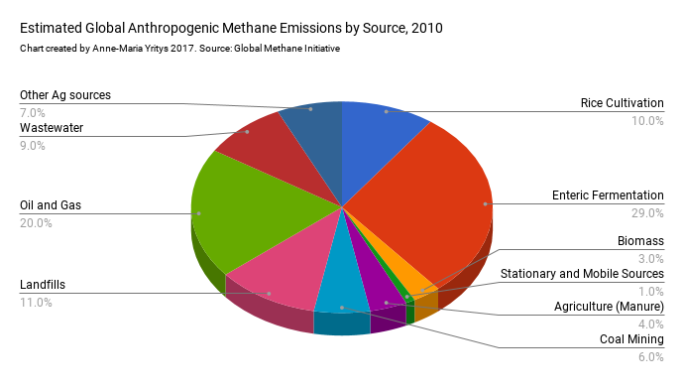
With the United States of America currently leading the production of natural gas hydrocarbons, followed by Russia, Iran, Qatar, Canada, China, The European Union, Norway, Saudi Arabia, and Turkmenistan, natural gas along with the oil/petroleum industry account for 20% of total methane emissions worldwide. In its World Oil Outlook 2040, OPEC estimates that the largest upcoming energy demand will come from natural gas, with an average annual growth of 0.4 % from 2015 to 2040. (Global Methane Initiative 2010; Central Intelligence Agency 2017; U.S. Energy Information Administration 2017; OPEC 2017).

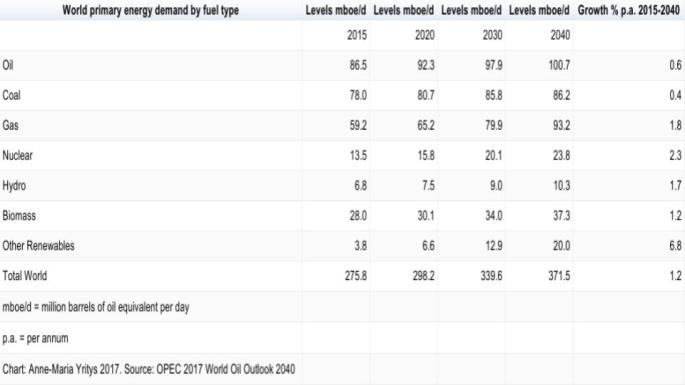
Following table chart illustrates OPEC´s forecast for the world primary energy demand by fuel type from 2015 to 2040. According to OPEC´s estimations, the demand for gas will increase by a rate of 1.8% p.a. during this time period, with the majority of demand coming from non-OECD countries and the most rapid economic growth in the developing world. OPEC projects the global economy in 2040 being 226% in comparison to 2016, with 3/4 of growth coming from developing countries. China and India are forecast to account for almost 40% of the global GDP in 2040. (OPEC 2017. World Oil Outlook 2040).
 

Untitled presentation

The OPEC acknowledges the relation between population growth and energy demand, however, considering a number of variables for instance in consumer trends. It also states how energy markets are affected by government policies and recognizes the need to monitor these on a regular basis, taking into consideration for instance the Paris Agreement and the Sustainable Development Goals, with energy efficiency and clean energy now trending development. The OPEC is closely monitoring worldwide energy market and policy developments, mentioning the USA, the European Union, China, and India at the forefront.

OPEC estimates that total world primary energy demand by fuel type from 2015 to 2040 will see an increase of 3.6% for gas, 1,5% for nuclear energy, 0.3% for hydro energy, and 4% for other renewables, while the demand for oil would decrease by 4.2%, coal demand decreasing by 5.1%, and biomass demand decreasing by 0.1% during the time frame. The OPEC identifies energy efficiency as a critical uncertainty for the energy market with policies concentrating on reducing emissions through a number of measures related to financial and fiscal instruments. (OPEC 2017. World Oil Outlook 2040).

The U.S. Energy Information Administration presents natural gas as a proportionately clean burning fossil fuel, although exploration, drilling and production have direct impacts on the environment, in addition to the fact that natural gas consists mainly of methane which is a powerful greenhouse gas. Leaks from natural gas-related activities such as pipelines are causing toxic anthropogenic methane emissions. (eia 2017). Despite of the many environmental and health risks related to fossil fuels such as natural gas, the global energy market will continue to depend on these. The OPEC projects that oil and gas combined will supply for more than 50% of global energy needs between 2015-2040. Gas alone is estimated to have a share of 29% in OECD, 20.8% in developing countries, and 45.4% in Eurasia in 2040. In China, gas is forecast to account for 10.6% of energy demand in 2040, while coal is expected to drop down to 48.6% from 64.3% in 2015. (OPEC 2017).

The OPEC estimates that the highest growth in gas demand in the OECD region will be in OECD America, recognizing key influences related to the overall demand of natural gas and its dependency on multiple critical factors including gas supplies, competition,  regulations, and pricing.

For instance in Finland, the national Energy Authority reports that “The Finnish natural gas market has been under sector-specific regulatory supervision since the assertion of the Natural Gas Market Act in August 2000”. The natural gas market in Finland has currently no competition, with 100% of the natural gas is being imported through one pipeline from Russia and traded on the Finnish market by one single company. In Finland, the demand for natural gas has been in decline for several reasons, with natural gas accounting for some eight (8%) of total generation fuel mix in 2014, with the baseline for energy demand being market-based. (energy authority Ref: 1842/601/2015/; Finnish Energy 2017).


Connect with me on Twitter @annemariayritys. For climate/environment-related posts only @GCCThinkActTank. Subscribe to Leading With Passion to receive my latest posts.


Take a step further to create YOUR online business. Learn more about the many benefits of how to create a beautiful website with WordPress.com and how to monetize your blog/website: 


WordPress.com – Create A Beautiful Website

Jetpack – The ideal way to experience WordPress – Code-free Customization

WooCommerce – The most customizable eCommerce platform for building your online business


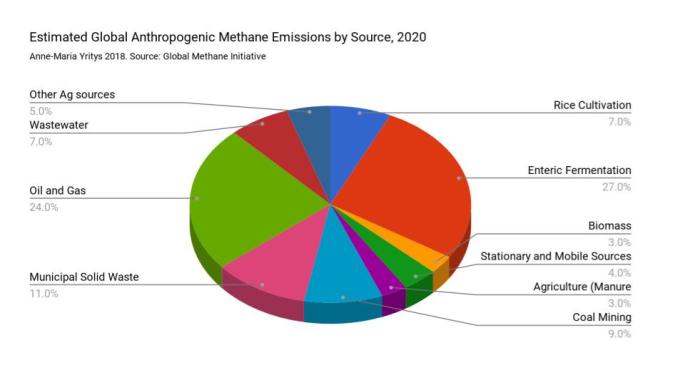
Estimated Global Methane Emissions 2020

What Are Stationary and Mobile Methane Sources?

Estimated Global Methane Emissions 2020

Methane, a powerful greenhouse gas which today accounts for at least a quarter of all anthropogenic climate change, has many different sources. The largest human-caused methane source is enteric fermentation, the digestive process in the animal farming industry, followed by oil and gas production, landfills, rice cultivation, wastewater, other agricultural sources, coal mining, agricultural manure, biomass, and stationary and mobile sources of anthropogenic methane emissions.

Stationary and mobile sources of methane being released into Earth’s atmosphere through human activity refers to combustion practices, with these accounting for an estimated one percent of other than natural methane activity on Earth. It is a byproduct of burning fossil fuels and organic matter in order to transform these into energy and heat.

According to the GMI (Global Methane Initiative), which is part of the United States Environmental Protection Agency EPA, there will be a 15% increase of human-caused methane emissions by 2020. Moreover, according to EPA/GMI, methane mitigation (projects) include many benefits for the overall (global) environment, not only in terms of reducing excess odors, but also in terms of minimizing anthropogenic methane emissions which are at a large scale responsible for the greenhouse effect and climate change on Earth since industrialization.


Connect with me on Twitter @annemariayritys. For climate/environment-related posts only @GCCThinkActTank. Subscribe to Leading With Passion to receive my latest posts.


Take a step further to create YOUR online business. Learn more about the many benefits of how to create a beautiful website with WordPress.com and how to monetize your blog/website: 


WordPress.com – Create A Beautiful Website

Jetpack – The ideal way to experience WordPress – Code-free Customization

WooCommerce – The most customizable eCommerce platform for building your online business


Enteric Fermentation Largest Single Source of Global Methane Emissions

chart (1)

Why is the amount of people worldwide who decide to go either vegetarian or vegan constantly growing? In the United States alone, the number of vegans has grown by 500% in a few years time only. The reasons for vegetarianism and veganism are many: some people simply do not like the taste of meat, others may suffer from a fish intolerance or allergy. A lot of people do not want to harm animals, and find it cruel to grow animals just in order to slaughter them and consume them. Among the many vegans I have personally met, one of the main reasons for their decision to cut out any animal products, including eggs and dairy, from their diets, is since they have found it improve their health and well-being.

Despite of the many dietary suggestions given to us by a number of experts, every individual who can afford buying and choosing their diet in the first place should be his or her own best expert. Unfortunately this is also not true most of the time since more and more people on our planet suffer from excess weight due to unhealthy consumption habits, while on the other side of the coin, millions of people go hungry and are malnourished due to lack of access to many-sided, nutrient-rich food. For those who can afford consuming meat products, dietitians usually state that (red) meat products contain all the necessary amino acids which are key ingredients of protein and our bodies capacity to build and maintain muscle tissue, while vegans especially have to make an extra effort to access all the necessary amino acids that are essential building stones of the protein our bodies need. Otherwise, human beings actually have no real need to consume meat or seafood. Even vegans can choose plant-based products with all the necessary amino acids (and, proteins). It is also a fact that consuming proteins in excess will lead to these being stored as fat (lipids) in our bodies. Thus, a balanced and healthy diet is always key to our overall well-being.

A major reason to choose veganism (or, vegetarianism) today is climate-related. Enteric fermentation, the digestive process of livestock, is the largest single emitter of anthropogenic methane emissions on a global scale. Around one-third of all human-caused methane emissions worldwide stems from enteric fermentation, predominantly from cattle. Every time we choose to consume meat, we contribute to an increase in global greenhouse emissions (methane). It is also questionable how much sense it makes to grow crops in order to feed animals that human beings will slaughter and consume, contributing at least twice as much to an increase in global greenhouse gas emissions.

The FAO (Food And Agriculture Organization of The United Nations) published “Tackling Climate Change Through Livestock – A Global Assessment Of Emissions And Mitigation Opportunities” in 2013. Access the PDF version of the publication here. The report is a compact global assessment of GHG emissions stemming from livestock supply chains with a discussion about research methodology, and dividing the study into clear chapters and themes such as overall emissions, main sources of emissions, emissions by geographical region, emissions by species, mitigation (potential and practice) with case studies, concluding the report with a chapter on suggestions for policy-making.

Most of us can afford to make individual/personal choices of consumption, influencing decision-makers to create better and more sustainable policies. In a world faced with many problems such as hunger and malnutrition, climate change, and an increasing amount of population battling problems with overweight, individual choices are not always enough. According to FAO`s “Tackling Climate Change Through Livestock – A Global Assessment Of Emissions And Mitigation Opportunities”, it is possible to reduce emissions stemming from all species in all regions, but there is an urgent need for better policies. FAO states that tackling difficult problems can be made possible with the right policies, innovations and investments. It has to be understood that through the necessary measures taken, we are better equipped to deal with large-scale problems such as climate change and a rapidly growing world population. The report concludes that additional research and development is necessary, improving the measurement of emissions, and support from global initiatives focusing on livestock especially due to its complexity and size.

Learn more by watching FAO´s video “Climate change mitigation in the livestock sector: overall potential, options and case studies”:


Connect with me on Twitter @annemariayritys. For climate/environment-related posts only @GCCThinkActTank. Subscribe to Leading With Passion to receive my latest posts.


Take a step further to create YOUR online business. Learn more about the many benefits of how to create a beautiful website with WordPress.com and how to monetize your blog/website: 
 

WordPress.com – Create A Beautiful Website

Jetpack – The ideal way to experience WordPress – Code-free Customization

WooCommerce – The most customizable eCommerce platform for building your online business


How Does Rice Cultivation Contribute to Global Methane Emissions?

chart (1)

This article is a continuation to my earlier articles upon climate change, greenhouse gas emissions and the influence of methane in Earth´s atmosphere. Access some of my previous articles here:

Climate Forcing Methane

Methane Release Poses Climate Risks

Climate Amplifier Methane

Methane is an Environmental Wildcard

In brief, methane is a greenhouse gas at least 22 times as powerful as carbon dioxide. It can be found naturally in Earth´s environment: for instance, permafrost in the Arctic region is a significant “storage room” for methane. Due to its powerful qualities as an energy source, methane is a key ingredient in the fossil fuel energy sector, i.e. oil and gas industries. What may be surprising to many is that one of the main emitters of climate amplifier methane is the agriculture and farming sector. In this article, we will take a closer look at rice cultivation, which alone accounts for around 10% (per cent) of all methane emissions worldwide.

According to the Rice Association, rice is being cultivated in more than one hundred (100) countries worldwide, with Antarctica being the only continent with no rice cultivation. With majority of all rice being consumed where cultivated, rice is the main source of food for half of world population. Today, world population is almost 7,6 billion. Hence, at least 3,8 billion people worldwide currently depend on rice as their main source of food. See the nutritional value here: Fineli – Rice, Boiled Without Salt.

With the many varieties of rice being cultivated in different countries, only a handful of these are being marketed. In Finland, for instance, a consumer can find basmati rice, jasmine rice, full corn rice, dark rice, white rice, various kinds of risotto rice under different labels/producers, porridge rice, and a number of other rice products such as rice cakes. Despite of being a widely cultivated crop/grain, at least 90% of all rice grows on the Asian continent.

Some of the major concerns of rice cultivation is the fact that it consumes more than 33% (one third) of all irrigation water worldwide. (KULUTTAJA – Velaksi viljelty basmatiriisi). One grain, one food product, which wastes more water than any other agricultural product. In times of water scarcity, and hundreds of millions of people worldwide with no access to clean water, this is a waste of energy and a waste of our most valuable natural resource: fresh water. If you have ever seen a rice field in nature, or e.g. on TV, you are aware of how a rice field looks like: covered with water, a rice field is not only a huge absorbent of fresh irrigation water, but also an optimal environment for methane to thrive. The production of one single kilo rice consumes up to 5.000 liters of water.

IRRI, the International Rice Research Institute, states on its website that the amount of rice lands globally is around 150.000.000 (150 million) hectares, half of which are under continuous irrigation. Furthermore, according to IRRI,within less than a decade at least 10-15% of irrigated rice fields will suffer from water scarcity. IRRI has been working for decades in improving methods and technologies in rice cultivation, through science and research. Despite of its high methane emissions and the amount of water needed for cultivation, IRRI estimates that our world needs up to 10.000.000 tons more rice each year to ensure food security for world population. Moreover, vast areas of rice-cultivating lands face risks due to climate change, such as destructive floods. Rice alone is not a sufficient source of nutrition: a large amount of rice eaters suffer from malnutrition and micronutrient deficiency. (IRRI Brochure).

Learn more by watching “Climate-friendly rice farming in the Philippines | Global Ideas” by DW English:

Connect with me on Twitter @annemariayritys. For climate/environment-related posts only @GCCThinkActTank. Subscribe to Leading With Passion to receive my latest posts.


Take a step further to create YOUR online business. Learn more about the many benefits of how to create a beautiful website with WordPress.com and how to monetize your blog/website: 


WordPress.com – Create A Beautiful Website

Jetpack – The ideal way to experience WordPress – Code-free Customization

WooCommerce – The most customizable eCommerce platform for building your online business


Changes in Water Balance in The Arctic To Have Implications For Global Climate

Arctic (45).jpg

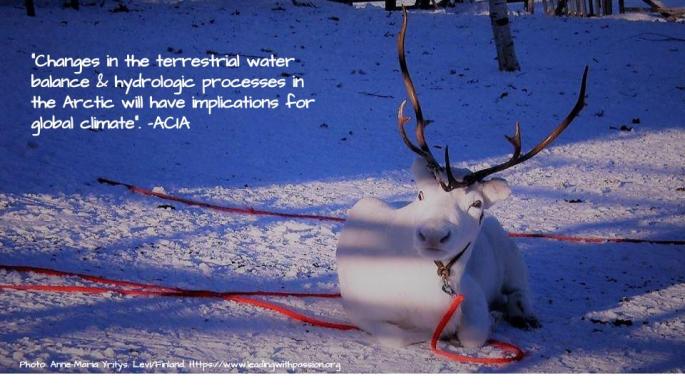
The Arctic region (North Pole), which is the second largest desert in the world after Antarctica (the South Pole), is home to some of our world´s largest fresh water resources. ACIA (Arctic Climate Impact Assessment) Chapter 6, Cryosphere and Hydrology (pp. 183-242), discusses changes, development and findings in sea ice, snow cover, glaciers and ice sheets, permafrost, river and lake ice, freshwater discharge, sea-level rise and coastal stability in the Arctic region, identifying critical research needs.

According to ACIA, observational data reveals that sea-ice coverage has decreased by up to 10 % in the past decades, with the largest impact during Arctic summer months. The decline also applies to multi-year ice, the sea ice thickness, and snow covers, while river discharges have expanded, permafrost temperatures have risen, and glaciers are losing significant proportions of mass, especially in Alaska where glacier retreat has been remarkably high since the 1990´s. Model projections carried out by ACIA experts indicate that these developments will continue throughout the 21st century, whereby sea levels are projected to rise due to a combination of many factors leading to climate change and warming in the Arctic region. Furthermore, ACIA reveals that the desolation of arctic glaciers and the Greenland Ice Sheet will impact sea level rise with several centimeters during this century.

IPCC (Intergovernmental Panel on Climate Change, 2001), has reported that global mean sea levels have risen by 120 meters in the past 20.000 years. Despite of stabilization of greenhouse gas emissions, sea levels will continue to rise for centuries to come. (IPCC, 2013). Moreover, (IPCC, 2013), in the past century glacier melting and ocean thermal expansion have been the main contributors to mean sea levels rising on a global scale. IPCC projects sea level rise to have significant regional patterns now and in distant future. Local sea levels may differ significantly from the global average depending for instance upon changing ocean currents leading to amplification of warming ocean water and altering surface winds.

Learn more by watching EDU-ARCTIC´s video “Mass balance of glaciers”:

Connect with me on Twitter @annemariayritys. For climate/environment-related posts only @GCCThinkActTank. Subscribe to Leading With Passion to receive my latest posts.


Take a step further to create YOUR online business. Learn more about the many benefits of how to create a beautiful website with WordPress.com and how to monetize your blog/website: 
 

WordPress.com – Create A Beautiful Website

Jetpack – The ideal way to experience WordPress – Code-free Customization

WooCommerce – The most customizable eCommerce platform for building your online business