Creating The Future – Leadership Resolutions for Year 2015

(Mother Nature. Artist: njaj. Freedigitalphotos.net. 290112)

“Mother Nature may be forgiving this year, or next year, but eventually she’s going to come around and whack you. You’ve got to be prepared”.

(Geraldo Rivera)

A few days left of year 2014 before we are heading into 2015, the year resonating with infinity, according to the Gregorian calendar. In some cultures, the New Year does not start until later in 2015, so everything is relative.

What do all cultures and traditions have in common for a New Year? Celebrations, festivities, resolutions, and last but not least, planning ahead. Yes, planning is an essential activity for anyone: private persons, businesses, organizations, municipalities, countries. Yet, there are events that cannot be planned for in advance, such as natural disasters. This Christmas, we all remembered the Asian Tsunami from 2004, where more than 200.000 innocent lives were lost due to a huge Ocean Earthquake along the Indian Ocean, directly affecting at least eight countries, and indirectly, many more.

There is no real evidence about this tragedy being caused by human beings, yet the possibility exists, taking into consideration how much Planet Earth is being manipulated by individuals.

We must remember to treat the Earth well, since “We don´t inherit land from our ancestors, we borrow it, rather, from our children” (Antoine de Saint-Exupéry). How we treat each other, animals on this planet, and our nature, is equal to leaving a legacy for future generations.

Thus, let us focus more on living according to virtues, and care not only for each other, but also for flora and fauna, the oceans that have, initially, given birth to human kind in the first place. Including and remembering these facts on a daily basis, and if forgotten, being reminded by other human beings about them, makes it easier for each and one of us to focus on creating an increasingly sustainable and lasting future for ourselves, and for generations to come.

Future is not something that simply happens to us, it is created by mankind each and every day, all over Planet Earth. The choices we make, from farming methods to the types of energy we use. Thus, let us forget about our fears for change, and be open to sustainable development, because evolution takes place when we allow it to happen.

Finally, a few general New Year´s Resolutions for 2015 that can be implemented both on individual, organizational, and governmental levels:

  1. I will no matter about my social and societal status, act responsibly and take increased responsibility for my actions.
  2. I promise to learn and develop my skills, knowledge, and wisdom on a daily basis by educating myself through all possible means, be it through media, social media, individuals with more knowledge about a certain topic, and through gathering real life experiences.
  3. I acknowledge that I am a spiritual being with a human experience, and not the other way around. As a spiritual being I understand the importance of nurturing both my mind and body on a daily basis in a manner that serves both me personally, and people around me.
  4. I promise to express gratitude for the life that I have been given, on a daily basis.
  5. I take nothing in life for granted.
  6. I respect everything and everyone upon Earth, and in our whole Universe. In challenging circumstances, I remember to pray, ask for help and guidance, and live according to virtues rather than fall into traps of the Ego.
  7. Any challenge that may come in my way will be treated with objectivity and greater wisdom than before. I understand that challenges are an essential part of life and nature, lessons for me to learn on my path towards developing my spirit.
  8. I will set clear boundaries and stand up for things that I believe in without losing faith in myself.
  9. I will say what I mean, and always speak the truth.
  10. I will be authentic, because this is the most essential part in growing as an individual and a spiritual being.
  11. I will guard memories, think long-term when creating and planning for the future, but live in the present.

Let us make year 2015 an unforgettable experience. May you be blessed upon your journey, and may the upcoming year help you reap the seeds that you have planted, and fulfill your dreams.

Why 2015 is THE Year of Emerging and Empowered Female Leadership

(Business Lady Showing Thumbs Up. Artist: imagerymajestic. Freedigitalphotos.net. Published on 28062012).
     

Many people, in a number of cultures, have prejudices towards female leaders, very often subconsciously. This is due to a number of reasons, including the fact that women do not always even support one and another in business life, of course depending upon the organization. In many cultures stereotypes are more than strong, leaving a woman either having to adapt to the local culture and manners, or giving her the choice to become a catalyst for change, an emancipated woman driving changes both in her personal and professional lives. 


Stereotypes and cultural manners are not easily changed, since everything starts from early childhood, where small girls are often dressed in pink color and expected to behave in a certain way. If you are a girl, or a woman, behaving differently from what has been expected from you, you are often regarded as being either a complicated personality, or simply difficult. Even by other women. Being different, and driving change, is not easy, but it is possible.


I come from a culture where women have equal rights with men, which is not self-evident in most cultures in the world. In Finland, a woman has the freedom to do anything she wants to, just like men. We had a female president, Tarja Halonen, from 2000-2012. Women have also been eligible to vote since 1906, as the 2nd country in the world after New Zealand. However, on a global basis, 80 % or more of all poor people worldwide are still women. Even in Scandinavia, and Finland, domestic violence and an abuse of women is still high, among other injustices that women worldwide, unfortunately, have to deal with on a daily basis. 


As a woman, and a man, what can you do to improve the global conditions of women?


1. Check out organizations supporting and empowering women, and female leadership. For example, UN Women is campaigning for a more equal world through the empowerment of men to support women in its “He for She-campaign”. 


2. As a woman, make sure to support other women and their aspirations. Too often, women are said to act as wolves against each other, although many women support each other as well. You lose nothing by supporting other people, and individuals of the same gender. 


3. Leadership is not about gender, but considering the current state of the world, there is definitely a need for more balance between genders in regard to leadership, and decision-making in societies.


4. We have many strong and competent female leaders worldwide. Yet, the current situation is not enough. More women need to take action, responsibility, and step into leadership. 


5. As a woman – believe in yourself. We are biologically somewhat different from men, which does not make us lesser from males. What male leaders have not managed to achieve, is “left over”, or possible, for women to manage and to take care of. The potential is huge.


6. As long as gender is an issue, and people are not being treated equally, there is work to do, both for men and women. 

“Any woman who understands the problems of running a home will be nearer to understanding the problems of running a country”. (Margaret Thatcher).

Merry Christmas to everyone, and a blessed & successful year 2015!

To Lead or Not To Lead – What Would Shakespeare Say?

 “Some are born great, some achieve greatness, and some have greatness thrust upon them”.

(William Shakespeare)

 What could Shakespeare, as a poet and actor, possibly have known about leadership? After all, he was “only” the greatest writer in English language of all times, a man who made history with his dramas and plays, many of which still today serve and entertain mankind in many parts of the world. If he sat down with me on my sofa right now, I would definitely be interested in hearing his life story – but, it is too late, because he passed away almost 400 years ago. And still, the memory of him is with us, because he was a leader of his own kind – someone, who managed to make history through his original and tireless work. 

Leadership, as any other activity, is continuous and tireless work. Anyone with leadership experience knows this. Not only do you have to take care of, and nurture, yourself, but also your team. Leadership requires a lot, and not many people dare to accept a leadership role – due to the fact that leadership can be very demanding. For example in Finland, most people prefer specialist roles rather than taking upon them the “burden” of being a leader. Why? Well, the reasons could be many, including the fact that at least in Finland; a leader does not always get paid much better than an average employee. This, of course, depends upon the company, and the leadership role in question. 


1. Emotional Stability, and Maturity

As a leader, you need to be emotionally stable. Of course, leaders can and should have feelings too – but as a leader, you need to be aware of the responsibility you have, and act accordingly. Emotional stability and maturity is not always equal to the age of the person – this of course depends upon the type of leadership role. Although sometimes, even very young people are capable of taking very heavy responsibilities. It all depends upon circumstances, and the leadership role in question. Personally I led my first team at the age of 25. In some cultures, even royalties and kings can be even younger. Any leader can experience a private (or professional) crisis, which is why leaders should be taken care of very well too. 

2. A Willingness to Lead.

Leaders are born, natural, and developed. Some people just have more “in-born” leadership qualities, such as great social and people skills. We all know that good leaders need to have good people skills – and if not, these have to be developed. Some people are more eager and willing to lead than others – so why not give the willing ones the chance? There is no way of forcing those who are not willing, and at the same time you need to evaluate why a specific person wants to take upon them an extra amount of responsibility and lead, in addition to themselves, others too. It is easier to train willing leaders than forcing employees into leadership roles who clearly do not want it in the first place.


3. A Willingness To Serve, and To Help Others.

A leader´s role is manifold, and there are many kinds of expectations in regard with leaders. A leader needs to be supportive, helpful, a good listener, a teacher, empathetic or at least sympathetic, and in addition to all the soft skills needed, a leader also needs to be capable of setting boundaries, being determined, treat every employee equally – and these people skills, most often, in addition to all technical skills required. A leader should never behave poorly. The requirements are strict, although we all are human. 


4. Flexibility.

 
 A leader needs to be flexible. Very often, leadership roles require various kinds of expansive activities. A leader needs to be prepared for unplanned activities. As much as we would like them to, things do not often go as planned. This, of course, depends upon the type of industry and business activity, but all industries require an amount of flexibility. As a leader you also have to realize, and accept, that very often your staff does have more expertise than you. A leader is not always the smartest one – but rather the one leading a team of highly qualified professionals.


“You are water; water is you. Think about the mysterious magical nature of this liquid energy that we take for granted. Try to squeeze it, and it eludes us; relax our hands into it, and we experience it readily. If it stays stationary, it will become stagnant; if it is allowed to flow, it will stay pure. It does not seek the high spots to be above it all, but settles for the lowest places. It gathers into rivers, lakes, and streams; courses to the sea; and then evaporates to fall again as rain. It maps out nothing and it plays no favorites: It doesn’t intend to provide sustenance to the animals and plants. It has no plans to irrigate the fields; to slake our thirst; or to provide the opportunity to swim, sail, ski, and scuba dive. These are some of the benefits that come naturally from water simply doing what it does and being what it is”. (Dr. Wayne W. Dyer).

Leadership is a responsible activity, and should not be taken lightheartedly. This does not mean that you have to be dead-serious – on the contrary! Leadership requires a lot, especially having good people and self-management skills. A good sense of humor is not of harm either. 

What a Bumpy Bus Ride in Cambodia Taught Me about Leadership

untitled-presentation-2

In 2012, I quite spontaneously decided to book a flight to Phnom Penh, the capital of the Kingdom of Cambodia in South East Asia, also known as the Pearl of Asia. The reactions of people close to me, as they heard about my upcoming trip, were quite astonished and anxious, with comments such as “How do you dare to travel so far away alone?”, and “What will you do there in the month of July, is not it a rainy month in that part of the world?”. The first leadership lessons I learned through my own actions, as well as through the reactions of people around me were: wow, I am fortunate to have the opportunity to travel, I am courageous enough to do so (on my own), and, I can listen to people around me yet I am the one who decides what to do with my life. 

I have to admit myself that traveling to Asia by myself for a month was something that made me feel very excited, especially after hearing the concerned comments of those closest to me. I do not even remember why I decided to go on the trip in the first place, but I guess it was the adventurer and explorer in me that needed to get away from the daily routines and to expand my knowledge about the world. It was not my first time in Asia, since I had traveled to Thailand many times; although never before alone. I had also read about Cambodia beforehand, and borrowed some travel books in my local library in Finland to plan my tour. I was going to tour around not only Cambodia, but also the neighboring countries Laos and Vietnam. The preparation also required a visit to the doctor who wrote me a prescription for malaria medication. Vaccinations against hepatitis and other diseases I already had from earlier trips. 

My anxiety vanished as soon as I arrived at the airport in Phnom Penh. Instantly, I met another woman, who had arrived with the same connecting flight from China. While waiting for our luggage, we started an interesting conversation. She told me that she had been in Nepal with her mother prior to her arrival in Phnom Penh. Since we were both heading in the same direction, we decided to share a taxi. Arriving at the hotel I had booked for the first two nights, everything was dark. It was about 2 a.m., so I had to ring a doorbell. I had informed the hotel staff about my late arrival, so it was no surprise for them. Soon after ringing the bell, someone came to open the door, checked me in, and gave me the key to my room. After a long journey, I slept very tight that night, and felt relieved as I woke up to the sunlight and tropical weather the next morning. 

After spending a day and another night in Phnom Penh, I took a local bus to Sihanoukville. There are no railways in Cambodia, so the only way of traveling from a place to another is either by bus or by taxi. Sihanoukville is a small town located in the very south of Cambodia, directly at the Gulf of Thailand. After two days of diving in the waters surrounding Sihanoukville, I left this backpackers paradise and headed towards Siem Reap. The local bus trip from Sihanoukville to Siem Reap was supposed to take eight hours, but the reality was very different. We left early in the morning, driving through Phnom Penh again, and from Phnom Penh to Siem Reap. A few days before another tourist that I had met had told me about his travel experiences, and suggested that I under no circumstances would take the bus to Vientiane (Laos), due to the fact that the roads are very bumpy, and the number of mosquitos in the bus was everything but pleasant. I took his words seriously, especially when personally experiencing the bumpy bus trip from Sihanoukville to Phnom Penh. Despite of making acquaintance with interesting people during the bus ride, I was exhausted as we arrived in Siem Reap late that night. The bus ride had taken about 13 hours, instead of the eight hours indicated on the schedule, with most of the ride being extremely bumpy (the roads in Cambodia are not in excellent condition, at least not in 2012). At this point I realized that taking the bus from Siem Reap to Vientiane would take ages, and the only reasonable way to get there would be to fly directly from Siem Reap. This, however, is another story, or a continuation of the same story, perhaps to be told at a later point. 

On the way to Takeo/Siem Reap. Photo by Anne-Maria Yritys. 2012.

The journey to Indochina, including the bumpy bus ride, taught me many things about myself, and about leadership:

  • If you never step out of your comfort zones, you will never grow as an individual/as a leader.  
  • To become a better leader, learn how to handle and respect yourself first.
  • Leadership is hard work. If you want to grow as a leader, you have to be prepared to “get your hands dirty”.
  • Whenever you meet new people remember, we all have a personal story to share. Instead of judging others, be compassionate and try to understand the other person.
  • Not everyone has to travel across the world to become a good leader, yet, seeing different countries and learning about other cultures is a learning experience, and great leaders never stop learning/growing! Traveling is an eye-opener. If you do not have the possibility to travel in “reality”, there are other ways of learning about different cultures, e.g. by reading and/or watching documentaries.
  • Pushing your personal boundaries will be worth the effort. Always do something to overcome your fears. However, never do anything that would harm you or anyone else!
  • Leadership is not only an external journey, but also a willingness to go inward, into your own mind, without fears. I met a local man on the bus ride, who had been a monk for some time before returning back to “normal” life. Hearing his story was fascinating. There are times for solitude. Never be afraid of being alone and tapping into your inner wisdom.
  • Great leaders are great listeners and observers.
  • Always be open for surprises and for changes. Planning is important, yet, the only thing that is constant is change. Do not fear change, instead, embrace it! It will make life much more pleasant for both you, and those around you. Great leaders are always willing to lead change.
  • Success is about overcoming your fears, and losing unnecessary boundaries. Leadership always requires some risk-taking and being capable of tapping into unknown territories. Brave leaders are both open and willing to expand their horizons.
  • You are never alone in this world, and the possibility of traveling is also a possibility of personal development, and growth. The more you know and understand about the world, different cultures, and people, the more abundant you become. I was surprised at noticing how many people travel alone in South East Asia. These countries are a paradise for backpackers, many of whom are very young and traveling even for months alone.
  • Always do some research before “jumping” into something. This applies to everything: business, relationships, traveling. Use your common sense, and learn from those with more experience. If there is no time for research, listen to your INTUITION. Your intuition will know what is the right thing to do. And, if you feel insecure about your intuition, do use ethical and moral codes before jumping into any conclusion/decision.
  • Always respect different people, and cultures, and be willing to adapt to local conditions.
  • Be grateful and thankful for all the experiences that life gives you. Hardships and obstacles are usually our best teachers.
  • Great leaders have patience. And if not, they exercise patience.
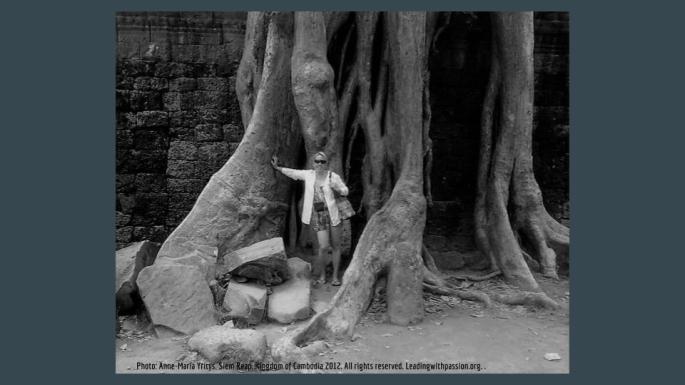
One of many temples in Siem Reap. Photo by Anne-Maria Yritys. 2012.

“A journey of a thousand miles begins with a single step”

(Lao Tzu)

How To Become a Great Leader (And Make History)

"Hand Holding Globe With Network". Freedigitalphotos.net.
“Hand Holding Globe With Network”. Freedigitalphotos.net.


“Great leaders are willing to sacrifice the numbers to save the people. Poor leaders sacrifice the people to save the numbers”.

(Simon Sinek) 

Leadership is NEVER about you. Great leadership even less. Leadership is not an issue of the EGO the EGO is something that managers are driven by. “Look at me, I am so fabulous”, or “Look at me, this is all about me, and how I want things to be”. 

Leaders do not act, or behave this way. Real Spiritual Leaders thrive from their hearts, and their minds, have learned their lessons, including humility and the fact that essentially, all leadership is about striving for a common goal, and aiming at reaching a state that benefits everyone. 

Unfortunately, due to deficiencies in the human mind, many managers mistake themselves for being leaders – driven by numbers rather than by people and forgetting that people are the driving forces rather than merely numbers. This begins, very often, at a very “bottom level”, where people with a low esteem need to push their self-esteem in order to lift themselves up. 

Great leadership is never about boosting yourself, your ego, or lifting yourself personally up. Great leadership is about working towards reaching a common goal, helping people along the way, about lifting others up, and saying “hey, we did a great job”. What we did, will have a positive impact on the world and everything that happens around us. Great leadership, and leadership from the spirit itself, is always positive, take other people into consideration, make them stronger, and develop human interaction into something better.

Great leadership is about forgetting about your ego, being willing to let others shine, helping others, and being positive. Spiritual warriors are those who will make history, which is something to keep in mind if you are willing to make it that far. Managers will be forgotten, people who have merely focused on getting a task done, neglecting both their own feelings as well as those of others. Spiritual leaders, on the other hand, are those who will be remembered and cherished by people. You only need to think about some of them – great spiritual leaders who have made themselves a name by sacrificing themselves and their egos for the greater good, and helping others in order to reach a common goal rather than serving their personal egos. 

Characteristics of great leaders: 

  • They always work for a common goal, not for the satisfaction of their personal ego´s. 
  • They are always willing to help people without asking for anything in return. 
  • They never complain, however much something may hurt. 
  • They ALWAYS stay positive, no matter how difficult circumstances may be. 
  • They know life is not only about them. 
  • They work to simplify lives for other people.
  • They are never ignorant, nor aggressive.
  • They never blame other people or circumstances. Neither do they blame themselves, but instead, know how to remain neutral and diplomatic. 
  • They respect themselves and others, but also have a sense of humor, and never take themselves too seriously. 
  • They are always open to learning, and always curious. 
  • They always care about people, and take the time to get to know their team in order to being capable of inspiring others. 
  • They are always open to improvement, both in themselves, and others. 
  • They are capable of receiving honest and direct feedback, and not only of giving some. 
  • They always stay positive, and know how to inspire people.

“Great leaders have a heart for people. They take time for people. They view people as the bottom line, not as a tool to get to the bottom line”.

(Pat Williams)


(Offshore Wind. Artist: xedos4. Freedigitalphotos.net. Published on 08112012).


Expand Your Mind and Strengthen Your Intuition

Tampere/Finland. December 2014. Photo by Anne-Maria Yritys.
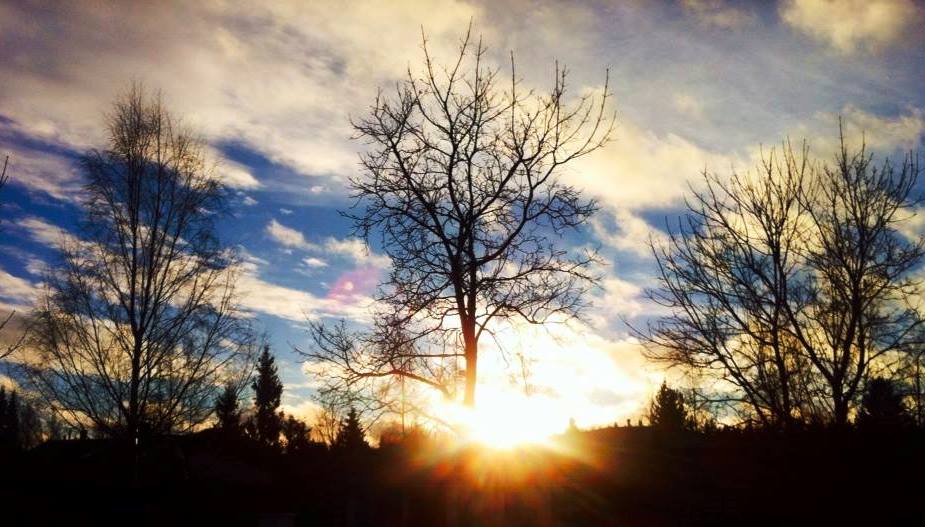
Sun Over The Horizon. Tampere/Finland. December 2014. Photo by Anne-Maria Yritys.

This time of the year days are getting shorter and shorter in the Northern Hemisphere, as we are heading towards midwinter. In Lapland this is a time of polar nights, when the sun does not rise at all over the horizon north of the Arctic Circle. Further south, the sun rises for a few hours, shining its light on the winter landscape. Adaptation to this darkness may seem overwhelming for many, even for northern citizens. The lack of light in the winter months makes it essential for northern citizens to intake extra D-vitamin. Many people plan a winter vacation to a sunny destination. Others spend the whole winter at home, adapting to the climate and darkness. With snow this time of the year, many people enjoy cross-country skiing, but when no snow falls, this is still an excellent time for running in nature. 

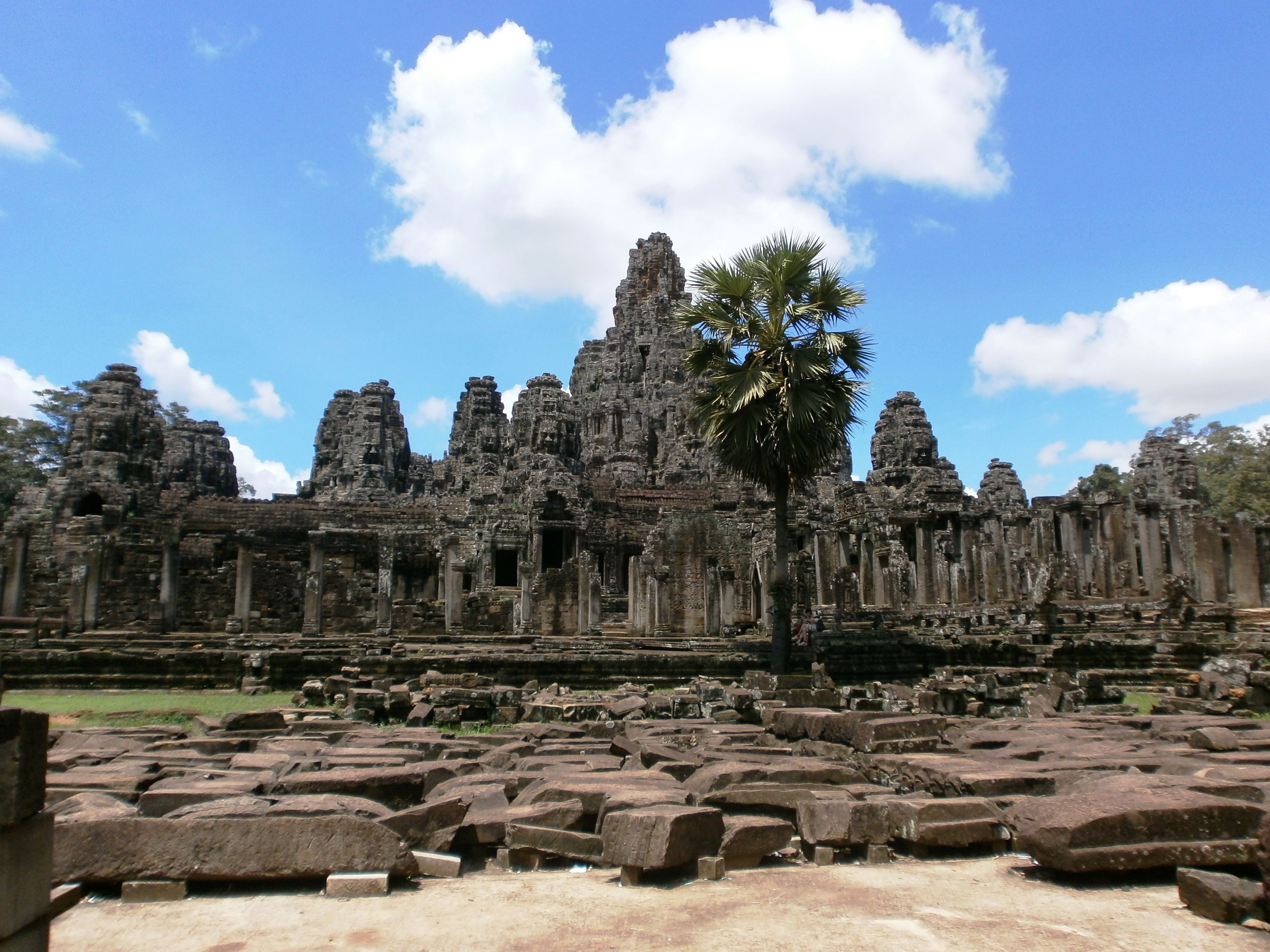
Running, as any other exercise, in darkness, is a way of strengthening one´s intuition. With no artificial light, one needs to rely completely on sensing the path. Of course, training in darkness requires some caution, and is not recommended in unfamiliar terrains where different kinds of hazards are possible. In fact, this reminds me of a holiday in Cambodia, where I toured the huge temple area of Angkor Wat by bike. Just before sunset, I wanted to visit Ta Phrom once more, but a local guardian firmly stopped me at the gate, suggesting that I would leave the area. With a slight feeling of disappointment, I climbed upon my bike and soon realized why he had asked me to leave. Darkness falls very quickly in Cambodia, and there are no artificial lights in the temple area, which is surrounded by jungles, home to many reptiles and snakes, something that we do not need to be cautious about in the North. 

During the same holiday, I went night diving through a local dive center. A few years earlier I could never even have imagined that I would, some day, travel to a country far from home, get dressed into a diving suit, and actually go diving after sunset. The night before, the local Dive Shop in Sihanoukville had taken us to the island of Koh Rong Samleum, where we spent the night sleeping in a diver´s bungalow located directly at the beach. I remember lying awake in my bunk bed, unable to fall asleep because of listening to the heavy monsoon rain falling during the night. The experience of sleeping under a mosquito net in an open bungalow, on a peaceful island far away from home, with the proximity of the huge ocean, is unforgettable. As was the dive after sunset. Led by a qualified instructor, we anchored the boat somewhere in the middle of the ocean. The captain stayed in the boat, while me and my instructor, and another instructor with his student, prepared to dive into the darkness. As my instructor jumped into the water, I simply followed her, quite excited, but fully trusting her expertise and guidance through the water. We were both wearing torches supplying us with some light in the otherwise completely opaque water. Our bottom time was 45 minutes, and the maximum depth was 6,5 meters, with a visibility of about three meters thanks to our torches. Night diving in itself is not the most beautiful diving experience due to the fact that during daytime, the underwater landscapes have so much more to offer for the eyes. However, as an overall experience, it is essential for any diver willing to develop, and to expand their minds. Hadn´t I taken my basic diving course in Finland a few years earlier, where waters often are opaque even during daytime, I would probably have been even more excited. With some previous diving experience, and the fact that we had dived earlier during the same day in almost the same area, I knew what was awaiting me. 

Scuba diving is not an extreme sport, but it is important to learn the technical skills and always remember the basic rules. As any other activity, scuba diving is not suitable for everyone, or not every body and mind is suited for scuba diving. The same applies to all sports, and activities, wherefore why it is so important to learn to recognize what kind of activities can help you personally to develop, grow as an individual, and to expand your mind.

Why is this important? 

Continuous learning and challenging ourselves is essential for our development.

 “The day we stop learning is the day we stop growing, or even worse, it is the day we start dying”

(Dr. Anthony Gambale)

Quoting Oscar Wilde: “I am not young enough to know everything”. 

It is an amusing quote, but also very innocent. There is nothing wrong with staying connected to the child in you, always open to learning and developing new skills. 

Tips for expanding your mind and strengthening your intuition: 

  • Practice some kind of physical or recreational activities regularly.
  • Train your mind through various activities, such as meditation and yoga. 
  • Focus on surrounding yourself with positive energy. Listen to your feelings – they will guide you in the correct direction. Life is too short to be wasted.
  • Make a list of things that you want to learn, create, or develop your skills in. 
  • Cleanse your mind every day, and keep it positive. 
  • Focus on your goals, and learn how to overcome obstacles. 
  • You never know what you are capable of, until you have given it a try.  


(The Beach At Dawn in Thailand. Artist: nuttakit. Freedigitalphotos.net. Published on 14032011).
 

How To Attract What You Want and Lead a Meaningful Life


(Health Of Spirit Mind And Body Means Mindfulness. Artist: Stuart Miles. Freedigitalphotos.net. Published on 15052014)

 “Problems cannot be solved at the same level of awareness that created them.”

 (Albert Einstein)

We live in a world filled with problems needing solutions. The problem with solving all those problems is that while we are busy solving them, usually we create new problems at the same time. Then we blame whatever we can, and easily make other people or circumstances scapegoats, thus using simple defense mechanisms, instead of looking in the mirror, taking a deep breath, and seeing where the actual problem is. Yes, so it is. Think about a world where every single individual would be willing to take the responsibility of finding fault in themselves rather than pointing a finger on other people, or circumstances. This is an important key in regards with many aspects of our lives – being strong enough to see ourselves as the troublemakers. Or, not necessarily troublemakers, but as the keys to actual improvements both in our personal lives and in our surrounding. 

I am definitely not the first human being reflecting about these things, hence the saying “Be the change that you want to see in the world”. Stop blaming other people, or circumstances, for your life´s challenges, or any challenges. Understand that you can only change yourself, and not others. Be ready to step forward, look in the mirror (many times a day, if needed), and face yourself. And do not only face yourself physically, but also mentally. There are a number of ways of connecting to your spirituality, of which meditation is an example. We are all spiritual beings. 

The American psychotherapist, author, and speaker Dr. Wayne W. Dyer puts it: “We are not human beings with a spiritual experience. We are spiritual beings with a human experience”. Remembering this makes it easier to connect to the actual spirituality that makes us evolve, and will eventually lead humanity towards a greater understanding, lives filled by virtues and true abundance, rather than the thought of just chasing money so that we can buy things that none of us actually do need in our lives. We came here naked, and will leave naked. How we fill our lives in between is up to each and one of us. Our job as individuals is not to find fault in others, or criticize them, but rather to set an example to other people. If you are in any kind of leading role, a parent, a teacher, you know how important this is. But there is not even need to be in an officially leading role, because anyone can become a role model to someone else, and set an example. 

There are hundreds of books about the Law of Attraction, and to be honest I cannot remember having read any of them, so no book promotions to be found in this post. I have rather learned through experience, by observing other individuals, and yes, of course through reading hundreds of articles, other books, watching videos, and simply by living.

When finding yourself in a non-optimal situation, realize that: 

– You personally are the problem, and the key to the solution, at the same time. Only by changing you will you be capable of changing whatever it is that you want to change. Admitting this is extremely important in order to get ahead. 

– You attract what you are, not what you want. This means, you need to start acting in a way that leads you towards the desired goal(s). It applies to EVERYTHING, and is very simple (well, at least theoretically). Therefore, check your behavior every day. 

– You better learn how to spend time alone. Many people have, unfortunately, a real difficulty being alone. Spending time alone does not mean that you are a lonely person. Spending time alone is crucial to stay connected to yourself. The possibility to spending time alone varies from person to person: a parent has less time for him/herself than a single person, but even parents can organize time for themselves. Some people are really insecure, and always need to be surrounded by friends, or people, in general. Spending time alone is not scary. It gives us the ability to get to know ourselves better, to lead a fulfilling “inner life” instead of just going with the flow.

– Too much time spent alone can, however, lead to isolation. We need other people in our lives. Even a yogi, or a spiritual guru, needs other people. We are all connected to another. Loneliness is something that many people suffer from these days, including many entrepreneurs, and (business) leaders. Everyone has the need for some kind of support, or interaction with other human beings. Whatever your situation is, socialize, because other individuals are important to our (personal) development. 

– Learn how to communicate your desires. This does not mean that you have to walk around shouting your wants and needs to everyone you need (although, some people behave this way). If you have had a tough time attracting what you truly want, it is about time to start practicing your communication skills. You can start by writing it down in a personal journal. When you do this on a regular basis, you will notice how much more effortless it becomes to actually communicate these in verbal interaction with other individuals. After all, people cannot read you mind, and if you meet someone who can read your mind, consider yourself lucky.

– Always be willing to help, and serve other people, (even) without expecting anything in return. 

– Learn how to say no as well. However helpful and servant you are, you do not have to accept everything. There is no point in being a people-pleaser.

– All our choices have an impact upon our lives. 

– Learn how to balance yourself both physically and mentally.

 “Your intuition will tell you where you need to go, connect you with the people you should meet, and guide you towards work that is meaningful to you, work that brings you joy and work that feels right for you”.

(Shakti Gawain)