Arctic Warming Especially Strong During Winter Months

Arctic (36).jpg

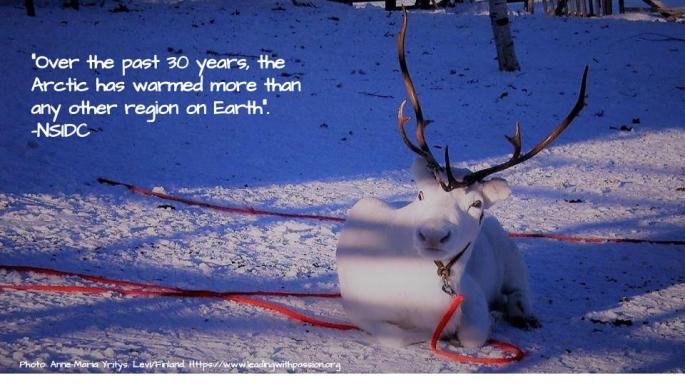
The Arctic region is warming at least double as fast as the rest of the world, releasing additional greenhouse gases such as carbon dioxide and methane into Earth´s atmosphere, changing weather patterns all over the world, and causing sea levels to rise. What is the reason behind Arctic warming being faster during winter months? How can this be explained?

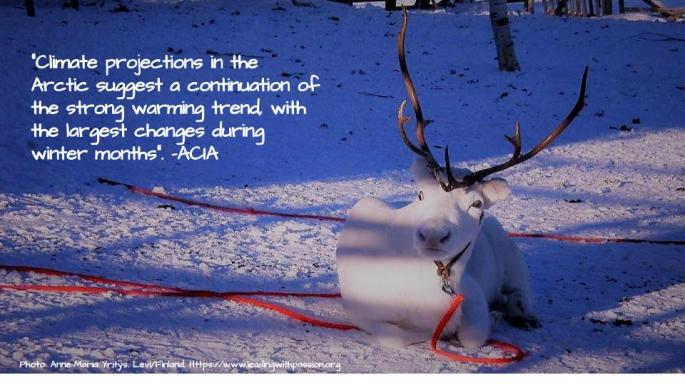
According to Nature.com – The changing seasonal climate in the Arctic, Arctic winter warming, abbreviated as AWW, can be multiplied with four in comparison to the Arctic summer warming, whereby most of the warming occurs on the surfaces in the Arctic which is an especially powerful feature during the Arctic winter months.

Bintanja, R. & van der Linden, E.C. (Scientific Reports 3. Article number 1556; 2013) results indicate three main reasons for the Arctic winter warming being stronger than the warming during the Arctic summer months; 1) variations in seasonal greenhouse forcings; 2) Arctic “local amplifying feedback” displays seasonal variations i.e. is magnified; 3) “physical limits may constrain temperature changes” suggesting that Arctic summers would warm faster if temperatures were not near melting.

NSIDC  discusses the importance of scientists work to study feedbacks taking place in the Arctic in order to understand the Arctic amplification and the climatic changes while NOAA suspects that there is no return back to the old Arctic. Although research from the past decades shows that the current overall warming in the Arctic region is due to human activity, it is yet largely unknown exactly how significant the constant changes and the warming of the climate in the Arctic region will be in near and in distant future. Collecting data, measuring and tracking changes and even small variations on a constant basis is thus necessary for scientists to understand how and why changes occur, and what kind of effect these changes will have upon the climate a) in the Arctic region and b) in other parts of the world.

Learn more by watching EarthNow´s video “Effects of Arctic Amplification”:


Connect with me on Twitter @annemariayritys. For climate/environment-related posts only @GCCThinkActTank. Subscribe to Leading With Passion to receive my latest posts.


Take a step further to create YOUR online business. Learn more about the many benefits of how to create a beautiful website with WordPress.com and how to monetize your blog/website: 


WordPress.com – Create A Beautiful Website

Jetpack – The ideal way to experience WordPress – Code-free Customization

WooCommerce – The most customizable eCommerce platform for building your online business

UV Radiation Particularly Intense in The Arctic

Arctic (35).jpg

ACIA (Arctic Climate Impact Assessment) is a separate project established by the Arctic Council in 2004. Access ACIA multi-disciplinary reports HERE and HERE. The Arctic Climate Impact Assessment report chapter five (5) discusses findings about Ozone and Ultraviolet Radiation in the Arctic Region in detail.

Research upon Earth´s ozone layer and ultraviolet radiation begun in its early stages in the 1950´s, as British Antarctic Survey (BAS) begun researching ozone holes in Antarctica in 1956. (EPA. United States Environmental Protection Agency). According to ACIA, the Antarctic ozone hole was discovered in 1985, while scientists had begun to project anthropogenic emissions of halocarbons such as CFC leading to stratospheric ozone depletion in the preceding decade.

As a conclusion of the research and discovery of the huge Antarctic ozone hole, at its peak stretching over a total area of more than 21 million square kilometers, world leaders decided to put their wise heads together and created the Montreal Protocol. The Montreal Protocol is an international treaty that was signed in Montreal in 1987 with a purpose of protecting our Earth´s ozone layer from further harm caused by human activities. Despite of the Montreal Protocol and the efforts to protect Earth´s ozone layer from further damage, it takes decades for the ozone layer to recover. Learn more about the situation of Earth´s ozone layer at NASA Ozone Watch.

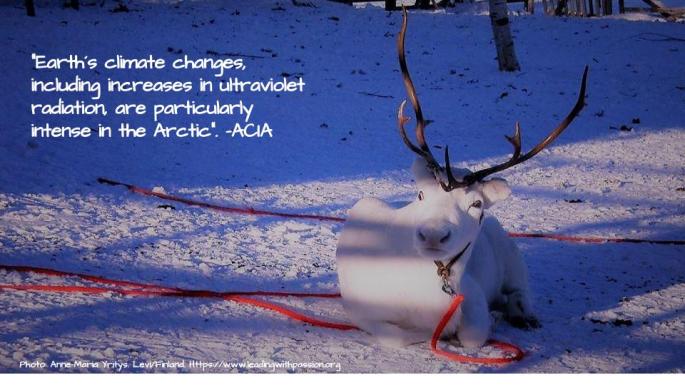
The ozone layer is a protecting layer of ozone gas surrounding Earth´s atmosphere, protecting our planet from harmful UV radiation. When the ozone layer is damaged, UV radiation that would otherwise have been kept back, reaches Earth´s atmosphere at stronger rates, causing additional harm, such as increased amounts of skin cancer and snow blindness. According to model projections, ozone losses will continue in the Arctic for decades to come despite of the actions that have been taken since the Montreal Protocol entered into force. ACIA reports that despite of partial ozone recovery, ozone depletion will continue in the Arctic for many decades, having impacts upon not only human health in the region, but also impact animals and plants in the Arctic region. Furthermore, climate change impacting sea ice and snow covers can have significant impacts on UV radiation in the Arctic Region.

Learn more by watching World Meteorological Organization´s (WMO) video “The Arctic and the Ozone Layer”:


Connect with me on Twitter @annemariayritys. For climate/environment-related posts only @GCCThinkActTank. Subscribe to Leading With Passion to receive my latest posts.


Take a step further to create YOUR online business. Learn more about the many benefits of how to create a beautiful website with WordPress.com and how to monetize your blog/website: 


WordPress.com – Create A Beautiful Website

Jetpack – The ideal way to experience WordPress – Code-free Customization

WooCommerce – The most customizable eCommerce platform for building your online business
Arctic Well-Being Essential For Earth

Arctic (34).jpg

It is about time even for the most critical climate change skeptics to open their minds eye and see what is happening around our world. To begin with, we live on a round planet, where everything we do has an effect upon our direct and indirect environment and society. It is a fact that if and when you eat your breakfast, you have already depended upon much of our world.

Just think about where your morning coffee, tea and/or juice comes from. Or the water you drink. Or your porridge, bacon, sandwich – depending upon what you consume in the morning, and throughout the whole day. Much of the food we consume, or the raw materials, are being imported from around the world. Just think about the complete process from planting the seed to the final product ending up either on your plate or in your glass/mug. Does it fall there from heaven? If not, how does it end up there?

The same applies to our world and its geographical regions. No one has to be more than averagely intelligent to understand this. It just seems that we many times seem to take many things for granted, forgetting that everything we do does have an effect upon not only ourselves, but on the whole planet.

Just because you or I happen to live in a region that has plenty of fresh water resources does not signify that we should go around wasting it as much as we want to. That is extremely selfish. Especially now that fresh water becomes increasingly much a scarce resource in more and more places around our world. While some of us waste fresh water without no consideration for the consequences, many people in this world do not even have access to clean, fresh water. Does this mean that those of us who are fortunate enough have to start feeling guilty and starve as so many people on this planet do? Of course not. Only that we all should be increasingly much considerate in our overall consumption habits. This applies not only to fresh water and food, but to everything.

The world has enough to feed every person´s need, but not every person´s greed.

– Mahatma Gandhi

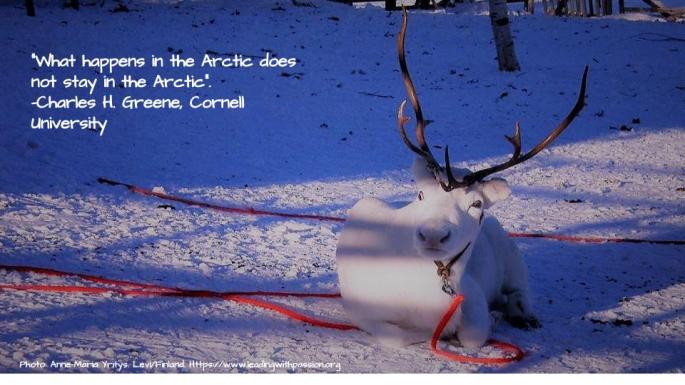
When the Arctic region warms faster and faster, losing much of its protective ice sheet and glaciers melting, this has an irreversible effect both on the Arctic region and on the rest of this planet. Much of the world´s fresh water resources are stored in the Arctic glaciers. When these melt, the fresh water gets mixed with salty ocean water. A complete waste of energy and time, if and when salty ocean water has to be desalinated. In addition, the warming Arctic region releases increasingly much greenhouse gases (e.g. carbon dioxide and methane) into Earth´s atmosphere, warming our planet and changing climates all over the world. Ice sheets and glaciers melting in the Arctic also increase rainfall in certain regions, and contribute to sea levels rising throughout the Earth.

Learn more about the Arctic region by watching Big Think´s video “President of Iceland, Ólafur R. Grímsson: The Arctic is the New Political Playing Field” (note from author: Grímsson served as the President of Iceland 1996-2016):


Connect with me on Twitter @annemariayritys. For climate/environment-related posts only @GCCThinkActTank. Subscribe to Leading With Passion to receive my latest posts.


Take a step further to create YOUR online business. Learn more about the many benefits of how to create a beautiful website with WordPress.com and how to monetize your blog/website: 


WordPress.com – Create A Beautiful Website

Jetpack – The ideal way to experience WordPress – Code-free Customization

WooCommerce – The most customizable eCommerce platform for building your online business
Climate Forcing Methane

Arctic (33)

Referring to my previous posts about methane and its impacts on climate change and the environment;

Methane Release Poses Climate Risks

Climate Amplifier Methane

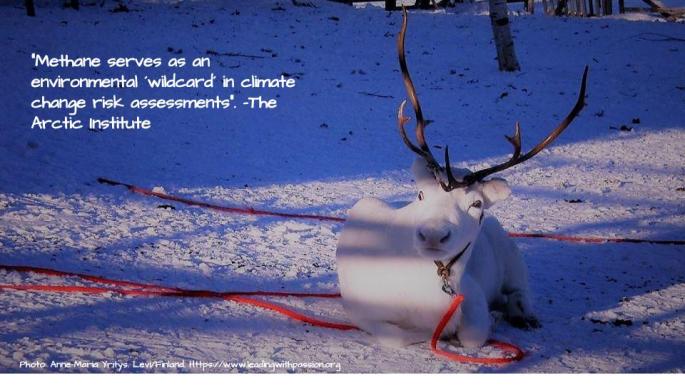
Methane is an Environmental Wildcard

methane is a powerful greenhouse gas which can be found naturally all around our planet. In addition, most human activities produce and release the invisible, odorless and tasteless greenhouse gas methane into Earth´s atmosphere, drastically increasing the greenhouse effect that is warming up our planet. The amount of methane in Earth´s atmosphere has never been as high as in the past 150 years, and this is due to industrialization.

The vast majority of anthropogenic methane release into Earth´s atmosphere is caused through agriculture and oil/gas production. Agriculture and animal farming, especially enteric fermentation, account directly for at least 50 per cent of all methane emissions (see figure below), followed by oil and gas with 20 per cent. Decreasing anthropogenic methane emissions through innovative and sustainable practices is thus necessary in order to stop our Earth´s climate from warming due to human activities. This can be accomplished through 1) improving and making current practices more efficient; 2) reducing/minimizing the usage of fossil fuels as energy sources 3) transforming agricultural and farming practices.

chart (1)

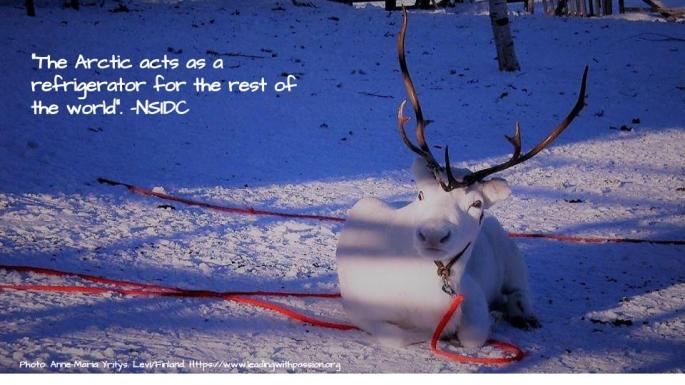
When greenhouse gas emissions constantly increase in Earth´s atmosphere, these warm the climate especially fast in the Arctic region, which acts as a natural refrigerator on our planet. With a rapidly warming Arctic region (and, a warming Antarctica), more and more methane is being released into Earth´s atmosphere, accelerating the warming of Earth everywhere, not only in the Polar regions. Exactly how strongly additional methane and other greenhouse gas emissions will affect the warming of the Arctic (and, the whole world), is not known. Methane is being referred to as a climate amplifier and an environmental wild card since the increase of this powerful greenhouse gas in Earth´s atmosphere can present us with sudden and unexpected changes in our planet´s climate system. This is why methane emissions have to be investigated and studied carefully, and caution must be taken in its additional production.

According to the Global Methane Initiative (GMI), reducing the amount of methane release in all sectors involved leads to many benefits, including better protection of the environment, overall health factors, workplace safety where concerned, less pollution and cleaner air.

Learn more about climatic forcings by watching Middlebury Environmental Geology´s video “Climatic forcings and feedbacks (class 21-v2):


Connect with me on Twitter @annemariayritys. For climate/environment-related posts only @GCCThinkActTank. Subscribe to Leading With Passion to receive my latest posts.


Take a step further to create YOUR online business. Learn more about the many benefits of how to create a beautiful website with WordPress.com and how to monetize your blog/website: 


WordPress.com – Create A Beautiful Website

Jetpack – The ideal way to experience WordPress – Code-free Customization

WooCommerce – The most customizable eCommerce platform for building your online business
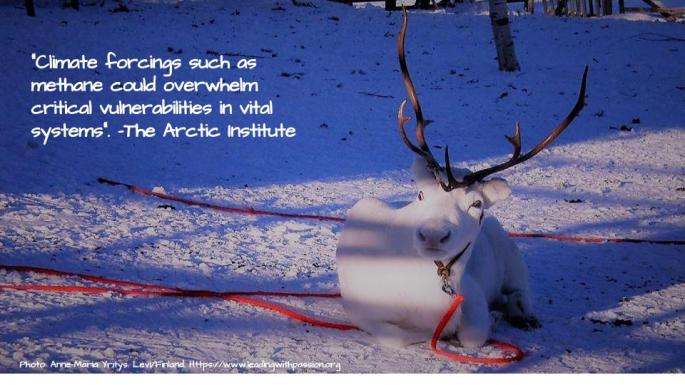
Methane Release Poses Climate Risks

Arctic (32)

Methane, a powerful chemical compound also known with the chemical symbol CH4, is at least 22 times as powerful a greenhouse gas than carbon dioxide CO2. Methane can be found naturally everywhere on our planet. Due to methane´s attributions, it is commonly used for e.g. the production of energy. In fact, around two thirds of all methane sources on our planet today are anthropogenic, i.e. man-made, through the burning of fossil fuels. Methane, which today accounts for around 14 % (per cent) of total greenhouse gas emissions on Earth, is so powerful that it accounts for more than one third of all human-caused warming on our planet.

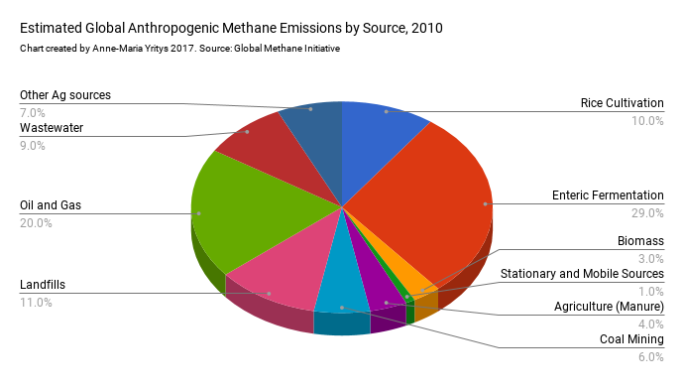
According to Global Methane Initiative, half of all methane emissions globally come from agriculture, coal mines, landfills, oil & natural gas systems and wastewater. The following chart, Estimated Global Anthropogenic Methane Emissions by Source 2010, shows the main methane sources through human activities worldwide, whereby rice cultivation alone accounts for 10% (per cent) of all methane released into Earth´s atmosphere. Enteric fermentation (animal farming) accounts for 29% of all methane emissions, biomass 3%, stationary and mobile 1%, agriculture (manure) 4%, coal mining 6%, landfills 11%, oil and gas 20%, wastewater 9% and other agriculture sources 7%.

chart (1)


According to the Global Methane Initiative (GMI), there are many economic and inexpensive ways of reducing methane emissions worldwide. Not only do we have the possibility worldwide to transfer our economies into using sustainable, renewable sources of energy such as solar energy and wind energy, but to make overall production more efficient in terms of methane releases within already existing technologies in industries that account for all anthropogenic methane (and, other greenhouse gas) emissions.

Learn more about reducing methane emissions in oil and gas production by watching Climate & Clean Air Coalition´s video “Reducing Methane Emissions in Oil and Gas Production”:


Connect with me on Twitter @annemariayritys. For climate/environment-related posts only @GCCThinkActTank. Subscribe to Leading With Passion to receive my latest posts.


Take a step further to create YOUR online business. Learn more about the many benefits of how to create a beautiful website with WordPress.com and how to monetize your blog/website: 


WordPress.com – Create A Beautiful Website

Jetpack – The ideal way to experience WordPress – Code-free Customization

WooCommerce – The most customizable eCommerce platform for building your online business
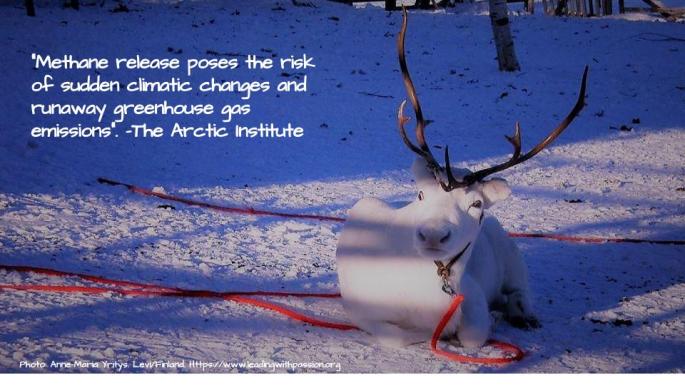
Climate Amplifier Methane

Arctic (31)

In my previous post, Methane is an Environmental Wildcard, I wrote a short introduction to what methane is and how it affects our environment. The Arctic Institute is one of the organizations worldwide that has been conducting research upon methane and its impacts in the Arctic region. As a reminder, the Arctic region consists of all the areas upon Earth that are located above the Arctic circle, all the way to the North Pole. The Arctic region thus, includes parts of the United States, Canada, Denmark (Greenland), Iceland, Norway, Sweden, Finland and Russia.

According to The Arctic Institute, with headquarters in Oslo, Norway, methane is the second most emitted greenhouse gas on our planet after carbon dioxide. The problem with methane emissions is that it is at least 22 times stronger than carbon dioxide, which makes it especially dangerous when released into Earth´s atmosphere. In addition, according to The Arctic Institute, most methane emissions are being released in geographical areas south of the Arctic region, but much of which end up IN the Arctic warming its climate faster.

The Arctic region itself is also a huge “storage room” for methane, which can be found under permafrost. When permafrost thaws, previously naturally stored methane reserves are released into our atmosphere, our soils and our oceans (and, other water sources), causing additional warming through a greenhouse effect. By now, everyone who has been following and reading my posts should be aware of what greenhouse gases are, and how they contribute to climate change and the rapid warming on our planet.

Greenhouse gases are natural to a certain extent on our planet, but with the rate they have been released through human activities into Earth´s atmosphere in the past one hundred years only, has drastically increased the greenhouse effect and the warming of our planet. This is why we have no other option than to transform our local/global economies into sustainable solutions. Sustainability means that we find completely new, fossil-free (free from the usage of coal, gas, and oil as energy sources) means of energy production, something that has been widely understood in many parts and countries in our world already.

Texas, which has always been known as an oil-producing state in the U.S.A., has since long transformed its energy production to using for instance solar energy and wind energy. China is doing the same, in addition to China investing immense amounts of money into the African continent with new solar energy plants. The United Arab Emirates is also investing heavily into renewable energy sources, as are Denmark and Sweden. In short, we have many options regarding renewable energy sources: solar energy, wind energy, ocean energy. We could easily provide the whole world with solar energy only, if we just wanted to. The need for environmentally damaging and harmful sources of energy, including dams, nuclear plants, oil drilling, gas drilling and coal burning will become less and less attractive. The sooner the better. We deserve to create and to live on a healthy planet, with clean air, healthy water sources (lakes, rivers, oceans), and healthy soils. A healthy, pollution-free environment is a basic human right, for every citizen on our planet.

Learn more about the Arctic region, the Arctic Sea and methane by watching Climate State´s video “Methane in the East Siberian Arctic Shelf (2017)”:


Connect with me on Twitter @annemariayritys. For climate/environment-related posts only @GCCThinkActTank. Subscribe to Leading With Passion to receive my latest posts.


Take a step further to create YOUR online business. Learn more about the many benefits of how to create a beautiful website with WordPress.com and how to monetize your blog/website: 


WordPress.com – Create A Beautiful Website

Jetpack – The ideal way to experience WordPress – Code-free Customization

WooCommerce – The most customizable eCommerce platform for building your online business
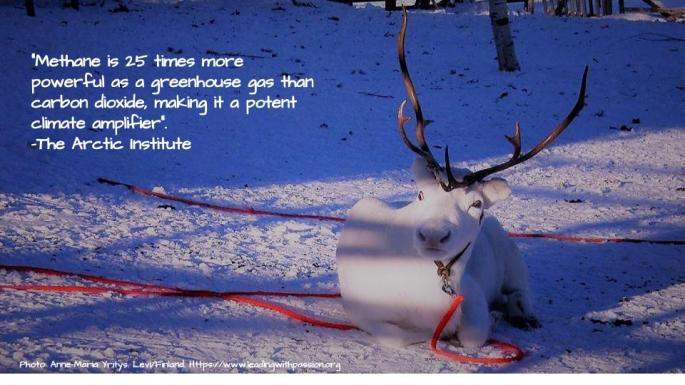
Methane is an Environmental Wildcard

Arctic (30).jpg

What does The Arctic Institute mean by methane being an environmental wildcard in climate change risk assessments? Should we call The Arctic Institute and ask, or perhaps find out more about methane by ourselves? We can do both, but let us start by finding out more through some research about methane.

According to the Environmental Defense Fund (EDF), methane is one of the greenhouse gases that pollutes our global environment. In the short-term, methane is 84 times more potent than carbon dioxide. In the long run, methane is at least 22 times stronger as a greenhouse gas in comparison to carbon dioxide.

The chemical compound methane (CH4 ) is a powerful greenhouse gas and source of energy, which can be found naturally below ground and under the sea floor. At room temperature methane is colorless, odorless and nontoxic, but may as an extremely flammable gas become explosive when mixed with air. Methane is a powerful energy source, which is why it has become so appealing to some energy markets. The risks of methane, however, may exceed its benefits. The usage of methane in energy production equals the usage of yet another fossil fuel, which have been proved to cause the greenhouse effect that is currently warming our planet so rapidly. Especially in the Arctic region, according to e.g. mother nature network, methane causes rapid warming and contributes strongly to climate change and glaciers melting.

Learn more about methane and its impacts on our climate by watching Environmental Defense Fund´s video “Methane – The other important greenhouse gas”:


Connect with me on Twitter @annemariayritys. For climate/environment-related posts only @GCCThinkActTank. Subscribe to Leading With Passion to receive my latest posts.


Take a step further to create YOUR online business. Learn more about the many benefits of how to create a beautiful website with WordPress.com and how to monetize your blog/website: 


WordPress.com – Create A Beautiful Website

Jetpack – The ideal way to experience WordPress – Code-free Customization

WooCommerce – The most customizable eCommerce platform for building your online business
The Arctic Is The World´s Refrigerator

Arctic (28)

Our Earth has two natural refrigerators: The Arctic Region (surrounding the North Pole), with a surface of 14.5 million square kilometers (equivalent to 5.5 million square miles), and the Antarctica (surrounding the South Pole), which is about identical in size with the Arctic region. Our Earth´s radius is 6.371 km (3.950 miles), and its total surface size is 510.1 million square kilometers (196.9 square miles). The Arctic Region and Antarctica thus, together cover about 5,7 % (per cent) of Earth´s total surface, a significant amount of land and ocean especially when taking into consideration how important both polar regions are for our Earth´s overall climate.

In the past decades, both the Arctic region and Antarctica have warmed fast, in fact, at least twice as fast as the rest of the world. Both the Arctic and Antarctica have been populated for more than 20.000 years, and now the world is discussing the importance and significance of the warming of our South Pole and North Pole and the affect of this on the rest of our planet.

For many, realizing and understanding the meaning of climate change and especially climate change in the polar regions may seem distant. Especially when these regions are scarcely populated, distant, and far away from an average person´s daily life. However, since everything and everyone is somehow connected on our planet Earth, we must all comprehend at least the basics of WHY climate change even at a far distance has effects upon all of our planet, not only in a specific geographical area/region.

Perhaps one way of increasing one´s understanding about the effects of even distant changes, the impacts upon nature and all life on the other side of our planet, can be achieved by being open to learning about different cultures, geography, biology and this can be done in many ways, one of which is reading, another being traveling. Today, no one can afford not being a global citizen, global citizenship being something that the United Nations as an intergovernmental organization has discussed for long already.

Global citizenship involves taking responsibility not only for what happens locally, but also increasing one´s awareness and understanding what happens globally. What our choices are today, and how these affect people elsewhere. We have to take ethical and moral responsibility for our actions, be it in our place of birth, home country, or a country that is being affected e.g. through our way of living/consumption habits. This means that we all have to understand that if we pollute the environment in one geographical region on this planet, it will ultimately affect us all. We cannot outsource e.g. pollution/environmental toxins and go around thinking that it will not come back to ourselves.

What goes around, comes around. It is as simple as that. Our world is round, 360 degrees. It can absorb a lot, but in the end, all that we put out into the atmosphere will come back and take care of the rest. So, we should all be increasingly much careful and considerate about WHAT we put out into our atmosphere, and our environment. If we lose our two natural refrigerators, the Arctic region, and Antarctica, meaning that if these regions change drastically in terms of climate, please remember that it will have serious impacts on EVERYTHING and EVERYONE on planet Earth, including both YOU and ME, not only “some distant animals, plants, and people living somewhere where I do not have to care about”.

Have you ever given thought to what e.g. climate change in the Arctic region and a civil war e.g. in Yemen could have in common? If not, perhaps it is time to take some time for deep reflection and understanding what climate change in one region of the world, and extreme hunger in another, could have in common. Watch Al Jazeera English´s video “How can world leaders end Yemen´s crisis? – Inside Story:


Connect with me on Twitter @annemariayritys. For climate/environment-related posts only @GCCThinkActTank. Subscribe to Leading With Passion to receive my latest posts.


Take a step further to create YOUR online business. Learn more about the many benefits of how to create a beautiful website with WordPress.com and how to monetize your blog/website: 


WordPress.com – Create A Beautiful Website

Jetpack – The ideal way to experience WordPress – Code-free Customization

WooCommerce – The most customizable eCommerce platform for building your online business
Why Has The Arctic Warmed So Much?

Arctic (27)

Why is the Arctic region warming so much? We already have scientific evidence for the fact that the rate of warming in the Arctic region, and elsewhere on our planet, is unnatural. Although climate change occurs naturally on our planet, research evidence indicates with 100 % certainty that the current warming of our planet is anthropogenic, i.e. man-made.

The current warming of our planet is caused by the immense amount of greenhouse gas emissions and other toxins released into Earth´s atmosphere through human activities, such as the burning of fossil fuels. Fossil fuels include oil, gas and coal, the origin of which are living organisms that were buried millions of years ago. Over time, pressure and heat have transformed these living organisms into fossil fuels, the usage of which releases harmful greenhouse gases, such as carbon dioxide, into Earth´s atmosphere, ending up everywhere around our planet, creating a(n) (artificial) greenhouse trapping heat inside of it.

According to e.g. NASA – What´s causing the poles to warm faster than the rest of Earth?, both the South Pole (Antarctica) and the North Pole (Arctic Region), are warming at least twice as fast as the rest of our planet. This can be explained through the Albedo effect, whereby light surfaces absorb less heat than dark surfaces. Thus, when an area is covered by thick layers of ice and snow, it reflects back the heat from the sun´s rays more efficiently than a dark surface.

Therefore, when large areas of ice and snow disappear, this development accelerates and causes the area that once was better protected by the light surface (ice, snow) to warm faster than before. Ultimately, the rapid warming of both poles, here especially the Arctic Region, causes our whole planet to warm more and more. This is the main reason for the warming of the Arctic Region (and, Antarctica) being of out most importance when conducting research upon the climate changes and changes in weather patterns around our globe.

Learn more by watching NASA Goddard´s video “NASA – The Arctic and the Antarctic Respond in Opposite Ways”:


Connect with me on Twitter @annemariayritys. For climate/environment-related posts only @GCCThinkActTank. Subscribe to Leading With Passion to receive my latest posts.


Take a step further to create YOUR online business. Learn more about the many benefits of how to create a beautiful website with WordPress.com and how to monetize your blog/website: 


WordPress.com – Create A Beautiful Website

Jetpack – The ideal way to experience WordPress – Code-free Customization

WooCommerce – The most customizable eCommerce platform for building your online business
What is Hiding Within Permafrost?

Arctic (26)

Permafrost, defined as ground soil that has been at a freezing point of 0 degrees Celsius or below for at least two years in a row, has been covering at least 24% (per cent) of the whole Arctic region for thousands, or even tens of thousands, of years. According to e.g. the University of Copenhagen – Center for Permafrost, permafrost can go as deep as 700 meters where at its thickest, for example in parts of Russia and in Greenland. The Center for Permafrost at the University of Copenhagen reports that one of the risks of thawing permafrost is soil collapse as frozen ice melts into water.

Other risks of thawing permafrost, which is now taking place all over the Arctic, include the release of bacteria and toxic greenhouse gases; especially methane. Bacteria possibly  spreading diseases could be released by decayed animals and plants that have, for thousands of years, been kept frozen under the thick layers of permafrost.

According to NSIDC scientist Kevin Schaefer, studying permafrost carbon is important to understand how thawing permafrost and the frozen organic matter within the permafrost react to the atmosphere if and when coming into contact with it. This because the frozen organic matter, if and when thawing, releases carbon dioxide and methane into Earth´s atmosphere. Until now, as reported in Geophysical Research Letters Vol. 43, 28 June 2016, there has been no significant increase in long-term methane emissions in Alaska despite of warming air temperatures.

Learn more about thawing permafrost in Alaska through American Geophysical Union AGU´s “FM15 Press Conference Alaska´s thawing permafrost Latest results and future projections”:


Connect with me on Twitter @annemariayritys. For climate/environment-related posts only @GCCThinkActTank. Subscribe to Leading With Passion to receive my latest posts.


Take a step further to create YOUR online business. Learn more about the many benefits of how to create a beautiful website with WordPress.com and how to monetize your blog/website: 


WordPress.com – Create A Beautiful Website

Jetpack – The ideal way to experience WordPress – Code-free Customization

WooCommerce – The most customizable eCommerce platform for building your online business