Migratory Species in The Arctic Suffer From Climate Change

Arctic (40)

Migratory species refers to all species that periodically “cross one or several national jurisdictional boundaries”. (InforMEA – migratory species – Definition(s). In other words, species that change their physical environment seasonally, because these cannot live/survive in the same geographical region around the year due to climatic conditions. Migratory species include for instance butterflies, birds, whales, seals, dolphins, turtles and insects. (Encyclopedia.com – Migratory Species).

Since migratory species are sensitive to climate change, a changing climate including even slight changes in environmental conditions can lead to these species changing their habitat/routes. The Bonn Convention (EUR-Lex-Access to European Union law) for Conservation of migratory species aims at developing international cooperation for conservation of migratory species of wild animals. As stated in the Bonn Convention, “wild animals require special attention because of their importance from the environmental, ecological, genetic, scientific, recreational, cultural, educational, social and economic points of view”. Furthermore, according to the Bonn Convention, parties must prevent migratory species from becoming endangered through promotion, cooperation and supporting research related to migratory species. Read the complete act here.

According to ACIA (Arctic Climate Impact Assessment), climate change impacts upon animals and their habitats in the Arctic region will endanger the livelihood of certain species, including polar bears and seals that depend upon sea ice for many reasons: giving birth, resting, and hunting. If the sea ice disappears, these animals will be threatened by extinction. Other animals in the Arctic that are threatened by climate change include many migratory bird species, and even caribou and reindeer herds.

Learn more about the Bonn Convention and the protection of migratory species by watching Bonn Convention´s video: “Listen: Reconciling Energy Developments with Migratory Species Conservation”:


Connect with me on Twitter @annemariayritys. For climate/environment-related posts only @GCCThinkActTank. Subscribe to Leading With Passion to receive my latest posts.


Take a step further to create YOUR online business. Learn more about the many benefits of how to create a beautiful website with WordPress.com and how to monetize your blog/website: 


WordPress.com – Create A Beautiful Website

Jetpack – The ideal way to experience WordPress – Code-free Customization

WooCommerce – The most customizable eCommerce platform for building your online business

Indigenous Communities in the Arctic Threatened By Climate Change

Arctic (39).jpg

An indigenous community consists of an indigenous population in a specific geographical area/territory who were present in that area before modern states and current borders (WHO – Indigenous populations). Indigenous populations live around the world. In the Arctic region, indigenous people are for instance Saami, Nenets, Khanty, Evenk, Chukchi, Aleut, Yupik, and Inuit. (Arctic Centre – University of Lapland – Arctic Indigenous Peoples). According to the University of Lapland, the Arctic region is today home to some four million people (13.1 million people live in the circumpolar north). (Nordregio – Indigenous population in the Arctic).

Although the Sami language has no official status as a national language in Finland, the Sami people have a legislative right to use and to maintain their own culture and language. Note from author: Finland has two official languages today, Finnish and Swedish. Finland´s national public service broadcasting company Yle offers news in the two official languages Finnish and Swedish, but also in Sami, sign language and in Russian, with more than 30.000 Russians living in Finland according to statistics from 2016: Statistics Finland – Foreign Citizens

Indigenous population everywhere in the world, now discussing indigenous population in the Arctic region including Saami and Inuit people, are known for living according to the laws and rules of nature, i.e. natural way of living by causing as little as possible damage to the environment through their way of living. With climate change and legislative changes made without consideration for the indigenous population e.g. regarding the Saami people´s right to traditional fishing in Arctic rivers, indigenous people in the Arctic region now face completely new challenges for livelihood. For example Saami people have reported that due to climate change, weather is now almost impossible to predict, and ice sheets are becoming thin.

Learn more about what Saami´s think about new salmon fishing restrictions by watching 350.org´s video “Climate justice in Sápmi: Áslat Holmberg, Fisherman & Politician”:


Connect with me on Twitter @annemariayritys. For climate/environment-related posts only @GCCThinkActTank. Subscribe to Leading With Passion to receive my latest posts.


Take a step further to create YOUR online business. Learn more about the many benefits of how to create a beautiful website with WordPress.com and how to monetize your blog/website: 


WordPress.com – Create A Beautiful Website

Jetpack – The ideal way to experience WordPress – Code-free Customization

WooCommerce – The most customizable eCommerce platform for building your online business
Climate Warming Increases Impacts on Arctic Ecosystems

Arctic (38).jpg

Climate change and climate warming in the Arctic Region (parts of the United States, Canada, Denmark (Greenland), Iceland, Norway, Sweden, Finland and Russia), at least in the short-term, brings completely new economic opportunities to the region overall. A major opportunity is tourism, although it is questionable whether an increase in tourism in the Arctic region is a consequence of climate change and warming, or rather a question of marketing. Should we rather ask what the consequences of an increase in tourism has on the Arctic region? And, how tourism can be developed in a sustainable way, with as little as possible negative impacts on the environment.

Tourism itself is not the actual problem, since it leads to economic development and growth in any region. The possible problems include the effects of everything that has to do with tourism, such as energy and transport. In fact, offering tourists for example increasingly much direct flights to a tourist destination has less environmental impacts than inefficient flight routes.

After the slump and financial crisis in Iceland 2008-2011, the islands tourism is today flourishing more than ever, as is the tourism in Finnish Lapland. In Iceland this has led to a drastic increase in prices, which of course has nothing to do with climate change. In Finnish Lapland, however, where ski races are being organized each winter, artificial snow has been used for years already since there has not been enough natural snowfall before and during the annual ski races. In fact, although South Korea is not part of the Arctic region, it is hosting the upcoming 2018 Winter Olympics. Due to a (risk of) lack of snow, the PyeongChang Winter Olympics 2018 has to rely upon artificial, imported snow. Lack of snow around the world, including the Arctic region, is becoming so common that it is already a reality that artificial snow has to be depended upon.

Understanding and responding to the challenges, risks/threats and opportunities with a changing climate in the Arctic region is not an unequivocal task. Some find completely new business opportunities through the warming of the region (and, the whole world), such as creating artificial snow. In short, an ice-free Arctic sea is by many businesses regarded as a huge opportunity to save costs, regardless of the possible risks involved in e.g. shipping through the Arctic sea. What businesses and consumers must realize is how to develop sustainable practices and how to ensure as little as possible environmental damage.

Learn more about sustainability by watching University of Copenhagen´s (UCPH) video “Sustainability Lecture: Community Health and Sustainability in Arctic Alaska”:


Connect with me on Twitter @annemariayritys. For climate/environment-related posts only @GCCThinkActTank. Subscribe to Leading With Passion to receive my latest posts.


Take a step further to create YOUR online business. Learn more about the many benefits of how to create a beautiful website with WordPress.com and how to monetize your blog/website: 


WordPress.com – Create A Beautiful Website

Jetpack – The ideal way to experience WordPress – Code-free Customization

WooCommerce – The most customizable eCommerce platform for building your online business
Arctic Climate Change Leads to Major Impacts on the Environment

Arctic (37)

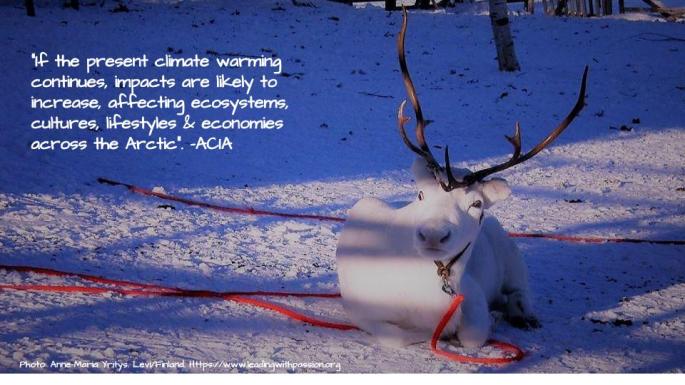
It is already crystal clear that Arctic climate change and warming leads to climate change and warming everywhere else on Earth. The damage that has already been caused by human beings is irreversible, since scientists think that there is no returning back to what once was. The question is, how can we minimize anthropogenic influences upon the Arctic region´s and Earth´s climate from now on, and, in the future? Climate research and science is essential in order to develop an understanding of what is happening both in the Arctic, in Antarctica and everywhere else on Earth.

Despite of the many efforts already being taken around our planet, the carbon dioxide levels in Earth´s atmosphere have been higher than ever in 2017. We have to work smarter and make serious efforts i.e. take action upon stopping this development, according to what was agreed in Paris in 2015.

The Paris Agreement, like the Montreal Protocol, have to be taken seriously: it was not until the huge holes in Earth´s ozone layer, caused by the usage of destructive halocarbons by human beings, were discovered that leaders and governments forced themselves to take action in order to protect our ozone layer from further damage, hoping to restore the damage once caused through anthropogenic activities.

Now we are facing an increasingly much dangerous situation, whereby Earth can no longer deal with all the greenhouse gases, toxins and pollution that are being released by thoughtless human beings. We have to be able to learn from our past mistakes and focus upon creating a sustainable environment for biodiversity and for future generations. One major step in this process includes taking into consideration the changes and warming that is occurring in Earth´s both poles: the Arctic region and Antarctica, both of which are scarcely inhabited, remote geographical regions, yet, which have a major impact upon Earth´s overall climate.

Learn more about why President Obama banned future offshore oil drilling in the Arctic by watching CBS News´s video “President Obama bans future offshore oil drilling in Arctic”:

Connect with me on Twitter @annemariayritys. For climate/environment-related posts only @GCCThinkActTank. Subscribe to Leading With Passion to receive my latest posts.


Take a step further to create YOUR online business. Learn more about the many benefits of how to create a beautiful website with WordPress.com and how to monetize your blog/website: 


WordPress.com – Create A Beautiful Website

Jetpack – The ideal way to experience WordPress – Code-free Customization

WooCommerce – The most customizable eCommerce platform for building your online business
Arctic Warming Especially Strong During Winter Months

Arctic (36).jpg

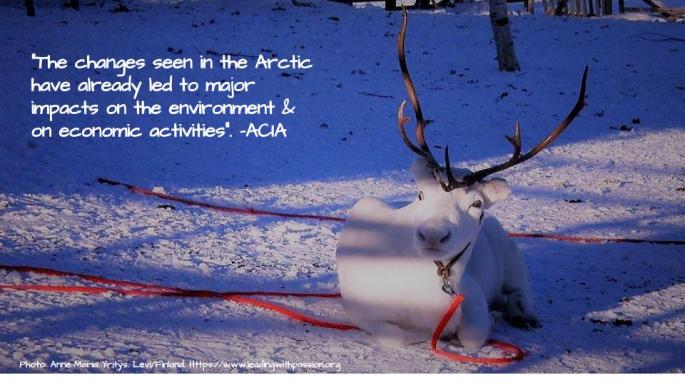
The Arctic region is warming at least double as fast as the rest of the world, releasing additional greenhouse gases such as carbon dioxide and methane into Earth´s atmosphere, changing weather patterns all over the world, and causing sea levels to rise. What is the reason behind Arctic warming being faster during winter months? How can this be explained?

According to Nature.com – The changing seasonal climate in the Arctic, Arctic winter warming, abbreviated as AWW, can be multiplied with four in comparison to the Arctic summer warming, whereby most of the warming occurs on the surfaces in the Arctic which is an especially powerful feature during the Arctic winter months.

Bintanja, R. & van der Linden, E.C. (Scientific Reports 3. Article number 1556; 2013) results indicate three main reasons for the Arctic winter warming being stronger than the warming during the Arctic summer months; 1) variations in seasonal greenhouse forcings; 2) Arctic “local amplifying feedback” displays seasonal variations i.e. is magnified; 3) “physical limits may constrain temperature changes” suggesting that Arctic summers would warm faster if temperatures were not near melting.

NSIDC  discusses the importance of scientists work to study feedbacks taking place in the Arctic in order to understand the Arctic amplification and the climatic changes while NOAA suspects that there is no return back to the old Arctic. Although research from the past decades shows that the current overall warming in the Arctic region is due to human activity, it is yet largely unknown exactly how significant the constant changes and the warming of the climate in the Arctic region will be in near and in distant future. Collecting data, measuring and tracking changes and even small variations on a constant basis is thus necessary for scientists to understand how and why changes occur, and what kind of effect these changes will have upon the climate a) in the Arctic region and b) in other parts of the world.

Learn more by watching EarthNow´s video “Effects of Arctic Amplification”:


Connect with me on Twitter @annemariayritys. For climate/environment-related posts only @GCCThinkActTank. Subscribe to Leading With Passion to receive my latest posts.


Take a step further to create YOUR online business. Learn more about the many benefits of how to create a beautiful website with WordPress.com and how to monetize your blog/website: 


WordPress.com – Create A Beautiful Website

Jetpack – The ideal way to experience WordPress – Code-free Customization

WooCommerce – The most customizable eCommerce platform for building your online business
UV Radiation Particularly Intense in The Arctic

Arctic (35).jpg

ACIA (Arctic Climate Impact Assessment) is a separate project established by the Arctic Council in 2004. Access ACIA multi-disciplinary reports HERE and HERE. The Arctic Climate Impact Assessment report chapter five (5) discusses findings about Ozone and Ultraviolet Radiation in the Arctic Region in detail.

Research upon Earth´s ozone layer and ultraviolet radiation begun in its early stages in the 1950´s, as British Antarctic Survey (BAS) begun researching ozone holes in Antarctica in 1956. (EPA. United States Environmental Protection Agency). According to ACIA, the Antarctic ozone hole was discovered in 1985, while scientists had begun to project anthropogenic emissions of halocarbons such as CFC leading to stratospheric ozone depletion in the preceding decade.

As a conclusion of the research and discovery of the huge Antarctic ozone hole, at its peak stretching over a total area of more than 21 million square kilometers, world leaders decided to put their wise heads together and created the Montreal Protocol. The Montreal Protocol is an international treaty that was signed in Montreal in 1987 with a purpose of protecting our Earth´s ozone layer from further harm caused by human activities. Despite of the Montreal Protocol and the efforts to protect Earth´s ozone layer from further damage, it takes decades for the ozone layer to recover. Learn more about the situation of Earth´s ozone layer at NASA Ozone Watch.

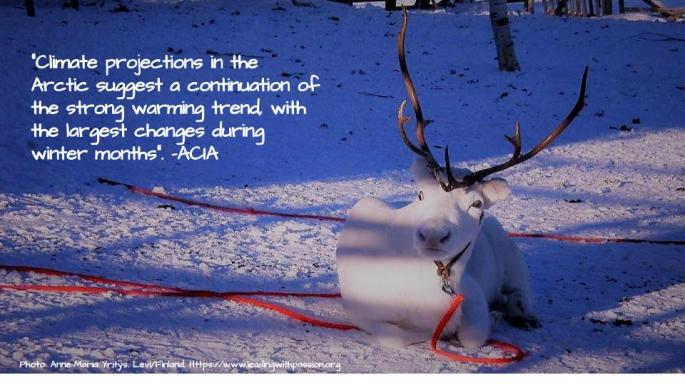
The ozone layer is a protecting layer of ozone gas surrounding Earth´s atmosphere, protecting our planet from harmful UV radiation. When the ozone layer is damaged, UV radiation that would otherwise have been kept back, reaches Earth´s atmosphere at stronger rates, causing additional harm, such as increased amounts of skin cancer and snow blindness. According to model projections, ozone losses will continue in the Arctic for decades to come despite of the actions that have been taken since the Montreal Protocol entered into force. ACIA reports that despite of partial ozone recovery, ozone depletion will continue in the Arctic for many decades, having impacts upon not only human health in the region, but also impact animals and plants in the Arctic region. Furthermore, climate change impacting sea ice and snow covers can have significant impacts on UV radiation in the Arctic Region.

Learn more by watching World Meteorological Organization´s (WMO) video “The Arctic and the Ozone Layer”:


Connect with me on Twitter @annemariayritys. For climate/environment-related posts only @GCCThinkActTank. Subscribe to Leading With Passion to receive my latest posts.


Take a step further to create YOUR online business. Learn more about the many benefits of how to create a beautiful website with WordPress.com and how to monetize your blog/website: 


WordPress.com – Create A Beautiful Website

Jetpack – The ideal way to experience WordPress – Code-free Customization

WooCommerce – The most customizable eCommerce platform for building your online business
Arctic Well-Being Essential For Earth

Arctic (34).jpg

It is about time even for the most critical climate change skeptics to open their minds eye and see what is happening around our world. To begin with, we live on a round planet, where everything we do has an effect upon our direct and indirect environment and society. It is a fact that if and when you eat your breakfast, you have already depended upon much of our world.

Just think about where your morning coffee, tea and/or juice comes from. Or the water you drink. Or your porridge, bacon, sandwich – depending upon what you consume in the morning, and throughout the whole day. Much of the food we consume, or the raw materials, are being imported from around the world. Just think about the complete process from planting the seed to the final product ending up either on your plate or in your glass/mug. Does it fall there from heaven? If not, how does it end up there?

The same applies to our world and its geographical regions. No one has to be more than averagely intelligent to understand this. It just seems that we many times seem to take many things for granted, forgetting that everything we do does have an effect upon not only ourselves, but on the whole planet.

Just because you or I happen to live in a region that has plenty of fresh water resources does not signify that we should go around wasting it as much as we want to. That is extremely selfish. Especially now that fresh water becomes increasingly much a scarce resource in more and more places around our world. While some of us waste fresh water without no consideration for the consequences, many people in this world do not even have access to clean, fresh water. Does this mean that those of us who are fortunate enough have to start feeling guilty and starve as so many people on this planet do? Of course not. Only that we all should be increasingly much considerate in our overall consumption habits. This applies not only to fresh water and food, but to everything.

The world has enough to feed every person´s need, but not every person´s greed.

– Mahatma Gandhi

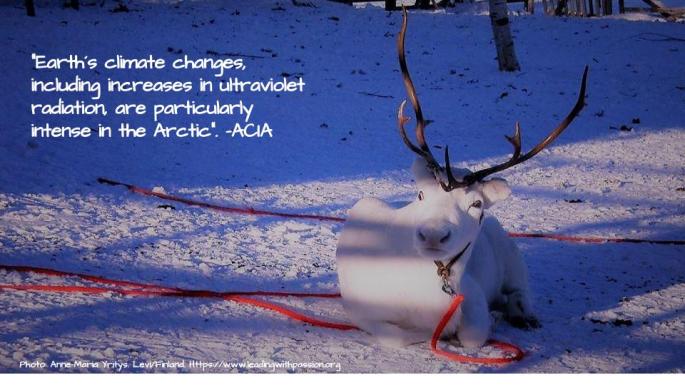
When the Arctic region warms faster and faster, losing much of its protective ice sheet and glaciers melting, this has an irreversible effect both on the Arctic region and on the rest of this planet. Much of the world´s fresh water resources are stored in the Arctic glaciers. When these melt, the fresh water gets mixed with salty ocean water. A complete waste of energy and time, if and when salty ocean water has to be desalinated. In addition, the warming Arctic region releases increasingly much greenhouse gases (e.g. carbon dioxide and methane) into Earth´s atmosphere, warming our planet and changing climates all over the world. Ice sheets and glaciers melting in the Arctic also increase rainfall in certain regions, and contribute to sea levels rising throughout the Earth.

Learn more about the Arctic region by watching Big Think´s video “President of Iceland, Ólafur R. Grímsson: The Arctic is the New Political Playing Field” (note from author: Grímsson served as the President of Iceland 1996-2016):


Connect with me on Twitter @annemariayritys. For climate/environment-related posts only @GCCThinkActTank. Subscribe to Leading With Passion to receive my latest posts.


Take a step further to create YOUR online business. Learn more about the many benefits of how to create a beautiful website with WordPress.com and how to monetize your blog/website: 


WordPress.com – Create A Beautiful Website

Jetpack – The ideal way to experience WordPress – Code-free Customization

WooCommerce – The most customizable eCommerce platform for building your online business
Climate Forcing Methane

Arctic (33)

Referring to my previous posts about methane and its impacts on climate change and the environment;

Methane Release Poses Climate Risks

Climate Amplifier Methane

Methane is an Environmental Wildcard

methane is a powerful greenhouse gas which can be found naturally all around our planet. In addition, most human activities produce and release the invisible, odorless and tasteless greenhouse gas methane into Earth´s atmosphere, drastically increasing the greenhouse effect that is warming up our planet. The amount of methane in Earth´s atmosphere has never been as high as in the past 150 years, and this is due to industrialization.

The vast majority of anthropogenic methane release into Earth´s atmosphere is caused through agriculture and oil/gas production. Agriculture and animal farming, especially enteric fermentation, account directly for at least 50 per cent of all methane emissions (see figure below), followed by oil and gas with 20 per cent. Decreasing anthropogenic methane emissions through innovative and sustainable practices is thus necessary in order to stop our Earth´s climate from warming due to human activities. This can be accomplished through 1) improving and making current practices more efficient; 2) reducing/minimizing the usage of fossil fuels as energy sources 3) transforming agricultural and farming practices.

chart (1)

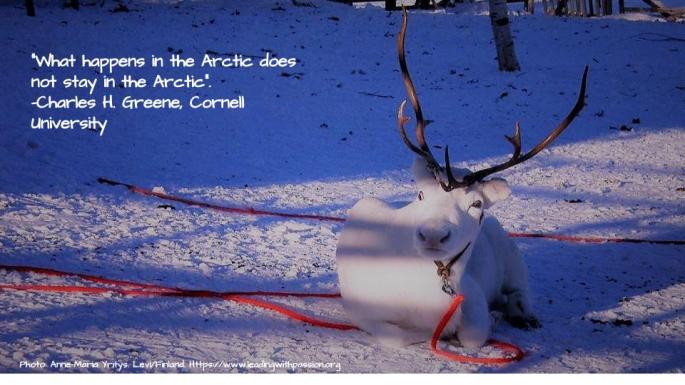
When greenhouse gas emissions constantly increase in Earth´s atmosphere, these warm the climate especially fast in the Arctic region, which acts as a natural refrigerator on our planet. With a rapidly warming Arctic region (and, a warming Antarctica), more and more methane is being released into Earth´s atmosphere, accelerating the warming of Earth everywhere, not only in the Polar regions. Exactly how strongly additional methane and other greenhouse gas emissions will affect the warming of the Arctic (and, the whole world), is not known. Methane is being referred to as a climate amplifier and an environmental wild card since the increase of this powerful greenhouse gas in Earth´s atmosphere can present us with sudden and unexpected changes in our planet´s climate system. This is why methane emissions have to be investigated and studied carefully, and caution must be taken in its additional production.

According to the Global Methane Initiative (GMI), reducing the amount of methane release in all sectors involved leads to many benefits, including better protection of the environment, overall health factors, workplace safety where concerned, less pollution and cleaner air.

Learn more about climatic forcings by watching Middlebury Environmental Geology´s video “Climatic forcings and feedbacks (class 21-v2):


Connect with me on Twitter @annemariayritys. For climate/environment-related posts only @GCCThinkActTank. Subscribe to Leading With Passion to receive my latest posts.


Take a step further to create YOUR online business. Learn more about the many benefits of how to create a beautiful website with WordPress.com and how to monetize your blog/website: 


WordPress.com – Create A Beautiful Website

Jetpack – The ideal way to experience WordPress – Code-free Customization

WooCommerce – The most customizable eCommerce platform for building your online business
Methane Release Poses Climate Risks

Arctic (32)

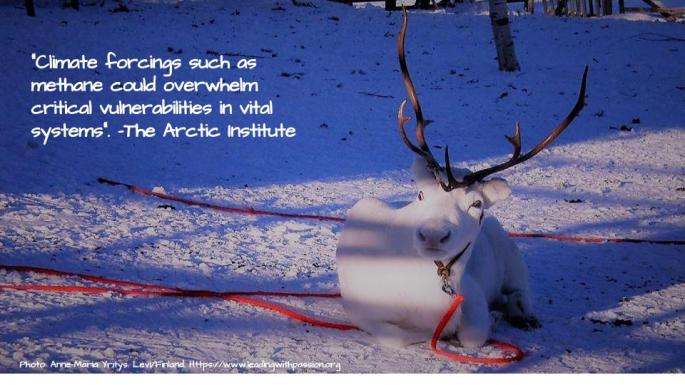
Methane, a powerful chemical compound also known with the chemical symbol CH4, is at least 22 times as powerful a greenhouse gas than carbon dioxide CO2. Methane can be found naturally everywhere on our planet. Due to methane´s attributions, it is commonly used for e.g. the production of energy. In fact, around two thirds of all methane sources on our planet today are anthropogenic, i.e. man-made, through the burning of fossil fuels. Methane, which today accounts for around 14 % (per cent) of total greenhouse gas emissions on Earth, is so powerful that it accounts for more than one third of all human-caused warming on our planet.

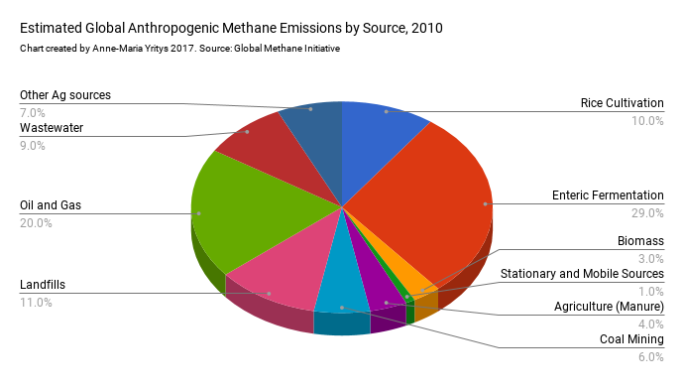
According to Global Methane Initiative, half of all methane emissions globally come from agriculture, coal mines, landfills, oil & natural gas systems and wastewater. The following chart, Estimated Global Anthropogenic Methane Emissions by Source 2010, shows the main methane sources through human activities worldwide, whereby rice cultivation alone accounts for 10% (per cent) of all methane released into Earth´s atmosphere. Enteric fermentation (animal farming) accounts for 29% of all methane emissions, biomass 3%, stationary and mobile 1%, agriculture (manure) 4%, coal mining 6%, landfills 11%, oil and gas 20%, wastewater 9% and other agriculture sources 7%.

chart (1)


According to the Global Methane Initiative (GMI), there are many economic and inexpensive ways of reducing methane emissions worldwide. Not only do we have the possibility worldwide to transfer our economies into using sustainable, renewable sources of energy such as solar energy and wind energy, but to make overall production more efficient in terms of methane releases within already existing technologies in industries that account for all anthropogenic methane (and, other greenhouse gas) emissions.

Learn more about reducing methane emissions in oil and gas production by watching Climate & Clean Air Coalition´s video “Reducing Methane Emissions in Oil and Gas Production”:


Connect with me on Twitter @annemariayritys. For climate/environment-related posts only @GCCThinkActTank. Subscribe to Leading With Passion to receive my latest posts.


Take a step further to create YOUR online business. Learn more about the many benefits of how to create a beautiful website with WordPress.com and how to monetize your blog/website: 


WordPress.com – Create A Beautiful Website

Jetpack – The ideal way to experience WordPress – Code-free Customization

WooCommerce – The most customizable eCommerce platform for building your online business
Climate Amplifier Methane

Arctic (31)

In my previous post, Methane is an Environmental Wildcard, I wrote a short introduction to what methane is and how it affects our environment. The Arctic Institute is one of the organizations worldwide that has been conducting research upon methane and its impacts in the Arctic region. As a reminder, the Arctic region consists of all the areas upon Earth that are located above the Arctic circle, all the way to the North Pole. The Arctic region thus, includes parts of the United States, Canada, Denmark (Greenland), Iceland, Norway, Sweden, Finland and Russia.

According to The Arctic Institute, with headquarters in Oslo, Norway, methane is the second most emitted greenhouse gas on our planet after carbon dioxide. The problem with methane emissions is that it is at least 22 times stronger than carbon dioxide, which makes it especially dangerous when released into Earth´s atmosphere. In addition, according to The Arctic Institute, most methane emissions are being released in geographical areas south of the Arctic region, but much of which end up IN the Arctic warming its climate faster.

The Arctic region itself is also a huge “storage room” for methane, which can be found under permafrost. When permafrost thaws, previously naturally stored methane reserves are released into our atmosphere, our soils and our oceans (and, other water sources), causing additional warming through a greenhouse effect. By now, everyone who has been following and reading my posts should be aware of what greenhouse gases are, and how they contribute to climate change and the rapid warming on our planet.

Greenhouse gases are natural to a certain extent on our planet, but with the rate they have been released through human activities into Earth´s atmosphere in the past one hundred years only, has drastically increased the greenhouse effect and the warming of our planet. This is why we have no other option than to transform our local/global economies into sustainable solutions. Sustainability means that we find completely new, fossil-free (free from the usage of coal, gas, and oil as energy sources) means of energy production, something that has been widely understood in many parts and countries in our world already.

Texas, which has always been known as an oil-producing state in the U.S.A., has since long transformed its energy production to using for instance solar energy and wind energy. China is doing the same, in addition to China investing immense amounts of money into the African continent with new solar energy plants. The United Arab Emirates is also investing heavily into renewable energy sources, as are Denmark and Sweden. In short, we have many options regarding renewable energy sources: solar energy, wind energy, ocean energy. We could easily provide the whole world with solar energy only, if we just wanted to. The need for environmentally damaging and harmful sources of energy, including dams, nuclear plants, oil drilling, gas drilling and coal burning will become less and less attractive. The sooner the better. We deserve to create and to live on a healthy planet, with clean air, healthy water sources (lakes, rivers, oceans), and healthy soils. A healthy, pollution-free environment is a basic human right, for every citizen on our planet.

Learn more about the Arctic region, the Arctic Sea and methane by watching Climate State´s video “Methane in the East Siberian Arctic Shelf (2017)”:


Connect with me on Twitter @annemariayritys. For climate/environment-related posts only @GCCThinkActTank. Subscribe to Leading With Passion to receive my latest posts.


Take a step further to create YOUR online business. Learn more about the many benefits of how to create a beautiful website with WordPress.com and how to monetize your blog/website: 


WordPress.com – Create A Beautiful Website

Jetpack – The ideal way to experience WordPress – Code-free Customization

WooCommerce – The most customizable eCommerce platform for building your online business