Agricultural Manure and Global Methane Emissions

chart (1)

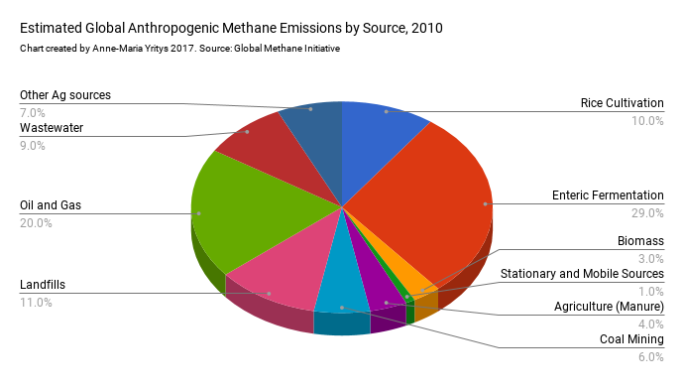
While enteric fermentation alone accounts for around a third of all anthropogenic methane emissions worldwide, agricultural manure accounts for another four per cent (4%), according to statistics published by GMI, the Global Methane Initiative, in 2010. In one of my previous posts, Enteric Fermentation Largest Single Source of Global Methane Emissions, I have discussed enteric fermentation and its role in global methane emissions. Unless familiar with greenhouse gas emissions and anthropogenic climate change, one may be surprised at the fact that animal farming is the major cause for human-caused methane emissions worldwide.

Will this be the beginning of the end of animal farming? In order to gain a broader view upon agriculture and animal farming, it may be beneficial to learn about and to understand the beginning and the history of both agriculture and animal farming, along with how these have developed in the past thousands and hundreds of years, up to the past century, the past decades, current developments and future trends. Although animal farming, the domestication and breeding of animals, and agriculture have been present for centuries already, there are differences between cultures, geographies and techniques. Agricultural science, according to for instance National Geography Society, has taken rapid leaps in productivity in the past decades because new sources of energy and power.

Today, in a world where much of animal farming has been industrialized, the ethics of animal farming is being questioned by a growing amount of people. While many animal farmers are struggling in order to make their business lucrative, or even to make ends meet, millions of people worldwide are against animal farming, finding animal farming the worst crime in history as stated in The Guardian´s article from September 25th, 2015: Industrial farming is one of the worst crimes in history.

While having no trouble buying meat products in supermarkets, many people today are in fact completely completely estranged with the reality of animal farming. If people were to see what actually takes place on many animal farms, their perceptions would perhaps change, or at least be impacted. For instance in Finland, currently almost half of human excrement today ends up as fertilizers in the agricultural sector, something that is strongly opposed by the food industry. There are of course restrictions both in Finland and in the European Union for the amounts of organic matters that may be legally used as fertilizers for growing crops. Nevertheless, the food industry is worried that traces of drugs, medicines, and even plastics may end up as fertilizers. Now imagine that animals are being fed with crops grown on lands where human excrement is being used as a fertilizer. Ultimately, this is a cycle where we end up consuming and eating everything that we so to say put out there. The more toxins at hand in our atmosphere, the more toxins in our soils, and in our bodies.

Methane emissions from enteric fermentation are significant, and these have an impact on our environment, our climate, and on ourselves. Although it is impossible to stop animal farming, there are ways of improving and affecting the amount of methane emissions being released through animal farming and enteric fermentation. Many consumers today also choose to leave away animal products from their lives (vegans). Others choose to buy organically produced animal products. We can all make an impact: as consumers, as farmers, and as policy-makers. There is not one single stakeholder in the supply chain that could not influence the future of animal farming, and the agricultural industry.

Learn more by watching Fertcare´s video “Managing nitrious oxide emissions from soil & fertilizer”:


Connect with me on Twitter @annemariayritys. For climate/environment-related posts only @GCCThinkActTank. Subscribe to Leading With Passion to receive my latest posts.


Take a step further to create YOUR online business. Learn more about the many benefits of how to create a beautiful website with WordPress.com and how to monetize your blog/website: 


WordPress.com – Create A Beautiful Website

Jetpack – The ideal way to experience WordPress – Code-free Customization

WooCommerce – The most customizable eCommerce platform for building your online business


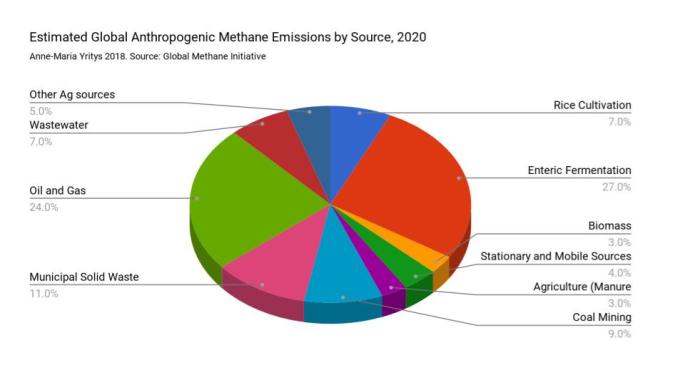
Estimated Global Methane Emissions 2020

What Are Stationary and Mobile Methane Sources?

Estimated Global Methane Emissions 2020

Methane, a powerful greenhouse gas which today accounts for at least a quarter of all anthropogenic climate change, has many different sources. The largest human-caused methane source is enteric fermentation, the digestive process in the animal farming industry, followed by oil and gas production, landfills, rice cultivation, wastewater, other agricultural sources, coal mining, agricultural manure, biomass, and stationary and mobile sources of anthropogenic methane emissions.

Stationary and mobile sources of methane being released into Earth’s atmosphere through human activity refers to combustion practices, with these accounting for an estimated one percent of other than natural methane activity on Earth. It is a byproduct of burning fossil fuels and organic matter in order to transform these into energy and heat.

According to the GMI (Global Methane Initiative), which is part of the United States Environmental Protection Agency EPA, there will be a 15% increase of human-caused methane emissions by 2020. Moreover, according to EPA/GMI, methane mitigation (projects) include many benefits for the overall (global) environment, not only in terms of reducing excess odors, but also in terms of minimizing anthropogenic methane emissions which are at a large scale responsible for the greenhouse effect and climate change on Earth since industrialization.


Connect with me on Twitter @annemariayritys. For climate/environment-related posts only @GCCThinkActTank. Subscribe to Leading With Passion to receive my latest posts.


Take a step further to create YOUR online business. Learn more about the many benefits of how to create a beautiful website with WordPress.com and how to monetize your blog/website: 


WordPress.com – Create A Beautiful Website

Jetpack – The ideal way to experience WordPress – Code-free Customization

WooCommerce – The most customizable eCommerce platform for building your online business


Methane Emissions From Biomass Production

chart (1)

Although biomass is currently being classified as a renewable energy source, it accounts for some  3% (three per cent) of total global methane emissions (with methane being a powerful greenhouse gas and anthropogenic methane emissions being known for causing Earth´s climate to warm). According to Vattenfall, one of the largest European retailers for electricty and fully owned (100%) by the Swedish state, biomass is at this time the largest single renewable energy source in the European Union.

Biomass and waste currently account for 2/3 (two-thirds) of renewable energy production worldwide, stated by Vattenfall. The state of Sweden has learned how to utilize waste to such an extent that it today is obliged to IMPORT waste in order to keep up with its (biomass) energy production. What a genius idea to turn waste into energy! Of course, the most optimal solution would be not to create any waste at all, but at the current state of the world, many countries are facing problems with for instance recycling, not to mention how these countries manage waste. Why destroy the environment and our soils by dumping all kinds of waste to landfills without any recycling, when there are much better options, such as biomass production and recycling available?

These are not only questions of environmental or human well-being, but also important issues concerning recycling, waste management, human health, animal health, planetary health, and the creation of sustainable business models and lucrative income for societies around the globe. Of course, biomass can not be created from any kind of waste. Today, biomass is being created and used mainly in countries focused on forest industries, and agriculture, whereby waste from these can be utilized to produce biomass energy from (renewable) sources.

Although biomass is today regarded to be a renewable energy source, and definitely more environmentally friendly than for instance coal, gas and oil production, the production of biomass involves both agriculture and forestry. If other renewable source of energy are at hand, there should be no need to excessively cut down forests or grow crops in order to produce biomass, if and when there are more environmentally friendly options available.

It is estimated that the demand for biomass will at least double in the upcoming decades, with scenarios up to 2050. According to the World Energy Council´s report World Energy Resources – Bioenergy | 2016, bioenergy currently accounts for 10% of total global energy supply, with biofuels being a sustainable option in the replacement of oil dependency. Moreover, with growing concerns for environmental well-being even in terms of biomass production, bioenergy is framed by sustainability standards such as ISO, only to mention one of many. The World Energy Council states that the use of waste and residues as raw material to produce bioenergy is most optimal.

Following video, “What is Biomass”, published by FairEnergy, briefly explains what biomass (production) is:


Connect with me on Twitter @annemariayritys. For climate/environment-related posts only @GCCThinkActTank. Subscribe to Leading With Passion to receive my latest posts.


Take a step further to create YOUR online business. Learn more about the many benefits of how to create a beautiful website with WordPress.com and how to monetize your blog/website: 


WordPress.com – Create A Beautiful Website

Jetpack – The ideal way to experience WordPress – Code-free Customization

WooCommerce – The most customizable eCommerce platform for building your online business
 

Enteric Fermentation Largest Single Source of Global Methane Emissions

chart (1)

Why is the amount of people worldwide who decide to go either vegetarian or vegan constantly growing? In the United States alone, the number of vegans has grown by 500% in a few years time only. The reasons for vegetarianism and veganism are many: some people simply do not like the taste of meat, others may suffer from a fish intolerance or allergy. A lot of people do not want to harm animals, and find it cruel to grow animals just in order to slaughter them and consume them. Among the many vegans I have personally met, one of the main reasons for their decision to cut out any animal products, including eggs and dairy, from their diets, is since they have found it improve their health and well-being.

Despite of the many dietary suggestions given to us by a number of experts, every individual who can afford buying and choosing their diet in the first place should be his or her own best expert. Unfortunately this is also not true most of the time since more and more people on our planet suffer from excess weight due to unhealthy consumption habits, while on the other side of the coin, millions of people go hungry and are malnourished due to lack of access to many-sided, nutrient-rich food. For those who can afford consuming meat products, dietitians usually state that (red) meat products contain all the necessary amino acids which are key ingredients of protein and our bodies capacity to build and maintain muscle tissue, while vegans especially have to make an extra effort to access all the necessary amino acids that are essential building stones of the protein our bodies need. Otherwise, human beings actually have no real need to consume meat or seafood. Even vegans can choose plant-based products with all the necessary amino acids (and, proteins). It is also a fact that consuming proteins in excess will lead to these being stored as fat (lipids) in our bodies. Thus, a balanced and healthy diet is always key to our overall well-being.

A major reason to choose veganism (or, vegetarianism) today is climate-related. Enteric fermentation, the digestive process of livestock, is the largest single emitter of anthropogenic methane emissions on a global scale. Around one-third of all human-caused methane emissions worldwide stems from enteric fermentation, predominantly from cattle. Every time we choose to consume meat, we contribute to an increase in global greenhouse emissions (methane). It is also questionable how much sense it makes to grow crops in order to feed animals that human beings will slaughter and consume, contributing at least twice as much to an increase in global greenhouse gas emissions.

The FAO (Food And Agriculture Organization of The United Nations) published “Tackling Climate Change Through Livestock – A Global Assessment Of Emissions And Mitigation Opportunities” in 2013. Access the PDF version of the publication here. The report is a compact global assessment of GHG emissions stemming from livestock supply chains with a discussion about research methodology, and dividing the study into clear chapters and themes such as overall emissions, main sources of emissions, emissions by geographical region, emissions by species, mitigation (potential and practice) with case studies, concluding the report with a chapter on suggestions for policy-making.

Most of us can afford to make individual/personal choices of consumption, influencing decision-makers to create better and more sustainable policies. In a world faced with many problems such as hunger and malnutrition, climate change, and an increasing amount of population battling problems with overweight, individual choices are not always enough. According to FAO`s “Tackling Climate Change Through Livestock – A Global Assessment Of Emissions And Mitigation Opportunities”, it is possible to reduce emissions stemming from all species in all regions, but there is an urgent need for better policies. FAO states that tackling difficult problems can be made possible with the right policies, innovations and investments. It has to be understood that through the necessary measures taken, we are better equipped to deal with large-scale problems such as climate change and a rapidly growing world population. The report concludes that additional research and development is necessary, improving the measurement of emissions, and support from global initiatives focusing on livestock especially due to its complexity and size.

Learn more by watching FAO´s video “Climate change mitigation in the livestock sector: overall potential, options and case studies”:


Connect with me on Twitter @annemariayritys. For climate/environment-related posts only @GCCThinkActTank. Subscribe to Leading With Passion to receive my latest posts.


Take a step further to create YOUR online business. Learn more about the many benefits of how to create a beautiful website with WordPress.com and how to monetize your blog/website: 


WordPress.com – Create A Beautiful Website

Jetpack – The ideal way to experience WordPress – Code-free Customization

WooCommerce – The most customizable eCommerce platform for building your online business
 

Gender equality and feminism

What is Gender Equality in the 21st Century?

20729465_10154695509392093_772182253498487397_n.jpg

What is gender equality today, in the 21st century? Unfortunately, in many countries worldwide, the terms feminism and gender equality do not even seem to exist, have been banned from vocabulary, or are at least being hushed by majority of population, both women and men. Even in developed countries where females legislatively have equal rights with males, discrimination is widespread. For many, the word feminism seems to provoke negative feelings, whereby feminist females can be regarded as either lesbians or man-haters.

This is far from true. Those who know the meaning of the word feminism understand that feminism is a term used to describe the theory of the political, economic and social equality of the sexes Merriam-Webster – Feminism | Definition of FEMINISM. Some feminists may of course be either bi-sexual or lesbian, but the word feminism should not be confused or mixed with the sexual orientation of anyone. In fact, many men are feminists. This is not an ideology dedicated to females. On the contrary, feminism is an ideology that supports equal rights for genders in general. Regretfully, some have not internalized this.

When I on March 8th 2015 published “365 Days a Year Dedicated for Women Globally”   on LinkedIn, a post dedicated to girls and women on the International Women´s Day, not everyone who read the post were delighted about it. After publishing “365 Days a Year Dedicated for Women Globally” I received not only angry comments, but also angry personal messages on LinkedIn. The topic is so sensitive in countries where the rights of girls and women are being oppressed that even discussing or writing about it awakens hatred in people.

Developed, progressive and democratic countries that are often defined to be gender equal are in fact not gender equal. These countries may have come closer to gender equality, but there is yet not one single country on Earth that can be defined as gender equal. The World Economic Forum, an organization committed to improving the state of the world, has been publishing The Global Gender Gap Report since 2006. The Global Gender Gap Report 2017 was published on November 2nd, 2017, analyzing the gender gaps in 144 countries. According to Klaus Schwab, Founder and Executive Chairman of the WEF, “Talent is one of the most essential factors for growth and competitiveness. To build future economies that are both dynamic and inclusive, we must ensure that everyone has equal opportunity”. (WEF. The Global Gender Gap Report 2017).

One of the key findings in The Global Gender Gap Report 2017 was that the average gap worldwide in terms of gender equality is 32% (31,7% in 2016). Furthermore, with the current rate of development, gender gaps could be cut out within one century. According to the report, gender inequality is costly: global GDP (gross domestic product) could see an increase of 5.3 trillion USD within less than a decade by ensuring gender equality in economic participation.

Although the Nordic countries (Iceland, Norway, Finland, Sweden, and Denmark) have the smallest gender gaps on a global level, even these countries have failed to achieve gender equality. As a result of this, Iceland has as the first country in the world decided to introduce equal pay through legislation, whereby paying one gender less than the other will be illegal. This news has been received for instance in Finland, where I currently live, with differing opinions. Some claim, without sufficient understanding about the causes of unequal pay, that “men in Finland earn more than women because they work overtime while women decide not to”, or, “men earn more than women because of choice of occupation”. This allows us to ask whether it is legitimate that traditionally male-dominated professions pay more than female-dominated professions? Is there some specific reason to pay for instance engineers more than nurses?

The realization of gender inequality in both Sweden and Finland, two of the world´s most gender equal countries, has led to the emerging of new political parties. In Sweden, Feministiskt initiativ was established in 2005 with the purpose of “opposing all forms of discrimination” in Sweden. In Finland, the Feminist Party was registered as recently as on January 1st, 2017, as a result of the realization that feminism has not been achieved in Finland. The Finnish Feminist Party states following on its website: “Conventional political ideologies have not succeeded in solving discrimination, sexism and racism, which are known phenomenons in both capitalist and socialist countries.” (Feministinen Puolue – Why a new political party?).

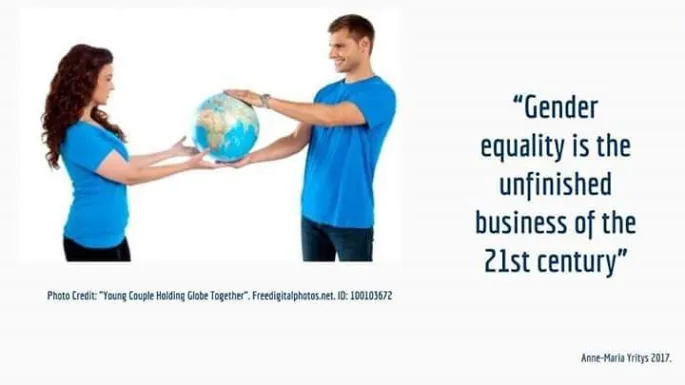
Equality (gender equality) truly is the unfinished business of the 21st century. Abolishing all kinds of discrimination in our societies is a responsibility of everyone, regardless of gender, economic, political, or social status. The best way of ensuring equality is to start living it, and asking ourselves what each one of as can do to contribute to an equal society where all individuals, regardless of any external attributes, can live and thrive without any discrimination.

Connect with me on Twitter @annemariayritys. For climate/environment-related posts only @GCCThinkActTank. Subscribe to Leading With Passion to receive my latest posts.


Take a step further to create YOUR online business. Learn more about the many benefits of how to create a beautiful website with WordPress.com and how to monetize your blog/website: 


WordPress.com – Create A Beautiful Website

Jetpack – The ideal way to experience WordPress – Code-free Customization

WooCommerce – The most customizable eCommerce platform for building your online business
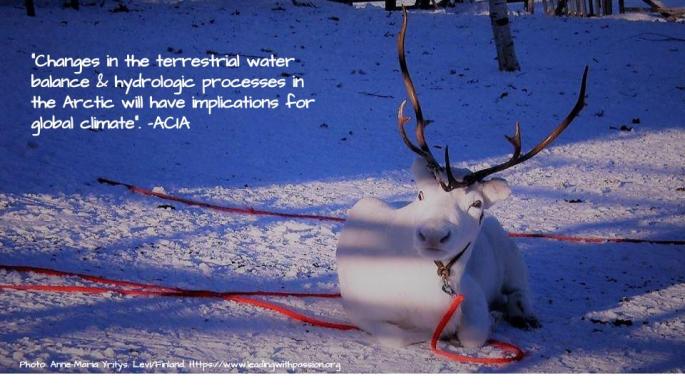
Changes in Water Balance in The Arctic To Have Implications For Global Climate

Arctic (45).jpg

The Arctic region (North Pole), which is the second largest desert in the world after Antarctica (the South Pole), is home to some of our world´s largest fresh water resources. ACIA (Arctic Climate Impact Assessment) Chapter 6, Cryosphere and Hydrology (pp. 183-242), discusses changes, development and findings in sea ice, snow cover, glaciers and ice sheets, permafrost, river and lake ice, freshwater discharge, sea-level rise and coastal stability in the Arctic region, identifying critical research needs.

According to ACIA, observational data reveals that sea-ice coverage has decreased by up to 10 % in the past decades, with the largest impact during Arctic summer months. The decline also applies to multi-year ice, the sea ice thickness, and snow covers, while river discharges have expanded, permafrost temperatures have risen, and glaciers are losing significant proportions of mass, especially in Alaska where glacier retreat has been remarkably high since the 1990´s. Model projections carried out by ACIA experts indicate that these developments will continue throughout the 21st century, whereby sea levels are projected to rise due to a combination of many factors leading to climate change and warming in the Arctic region. Furthermore, ACIA reveals that the desolation of arctic glaciers and the Greenland Ice Sheet will impact sea level rise with several centimeters during this century.

IPCC (Intergovernmental Panel on Climate Change, 2001), has reported that global mean sea levels have risen by 120 meters in the past 20.000 years. Despite of stabilization of greenhouse gas emissions, sea levels will continue to rise for centuries to come. (IPCC, 2013). Moreover, (IPCC, 2013), in the past century glacier melting and ocean thermal expansion have been the main contributors to mean sea levels rising on a global scale. IPCC projects sea level rise to have significant regional patterns now and in distant future. Local sea levels may differ significantly from the global average depending for instance upon changing ocean currents leading to amplification of warming ocean water and altering surface winds.

Learn more by watching EDU-ARCTIC´s video “Mass balance of glaciers”:

Connect with me on Twitter @annemariayritys. For climate/environment-related posts only @GCCThinkActTank. Subscribe to Leading With Passion to receive my latest posts.


Take a step further to create YOUR online business. Learn more about the many benefits of how to create a beautiful website with WordPress.com and how to monetize your blog/website: 


WordPress.com – Create A Beautiful Website

Jetpack – The ideal way to experience WordPress – Code-free Customization

WooCommerce – The most customizable eCommerce platform for building your online business
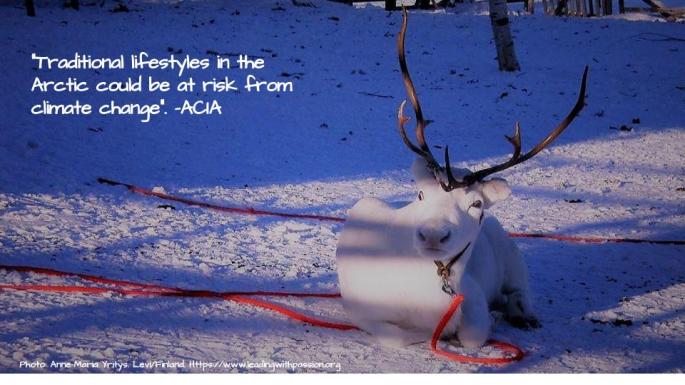
Traditional Lifestyles in The Arctic At Risk From Climate Change

Arctic (46).jpg

With a melting Arctic, traditional lifestyles of indigenous population in the region are at risk of suffering, or completely disappearing. While yet home to millions of people, the Arctic region is one of the most scarcely populated places upon Earth. In fact, despite of its rugged vegetation and being classified as the second largest desert in the world after Antarctica, the Arctic region is home to some of our world´s largest fresh water resources. (The USGS Water Science School). This may come as a surprise to many who thought that Sahara would be the largest desert in the world. (World Atlas – 10 Largest Deserts In The World).

Despite of its aridity, the indigenous people in the Arctic region have grown their cultures and traditions for thousands of years. Hunting, fishing, and herding of for instance reindeers has been part of the way of life of the indigenous populations, e.g. Inuits and Sàmis since they first arrived in the Arctic region. These traditions are now at a risk of diminishing, or even disappearing due to climate change, which alters the environment and weather (patterns) for both the human beings, fauna and flora in the Arctic region.

With caribous and reindeers being domesticated animals in the Arctic regions, the population of these is not currently directly at risk. However, many wild animals such as polar bears and seals could be at danger with the Arctic sea ice extent decreasing, and soon even completely disappearing during Arctic summer months near the North Pole. Darwinists may say “it is not the strongest of the species that survive, but those most adaptive to change”. This may still today be relevant, but Charles Darwin was an evolutionary scientist who lived in the 19th Century, and was lucky enough not to be obliged to witness what is happening in our world today, unless, of course, he is turning in his grave due to current world events.

Learn more about by watching Audiobook Channel´s video “Darwin and Theory of Evolution Documentary”:

Connect with me on Twitter @annemariayritys. For climate/environment-related posts only @GCCThinkActTank. Subscribe to Leading With Passion to receive my latest posts.


Take a step further to create YOUR online business. Learn more about the many benefits of how to create a beautiful website with WordPress.com and how to monetize your blog/website: 


WordPress.com – Create A Beautiful Website

Jetpack – The ideal way to experience WordPress – Code-free Customization

WooCommerce – The most customizable eCommerce platform for building your online business
Anne-Maria Yritys 2017.

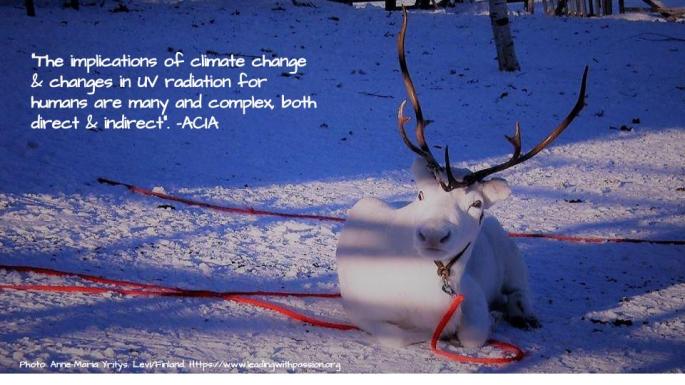
Climate Change Impacts Are Many And Complex (in the Arctic)

Arctic (44).jpg

With a rather quickly changing climate in the Arctic region, whereby the region´s climate has warmed more rapidly than anywhere else on Earth in the past three decades, can anyone keep pace with what is taking place? According to many scientists, researchers and universities, we have now less than a decade to bring down global temperatures to a safe level. If not, we could be heading towards a climate disaster, affecting all life on our planet.

Many climate change skeptics refuse to believe what is happening. Cynics state that it is too late to do anything, that we are already headed towards an unstoppable disaster. Various, quite recent, forecasts are already becoming factual, with extreme weather events becoming stronger and more frequent, sea levels rising, extreme droughts in some areas around our world while others have increasingly much rainfall and floods. Climate change is real, and most of the past century´s climate change is anthropogenic. This has been realized by majority of world population, most of whom take action in completely new, creative ways to prevent further human damage to our climate and environment.

Completely new innovations are making way for a sustainable future, in all sectors. With the energy sector being the most important in terms of combating anthropogenic climate change, the energy sector is now being transformed into renewable sources of energy. Renewable sources of energy are defined as fossil-free energy sources, excluding the usage of coal, gas and oil.

It is highly questionable whether for instance hydropower and nuclear power can be defined as environmentally friendly, or sustainable. For now, most of the world seems yet to depend upon both of these energy sources. What the energy market will be in twenty years from now is completely up to ourselves, our efforts as societies, governments and legislative actions around the world. Many countries are heading towards 100 % renewable energy from non-nuclear sources, such as wind and solar energy.

Agricultural and farming practices are the second largest emitter of climate changing greenhouse gas emissions worldwide. The food and agriculture sector has no other option than to transform, either through force of nature or by starting to implement sustainable changes into the industry before it is no longer a choice, but a necessity. Many people have since long made an individual choice of becoming vegan, which means voluntarily giving up the consumption of any animal products (dairy products, eggs, meat). Others decrease their consumption of meat without going completely vegetarian.

According to The Vegan Society, veganism is protected as a human right. In Britain alone, as estimated by The Vegan Society, the amount of vegans in 2016 rose up to more than half a million of total British population. Rise of The Vegan, on the other hand, reports that veganism has grown with 500 % in the United States since 2014, with six per cent of United States citizens now being vegan. BBC Future has reported that if the whole world population would eliminate red meat from their diets, food industry-related greenhouse gas emissions would decline with 60 %. If our whole world population went vegan, the amount of emissions would drop by 70 %. These are huge numbers, especially when many people around the world are unaware of how much the agriculture and food sectors contribute to releases in greenhouse gas emissions. While for now no one can be forced to become either vegetarian or vegan, we can all decide to decrease the amount of meat we consume by incorporating vegetarian/vegan days into our personal lives on a regular basis.

Learn more by watching “The Hidden Impacts of Climate Change”, published by VICE News on December 2nd, 2015:


Connect with me on Twitter @annemariayritys. For climate/environment-related posts only @GCCThinkActTank. Subscribe to Leading With Passion to receive my latest posts.


Take a step further to create YOUR online business. Learn more about the many benefits of how to create a beautiful website with WordPress.com and how to monetize your blog/website: 


WordPress.com – Create A Beautiful Website

Jetpack – The ideal way to experience WordPress – Code-free Customization

WooCommerce – The most customizable eCommerce platform for building your online business
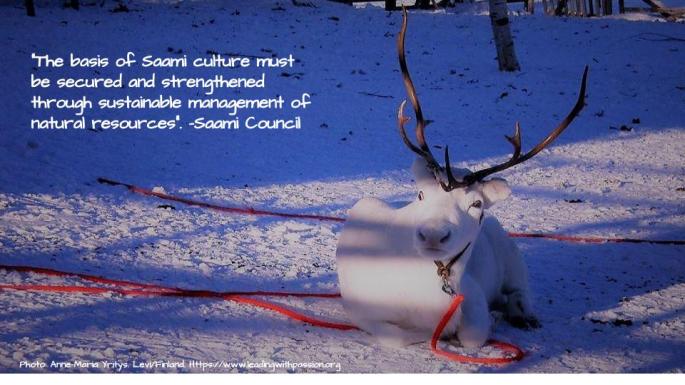
Saami Culture Must Be Secured Through Sustainable Management in the Arctic

Arctic (43)

The Saami (Sámi), one of the world´s many indigenous populations, live in the Sápmi region, known in English as Lapland, in Northern Europe (Finland, Sweden, Norway and Russia). The total Sámi population is today around two million (2.000.000). In the Nordic countries, the Sámi population have their own parliaments. The Saami Council, a non-governmental umbrella organization, is based on Saami organizations. (SÁMIRÁDDI).

Although not acknowledged as a national language e.g. in Finland, the Saami population have the right to self-determination, including the right to determine their own economic and social development. (Saami Council). How can this be secured in (a) geographical region(s) belonging to various states, with a changing climate, and with a legislation that does not necessarily take into consideration the cultural heritage and old traditions of the Saami population. This is a question concerning Saami ´s in Finland and Norway in terms of a new restrictive legislation concerning fishing in Tenojoki (river Tana), expected to enter into force if and when the Finnish Parliament accepts it. According to YLE reporting about this new bilateral agreement, it could be a violation of the Saami people´s human rights. As a permanent participant in the Arctic Council, the Saami Council certainly has a strong foothold in the Arctic region, and in questions concerning the Arctic region.

Learn more about life in the Arctic in a changing climate by watching Thin Ice´s video “The Changing Arctic – Life in the Arctic – Sami view”:


Connect with me on Twitter @annemariayritys. For climate/environment-related posts only @GCCThinkActTank. Subscribe to Leading With Passion to receive my latest posts.


Take a step further to create YOUR online business. Learn more about the many benefits of how to create a beautiful website with WordPress.com and how to monetize your blog/website: 


WordPress.com – Create A Beautiful Website

Jetpack – The ideal way to experience WordPress – Code-free Customization

WooCommerce – The most customizable eCommerce platform for building your online business
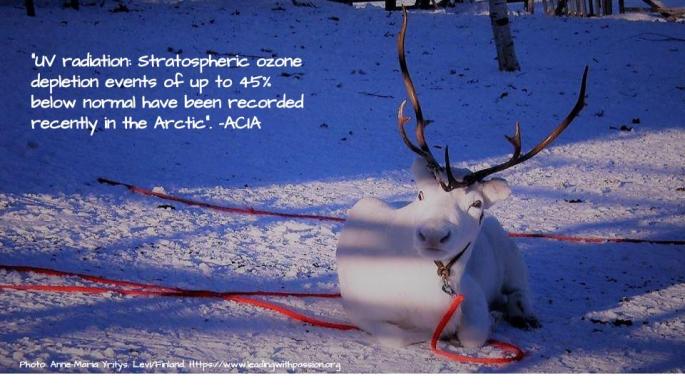
Stratospheric Ozone Depletion Up to 45% Below Normal in the Arctic

Arctic (42).jpg

According to ACIA (Arctic Climate Impact Assessment), a scientific research report first published in 2004, stratospheric ozone depletion of up to 45 % (per cent) below normal have been recorded in the Arctic region. To gain further insight, read one of my older posts UV Radiation Particularly Intense in The Arctic.

What on Earth is stratospheric ozone depletion? Stratospheric ozone depletion is defined as the decrease and/or disappearance of the stratospheric ozone layer which is a natural gas layer surrounding Earth´s atmosphere, protecting Earth from harmful solar UV radiation. The ozone layer is situated between approximately 15 and 30 kilometers from Earth´s surface. According to the WHO, the release of harmful CFC´s and other halocarbons into Earth´s atmosphere in the past decades leads to increased amounts of skin cancer.

For instance cosmic radiation is more powerful in space, and with a dysfunctional/ damaged stratospheric ozone layer cosmic radiation can more easily reach Earth. This is why e.g. flight personnel have log books where their amount of exposure to cosmic radiation is being measured and monitored. Stewardesses have, for example, a higher risk than other women of breast cancer, one reason why being a stewardess is one of the unhealthiest professions on Earth. An increased risk of cancer of course affects all flight personnel.

A damaged ozone layer takes several decades to “repair”, if even possible. Holes and complete disappearance of the ozone layer poses many risks to Earth and all life on this planet, from an increased amount of cancer to changes in Earth´s climate, especially in Earth´s most vulnerable regions: the North Pole (Arctic region) and South Pole (Antarctica). Strong, harmful UV rays damage not only human beings, but the environment (flora and fauna) everywhere.

Learn more about cosmic rays by watching SpaceRip´s video “NASA Telescope Discovers the Origin of Cosmic Rays”:


Connect with me on Twitter @annemariayritys. For climate/environment-related posts only @GCCThinkActTank. Subscribe to Leading With Passion to receive my latest posts.


Take a step further to create YOUR online business. Learn more about the many benefits of how to create a beautiful website with WordPress.com and how to monetize your blog/website: 


WordPress.com – Create A Beautiful Website

Jetpack – The ideal way to experience WordPress – Code-free Customization

WooCommerce – The most customizable eCommerce platform for building your online business