What Contributes to Ocean Acidification?

Arctic (10)

Ocean acidification is a serious threat to our planet and our marine ecosystems. The term ocean acidification signifies changes in the ocean´s natural pH balance, with pH in chemistry referring to the acidity and/or alkalinity of a solution on a logarithmic scale where seven (7) is neutral. The lower the pH of the solution, the higher the acidity and the higher the pH, the lower the acidity. pH is also a measure of the hydrogen ion concentration of a solution. (Academic Brooklyn).

Lower pH levels have also been measured in soils around the world, meaning that e.g. farming soils have in many places become more acidic due to a number of reasons, including poor soil management. pH can and is also measured in us human beings: some people even exercise alkaline diets with the thought that our bodies are healthier the more pH-balanced they are. Thus, eating and drinking habits that lead to our bodies becoming more acidic are thought as of being responsible for many health problems. A healthy human being has, on the average, a body pH of 7.4.

Since healthy and balanced pH levels are important for everything living on our planet, including ourselves, we can only guess what the consequences are when a normal pH becomes imbalanced: even small variations in a healthy pH can lead to significant changes in health, not only in us human beings but also in our soils and in our marine environments. Therefore, imbalances in our ocean´s pH levels and ocean acidification should be taken seriously.

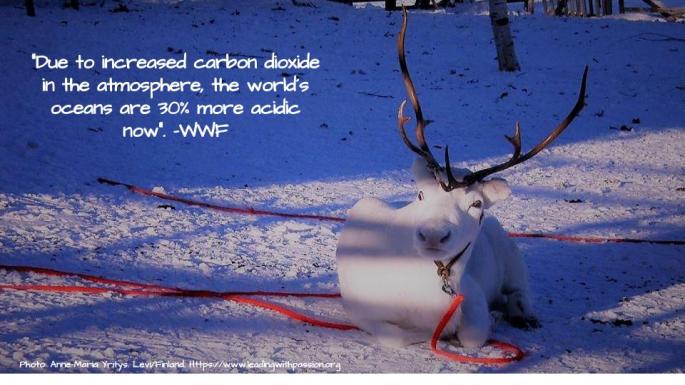
The main cause of ocean acidification as per today is our oceans intake of carbon dioxide. All human activities on the planet release greenhouse gases into our atmosphere, with the amount of CO2 in our atmosphere being higher than ever before in human history. Up to 40% of all greenhouse gases in Earth´s atmosphere are being absorbed by our oceans, with e.g corals acting like trees in forests: corals in our oceans absorb toxins and pollution in the same way as our trees in our forests. Needless to say, this leads not only to a collapse in our coral ecosystems, but an immense amount of greenhouse gases in our marine environments that become more and more acidic. With the Arctic region warming, it releases a significant amount of both CO2 and methane (a significantly more powerful greenhouse gas than carbon dioxide), which leads to increased acidification all over our planet, destroying our world´s natural (pH) balance and making everything around us more acidic.

Learn more about ocean acidification by watching randomSFstuff´s video “Ocean Acidification Explained”:


Connect with me on Twitter @annemariayritys. For climate/environment-related posts only @GCCThinkActTank. Subscribe to Leading With Passion to receive my latest posts.

Take a step further to create YOUR online business. Learn more about the many benefits of how to create a beautiful website with WordPress.com and how to monetize your blog/website:

WordPress.com – Create A Beautiful Website

Jetpack – The ideal way to experience WordPress – Code-free Customization

WooCommerce – The most customizable eCommerce platform for building your online business

Why is The Gulf Stream About to Halt?

Arctic (9)

The Gulf Stream is a strong current in the Atlantic ocean, starting in the Gulf of Mexico and leading all the way to Northern Europe, affecting the climate and weather conditions, and bringing for example warmer weather to Northern Europe by affecting the region´s atmosphere. Learn more about the Gulf Stream e.g. at LiveScience.

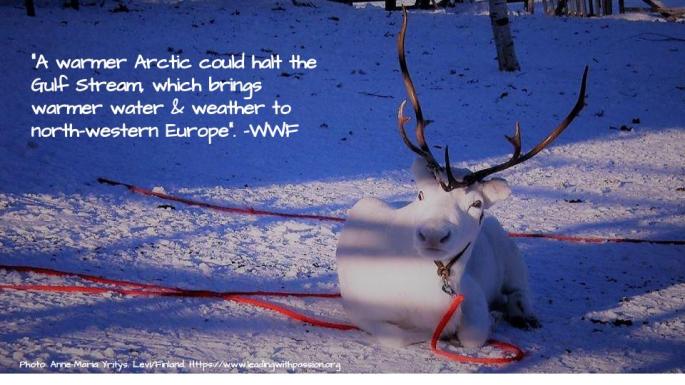
When greenhouse gases warm our oceans, this affects everything in our marine ecosystem. While the melting Arctic region, including glaciers and the Arctic Sea in general becoming ice free (with a current prognosis during summer months each year), affects the world´s climate by warming it, changes in the Gulf Stream could lead to a collapse in temperatures in Europe. According to some studies, at least parts of Europe could, instead of warming, become freezing cold, if and when the Gulf Stream halts and stops bringing warm weather to Europe.

While some speak about global warming, the correct term is in fact climate change. Even more precisely, anthropogenic climate change, something caused upon our planet solely and purely by us human beings and our many environmentally damaging activities, including the burning of fossil fuels and releasing ever more greenhouse gases into our planet´s fragile atmosphere. Is our planet warming or freezing? What ever is taking place, these changes in our climate(s) around the world are quite significant.

Learn more about the Gulf Stream through Kurzgesagt – In A Nutshell´s “The Gulf Stream Explained”:


Connect with me on Twitter @annemariayritys. For climate/environment-related posts only @GCCThinkActTank. Subscribe to Leading With Passion to receive my latest posts.

Take a step further to create YOUR online business. Learn more about the many benefits of how to create a beautiful website with WordPress.com and how to monetize your blog/website:

WordPress.com – Create A Beautiful Website

Jetpack – The ideal way to experience WordPress – Code-free Customization

WooCommerce – The most customizable eCommerce platform for building your online business
Arctic Fisheries About to Disappear

Arctic (8)

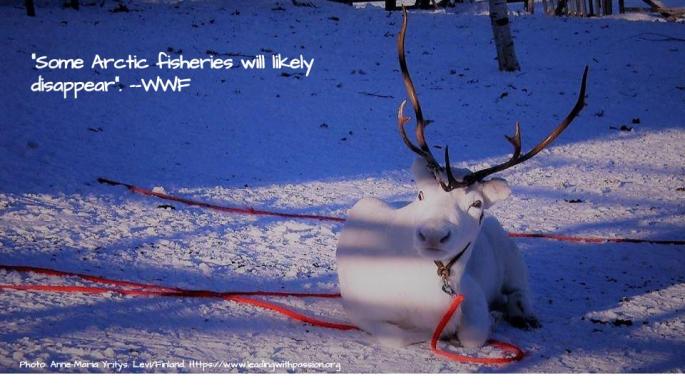
Why are Arctic fisheries under threat and about to disappear? Or, should we rather ask, why are so many arctic (marine) species under threat? The likelihood of Arctic fisheries disappearing increases when fishing is no longer possible and/or profitable. When the Arctic marine environment changes due to climate warming, a vast majority of Arctic marine species, including fish and algae, are severely threatened. Over-fishing is a problem in itself, but to thrive and to survive, all living beings in the Arctic waters need ideal conditions, including water temperature. When the ocean conditions change and become damaged through various human-caused activities, this naturally has an impact upon all life under water.

Human-caused threats to fishing and marine life in the Arctic region include climate change and warming overall, causing the natural environment of these species to change so drastically that some of them may complete lose their habitat. Other species may migrate due to climate change. There are already examples of this, e.g. tuna fish migrating further into the west in the Atlantic ocean, away from the eastern coastline in the United States. Ocean acidification, the increase of acidity disrupting our ocean´s natural pH level, is another major problem for all marine life. How will the release of additional greenhouse gases, carbon dioxide and methane, affect life underwater in the Arctic? Taken into consideration that these gases are harmful to all life upon Earth, the must pose major risks and lead to severe consequences in the sea/ocean ecosystem.

Greenpeace, WWF, ScienceDaily and Barents Observer are among useful organizations for learning more about climate change and its effects upon our environment, flora and fauna.

Learn more about the threats to marine life and fishing in the Arctic region through Free Documentary´s “Ice Race – Exploitation – THE END of Fishing?” (Full Documentary):


Connect with me on Twitter @annemariayritys. For climate/environment-related posts only @GCCThinkActTank. Subscribe to Leading With Passion to receive my latest posts.

Take a step further to create YOUR online business. Learn more about the many benefits of how to create a beautiful website with WordPress.com and how to monetize your blog/website:

WordPress.com – Create A Beautiful Website

Jetpack – The ideal way to experience WordPress – Code-free Customization

WooCommerce – The most customizable eCommerce platform for building your online business
How Do Temperature Shifts Impact the Climate and Environment (in The Arctic)?

Arctic (7)

I am neither a meteorologist nor a geologist, but I know from personal experience, media and research that changing weather patterns and temperature fluctuations are common in most places on Earth. Especially in the Arctic region, where changes/differences in temperatures may vary very quickly, from e.g. -20 degrees Celsius one day and +5 degrees Celsius the next day. This is common e.g. in whole Finland.

My knowledge about the importance of micro- and macro climates also goes back to my oenology/wine studies, whereby e.g. vineyards in the same region are affected by a number of things, such as compass point, soil composition, hours of sunlight, rainfall, humidity, and overall growth conditions. In fact, regardless of how favorable a micro climate is, and regardless of how knowledgeable a winemaker is, e.g. viticulture and wine making are largely affected by climate and weather. Two vineyards in the same region may have huge differences e.g. in quality, depending upon how favorable the vineyard´s micro climate is, in addition to the expertise of the winemaker. This only as an example of how sensitive our climates are to variations, especially in terms of agriculture, farming and e.g. oenology.

Now back to the Arctic region. If and when even large temperature variations in the Arctic region are commonplace, why should we be concerned about shifting temperatures in the Arctic region?

The problem with the changing temperatures in the Arctic region today is that the temperature fluctuations and variations are no longer what they used to be: not only are there variations in the temperatures overall, but the whole region in general is warming at an alarming rate: so fast that the sea ice extent in the Arctic sea is disappearing during summer months, leaving the ocean surface blank and wide open, allowing for the shallow Arctic sea to absorb the sun´s rays in a way that warms the region faster and faster all the time. In addition to that, the constant climate change and warming in the Arctic is causing permafrost thawing. When this happens, dangerous greenhouse gases, especially methane, are being released into Earth´s atmosphere.

Our world is already combating greenhouse gas emissions and working towards lowering the greenhouse gas emission rates in our atmosphere, but at the current rate we are not fighting greenhouse gas emissions fast enough. Now, greenhouse gas emissions are at a higher level than ever before. If this development continues, we are facing completely new dangers and risks, some of which climate scientists may already be aware of, but what is not yet commonly being discussed on media.

The dangers of climate change and the release of greenhouse gases are a real risk for all of us, which is why everyone must take action to tackle this, not in future, but starting immediately. Watch ClimateCentral´s video “Arctic Changes: The Big Picture” to learn more:


Connect with me on Twitter @annemariayritys. For climate/environment-related posts only @GCCThinkActTank. Subscribe to Leading With Passion to receive my latest posts.

Take a step further to create YOUR online business. Learn more about the many benefits of how to create a beautiful website with WordPress.com and how to monetize your blog/website:

WordPress.com – Create A Beautiful Website

Jetpack – The ideal way to experience WordPress – Code-free Customization

WooCommerce – The most customizable eCommerce platform for building your online business
Why Does Arctic Ice Extent Decrease?

Arctic (6)

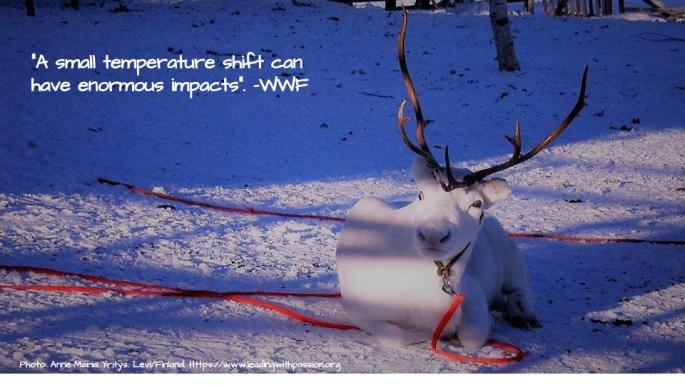
Glaciers are melting, ice and snow sheets are melting, and the Arctic sea ice is melting at a rapid rate, so fast that it is estimated to disappear completely during summer months within only a few years, or by 2040. Why is this happening? According to some researchers and scientists, the Earth´s weather is being changed and manipulated on purpose through geoengineering. (GeoEngineering Watch). GeoEngineering Watch reports that for example chemical ice nucleation is an important tool for geoengineers, with geoengineered snow storms being created by experimenting human beings (geoengineers).

Whether caused by geoengineering human beings or not, it is a fact that glaciers, ice sheets, and Arctic sea ice are melting rapidly, affecting not only the climate in the large Arctic region, but all over our planet. When the ice and snow covers disappear in the Arctic, it causes permafrost to thaw and climate change accelerating faster than ever.

This is caused by the albedo effect, whereby the black ocean/sea surface absorbs increasingly much of the sun rays´ heat, unable to reflect as much of its energy and heat back into the atmosphere in comparison with thick ice and snow covered surfaces. This constantly warming climate in the Arctic region thus accelerates and accelerates, causing even more of the ice and snow covers to melt, warming the region and the whole world to an extent that has never earlier been seen in history. And, this is all anthropogenic, i.e. caused by us human beings.

How much worse is this made by and through geoengineering? This is a topic not yet much discussed. What is discussed openly today is the anthropogenic climate change caused by e.g. the release of greenhouse gases and other toxins into Earth´s atmosphere, including CO2. When climate change continues and intensifies in the Arctic region, it also causes more and more carbon dioxide and methane being released into our global atmosphere, the consequences of which lead to the greenhouse effect on our planet to become even worse.

Learn more about the Arctic sea ice decrease by watching NASA Goddard´s video “Older Arctic Sea Ice Disappearing”:


Connect with me on Twitter @annemariayritys. For climate/environment-related posts only @GCCThinkActTank. Subscribe to Leading With Passion to receive my latest posts.

Take a step further to create YOUR online business. Learn more about the many benefits of how to create a beautiful website with WordPress.com and how to monetize your blog/website:

WordPress.com – Create A Beautiful Website

Jetpack – The ideal way to experience WordPress – Code-free Customization

WooCommerce – The most customizable eCommerce platform for building your online business
Why Are Sea Levels Rising Worldwide?

Arctic (5)

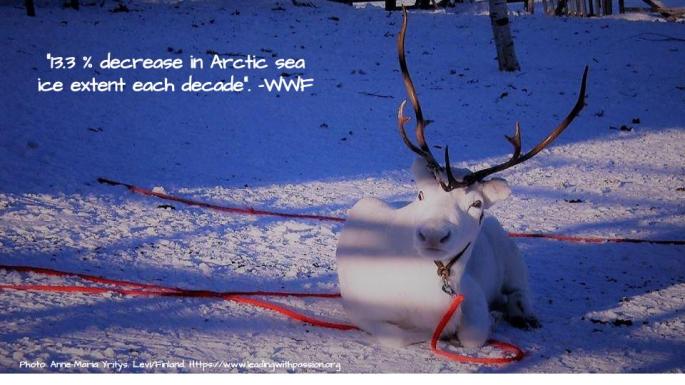
As scientific research evidence upon our Earth reveals, it has been estimated that sea and ocean levels will continue to rise during the 21st century. Some calculations suggest that sea levels around the world would rise by at least one (1) meter by 2100. Why is this happening?

According to NOAA National Ocean Service, sea levels are annually rising due to two reasons: 1) the accelerated and increased melting of glaciers and ice sheets (e.g. in the Arctic region); 2) the warming oceans, a consequence of our oceans absorbing most of the atmospheric heat caused by us human beings e.g. in the form of greenhouse gas emissions.

Why is this to be taken very seriously? Why should we care if and when our ocean and sea levels rise? Sea level rise should be taken very seriously. Here are some of the main reasons listed:

  • When ice sheets and glaciers melt, it causes not only the sea levels to rise, but affects the whole world´s climate, varying from one geographic region to another. This includes more rainfall in some regions, whereby it affects the growing of crops. This has already been identified in many countries which experiment with and invest in completely new ways of producing food, such as vertical farming. In short, vertical farming is a future way of growing certain food products, if and when these can no longer be farmed through traditional agriculture.
  • When ice sheets and glaciers melt, with our oceans and seas becoming warmer, extreme weather temperatures are becoming increasingly much common. Drought in extreme heat waves are examples, but also floods and hurricanes that are much more powerful than previously. Unless well-prepared, regions affected by these extreme weather events will suffer immense, both non-material and material consequences, as we have seen many times only in 2017 e.g. in Bangladesh, in the United States, and Puerto Rico. These only being some of the examples.
  • Perhaps one of the worst reasons we should take rising sea levels very seriously is when considering all states that are low-lying, especially low-lying island nations and low-lying coastal cities. If sea levels continue to rise at the current rate, without anything being done to a) prevent it from rising further b) protect the infrastructure and topography of these coastal cities, nations, and island nations, the consequences of sea level rise hitting these regions will be detrimental. If one geographical region becomes inhabitable due to sea level rise, all the people affected will be obliged to find new homes. This is why it is also estimated that the number of climate change refugees will grow significantly already by 2050.


As an example, learn what our world would look like if ALL the ice melted, a video published by BI Science:


Connect with me on Twitter @annemariayritys. For climate/environment-related posts only @GCCThinkActTank. Subscribe to Leading With Passion to receive my latest posts.

Take a step further to create YOUR online business. Learn more about the many benefits of how to create a beautiful website with WordPress.com and how to monetize your blog/website:

WordPress.com – Create A Beautiful Website

Jetpack – The ideal way to experience WordPress – Code-free Customization

WooCommerce – The most customizable eCommerce platform for building your online business
What Does Thawing Permafrost Signify?

Arctic111

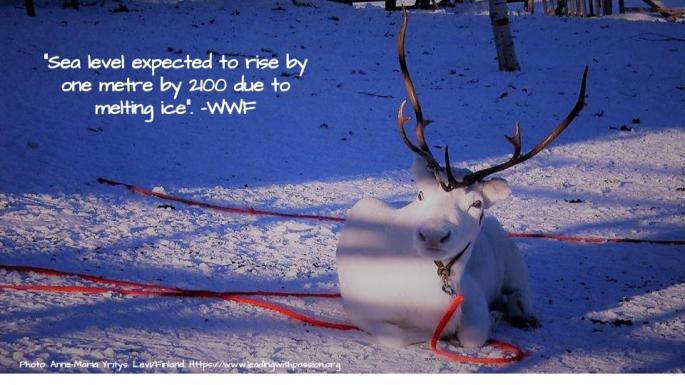
Anthropogenic climate change in the Arctic region includes thawing permafrost. What does that mean? Permafrost is ground with a temperature below the pressure melting point for a minimum of two years in a row. (The Norwegian Polar Institute – The Arctic System). A significant amount of journal articles about permafrost can be found e.g. at NSIDC – National Snow & Ice Data Center. Again, according to for example The Arctic System, the thickness of permafrost varies from 100 up to 500 meters in depth. During summer months in the Arctic region, the permafrost naturally thaws up to one meter, providing a basis for flora and fauna to live in.

As reported by Phys.org – Defrosting the world´s freezer – thawing permafrost, the extent of how permafrost is now thawing with the fast warming of the Arctic region, is much larger than ever before. It is estimated that the Arctic could lose up to 70 % of its permafrost within the next 100 years, moving the southern boundary for permafrost hundreds of kilometers further south, releasing huge amounts of greenhouse gases methane and carbon dioxide into our atmosphere – the consequences of which are yet unknown.

To learn more about thawing permafrost, watch Climate State´s video Climate Change in the Arctic and Model Projections (2017):


Connect with me on Twitter @annemariayritys. For climate/environment-related posts only @GCCThinkActTank. Subscribe to Leading With Passion to receive my latest posts.

Take a step further to create YOUR online business. Learn more about the many benefits of how to create a beautiful website with WordPress.com and how to monetize your blog/website:

WordPress.com – Create A Beautiful Website

Jetpack – The ideal way to experience WordPress – Code-free Customization

WooCommerce – The most customizable eCommerce platform for building your online business
What is The Albedo Effect?

Arctic (4)

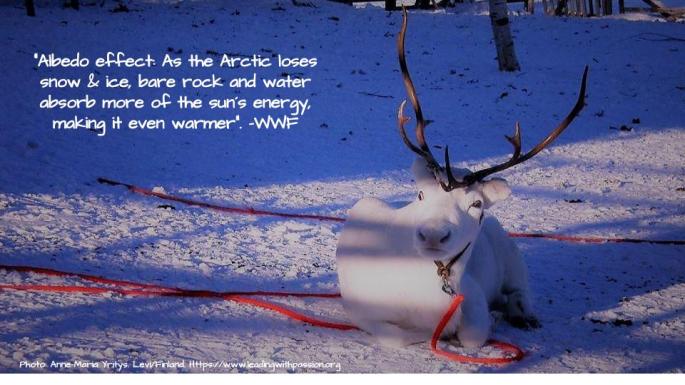
To understand climate change (in the Arctic region) better, we also have to understand the scientific terminology related to anthropogenic climate change. According to a number of sources, including the Norwegian Polar Institute, the albedo effect refers to how different kinds of surfaces are able to reflect the sun´s rays, i.e. the heat from the sun.

Why this is so important in the Arctic region, including the Arctic Ocean (sea) is because when ice/snow/permafrost covers melt, this is causing additional, accelerated warming in the Arctic region. This occurs since dark surfaces absorb more of the sun´s energy (low albedo) in comparison to light surfaces. When this happens increasingly much in the Arctic region, it causes even more rapid warming which in turn leads to climate change spreading faster from the Arctic region into the rest of the world. What the consequences of these changes will be, unless we manage to halt the warming on our planet (and, especially in the Arctic region), are yet unknown.

Learn more about the albedo effect by watching e.g. following video, published by KTVL News10 – The albedo effect and warming:


Connect with me on Twitter @annemariayritys. For climate/environment-related posts only @GCCThinkActTank. Subscribe to Leading With Passion to receive my latest posts.

Take a step further to create YOUR online business. Learn more about the many benefits of how to create a beautiful website with WordPress.com and how to monetize your blog/website:

WordPress.com – Create A Beautiful Website

Jetpack – The ideal way to experience WordPress – Code-free Customization

WooCommerce – The most customizable eCommerce platform for building your online business
Heavy Metals & POPs Concerning Pollutants in the Arctic Region

Arctic (49)

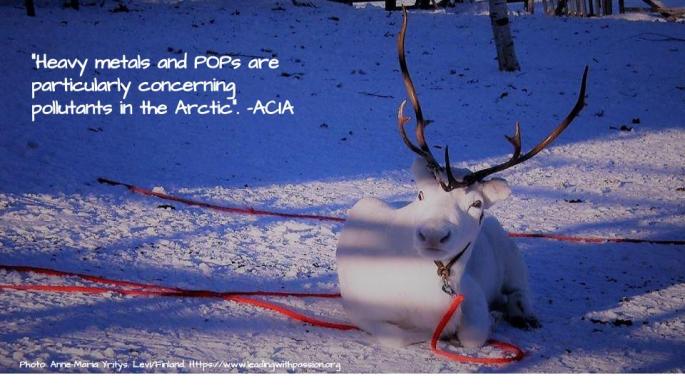
What causes environmental damage in the Arctic? According to ACIA (ACIA Scientific Report 2005, Cambridge University Press), heavy metals and POP´s are especially concerning pollutants in the Arctic region. Especially damaging heavy metals include in the Arctic region include mercury, cadmium and lead (AMAP 2002: Arctic Pollution Issues: A State of the Arctic Environment Report; McConnell* Joseph R. and Edwards Ross. PNAS 2008. vol. 105 no. 34 – Coal burning leaves toxic heavy metal legacy in the Arctic), sources of which were largely unknown until the 1980´s when modern measurements started. Today it is known that industrial activities, including coal burning, emit toxic heavy metals that travel through the atmosphere, ending up deposited in the polar regions (McConnell* Joseph R. and Edwards Ross. PNAS 2008. vol. 105 no. 34).

POP´s (Persistent Organic Pollutants) in the Arctic region, on the other hand, transported through the atmosphere through a number of ways, e.g. air and water, are toxic chemicals that pose severe risks to both human health and the environment worldwide. (The Arctic Institute 2016. Persistent Organic Pollutants in the Arctic – Infographic). Furthermore, according to the Arctic Institute, these POP´s (e.g. PCBs, DDT and dioxins) are especially dangerous due to their persistence and longevity in the environment, posing risks not only to our environment in general, but to the whole food chain. Most of the POP´s originate not from the Arctic but from industrial processes such as municipal and medical waste. (The Arctic Institute 2016. Persistent Organic Pollutants in the Arctic – Infographic).

Learn more about Heavy Metals in the Environment – NRES Seminar Series (Natural Resources and Environmental Sciences Secondary Major at Kansas State University):


Connect with me on Twitter @annemariayritys. For climate/environment-related posts only @GCCThinkActTank. Subscribe to Leading With Passion to receive my latest posts.

Take a step further to create YOUR online business. Learn more about the many benefits of how to create a beautiful website with WordPress.com and how to monetize your blog/website:

WordPress.com – Create A Beautiful Website

Jetpack – The ideal way to experience WordPress – Code-free Customization

WooCommerce – The most customizable eCommerce platform for building your online business
The Arctic Climate is Warming Dangerously Quickly

Arctic (2)

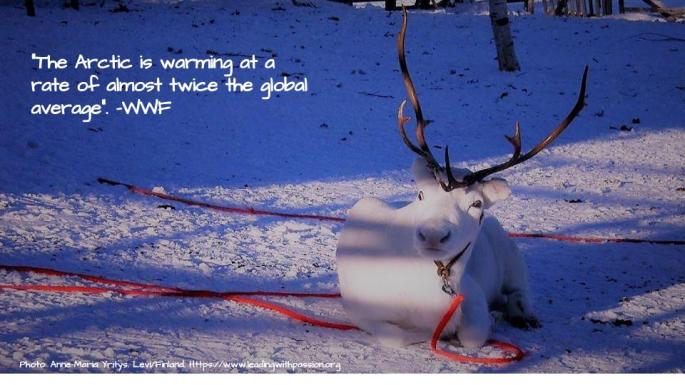
The Arctic climate is warming quickly, at least twice as fast as the climate in the rest of the world. Especially winters are becoming warmer, but the overall effect on the Arctic (and, global) environment is throughout the year. Temperature fluctuations are normal from year to year, however, research-based evidence proves that there are significant changes (i.e. warming) in the average temperatures in the Arctic region. Some may think that warming of the (Arctic) climate is a positive thing, but in reality, it is not.

Why is Arctic warming a major risk not only for the Arctic region, but for the whole world? The warming of the Arctic region poses several serious risks, including:

  • When the Greenland ice sheet melts, we lose majority of the Earth´s fresh water resources. In addition, sea levels rise and the Arctic (and, the whole world) warms at an even faster rate due to the sun´s rays and heat being absorbed increasingly powerfully by the (Arctic) ocean, which in turn ultimately leads to rising ocean temperatures. The overall rise in ocean temperature has been proven to cause stronger and more extreme hurricanes and other extreme weather events.
  • The warming of the Arctic and its oceans leads to risks for all flora and fauna in the Arctic region, including species that need the ice cover, such as polar bears. While being home to thousands of species, the Arctic species are under completely new threats due to the warming climate, loss of ice and snow sheets.
  • A major threat of Arctic warming includes the thawing permafrost, which currently covers an unknown amount of decayed plants and animals. When these come in contact with air (when the permafrost melts), the risks of diseases and greenhouse gases (especially methane) spreading increase manifold.


Watch Yorkshire Wildlife Park´s video “Polar Bears & Climate Change”:


Connect with me on Twitter @annemariayritys. For climate/environment-related posts only @GCCThinkActTank. Subscribe to Leading With Passion to receive my latest posts.

Take a step further to create YOUR online business. Learn more about the many benefits of how to create a beautiful website with WordPress.com and how to monetize your blog/website:

WordPress.com – Create A Beautiful Website

Jetpack – The ideal way to experience WordPress – Code-free Customization

WooCommerce – The most customizable eCommerce platform for building your online business