What Does Thawing Permafrost Signify?

Arctic111

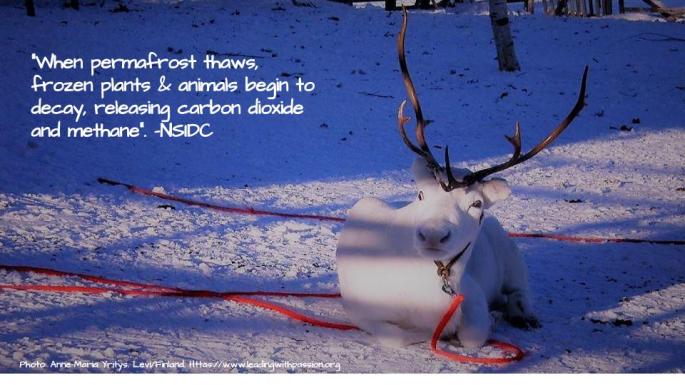
Anthropogenic climate change in the Arctic region includes thawing permafrost. What does that mean? Permafrost is ground with a temperature below the pressure melting point for a minimum of two years in a row. (The Norwegian Polar Institute – The Arctic System). A significant amount of journal articles about permafrost can be found e.g. at NSIDC – National Snow & Ice Data Center. Again, according to for example The Arctic System, the thickness of permafrost varies from 100 up to 500 meters in depth. During summer months in the Arctic region, the permafrost naturally thaws up to one meter, providing a basis for flora and fauna to live in.

As reported by Phys.org – Defrosting the world´s freezer – thawing permafrost, the extent of how permafrost is now thawing with the fast warming of the Arctic region, is much larger than ever before. It is estimated that the Arctic could lose up to 70 % of its permafrost within the next 100 years, moving the southern boundary for permafrost hundreds of kilometers further south, releasing huge amounts of greenhouse gases methane and carbon dioxide into our atmosphere – the consequences of which are yet unknown.

To learn more about thawing permafrost, watch Climate State´s video Climate Change in the Arctic and Model Projections (2017):


Connect with me on Twitter @annemariayritys. For climate/environment-related posts only @GCCThinkActTank. Subscribe to Leading With Passion to receive my latest posts.

Take a step further to create YOUR online business. Learn more about the many benefits of how to create a beautiful website with WordPress.com and how to monetize your blog/website:

WordPress.com – Create A Beautiful Website

Jetpack – The ideal way to experience WordPress – Code-free Customization

WooCommerce – The most customizable eCommerce platform for building your online business

What is The Albedo Effect?

Arctic (4)

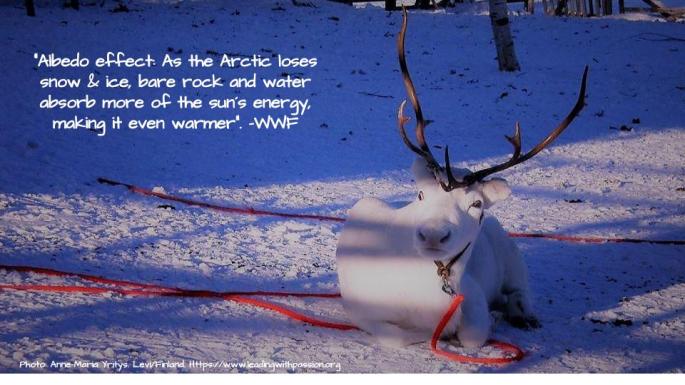
To understand climate change (in the Arctic region) better, we also have to understand the scientific terminology related to anthropogenic climate change. According to a number of sources, including the Norwegian Polar Institute, the albedo effect refers to how different kinds of surfaces are able to reflect the sun´s rays, i.e. the heat from the sun.

Why this is so important in the Arctic region, including the Arctic Ocean (sea) is because when ice/snow/permafrost covers melt, this is causing additional, accelerated warming in the Arctic region. This occurs since dark surfaces absorb more of the sun´s energy (low albedo) in comparison to light surfaces. When this happens increasingly much in the Arctic region, it causes even more rapid warming which in turn leads to climate change spreading faster from the Arctic region into the rest of the world. What the consequences of these changes will be, unless we manage to halt the warming on our planet (and, especially in the Arctic region), are yet unknown.

Learn more about the albedo effect by watching e.g. following video, published by KTVL News10 – The albedo effect and warming:


Connect with me on Twitter @annemariayritys. For climate/environment-related posts only @GCCThinkActTank. Subscribe to Leading With Passion to receive my latest posts.

Take a step further to create YOUR online business. Learn more about the many benefits of how to create a beautiful website with WordPress.com and how to monetize your blog/website:
WordPress.com – Create A Beautiful Website

Jetpack – The ideal way to experience WordPress – Code-free Customization

WooCommerce – The most customizable eCommerce platform for building your online business

Why We Must Protect The Arctic Region

Arctic

The Arctic region consists of: The Arctic Ocean (or, sea), adjoining seas, parts of Russia, parts of U.S.A., Northern Canada, Iceland, the Faroe islands and parts of Norway, Sweden and Finland. The Arctic Ocean, or often also named the Arctic Sea due to its size and junction to the Atlantic and the Pacific in the north. Of all the world´s oceans, it is the smallest and shallowest. See a map here: North Pole Arctic Map – World Atlas.

The whole Arctic region, including the previously mentioned sea and land areas, are home to millions of people and thousands of species, some of which already are under serious threat of extinction (due to climate change and warming), including polar bears, pacific walruses, and several seal species. (Center for Biological Diversity).

Previously covered 100% by thick sea ice throughout the whole year, the Arctic ocean has in the past decades warmed so much that it is now already partly open during summer months. It is estimated that the Arctic ocean will be completely ice free during summer months within a few years only, or the latest by 2040. Why is this a problem?

The problem with the Arctic ocean, and the Arctic region warming, include:

  • Arctic species, flora and fauna, suffering from the warming temperature, having to adjust to completely new circumstances.
  • When the Arctic region warms at least double as fast as the rest of the world, this has in/direct impacts upon our whole planet. When the Arctic ocean becomes open, it warms even faster and causes ocean currents in the whole world´s oceans to change, the (upcoming) impacts of which are yet mostly unknown.
  • The large land masses in Siberia, much of which is under permafrost, are thawing due to the climate warming. This includes many risks, such as heavy amounts of methane being released into our atmosphere, with methane being a powerful greenhouse gas that changes the Earth´s atmosphere.
  • The Arctic region is home to some of the Earth´s largest natural resources, such as oil and gas. Some countries are more than willing to exploit these resources, in addition to the fact that some countries see an open Arctic ocean as a means to save e.g. transportation costs from one country to another, without caring about the fragile Arctic ecosystem and the environmental damages caused by human activities.

Listen to artist and musician Ludovico Einaudi´s brave “Elegy for the Arctic” – Official Live (Greenpeace) and tune into the Arctic ocean´s atmosphere here:


Connect with me on Twitter @annemariayritys. For climate/environment-related posts only @GCCThinkActTank. Subscribe to Leading With Passion to receive my latest posts.

Take a step further to create YOUR online business. Learn more about the many benefits of how to create a beautiful website with WordPress.com and how to monetize your blog/website:

WordPress.com – Create A Beautiful Website

Jetpack – The ideal way to experience WordPress – Code-free Customization

WooCommerce – The most customizable eCommerce platform for building your online business

Why is the Melting of Arctic Sea Ice Dangerous?

Arctic (3)

According to research evidence, the fast melting of the Arctic ice sheet will soon lead to the Arctic ocean in the northern hemisphere being completely ice free during summer months. Why is this a problem, and what are the consequences of the Arctic ice sheets melting?

  • When ice sheets break and melt, it causes (hazardous) waves in the ocean
  • The melting of the Arctic ocean ice sheets influences and changes global weather patterns, and affects for example the jet stream, which in turn causes increasingly many extreme weather events such as stronger hurricanes, floods and droughts around the world. Some regions worldwide consequently suffer from more severe heatwaves while others become colder.
  • When the ice sheets melt, they are being replaced by thinner ice sheets that are very saline. The young, thin ice sheets also play a significant role in how carbon dioxide (CO2) moves through the system, with CO2 being one of the major problematic greenhouse gases that are warming our planet.
  • When snow fall on the young, thin ice sheets, this snow prevents the new, young ice sheets from growing thicker, resulting in the ice sheets becoming thinner each year.
  • The sea ice in the Arctic is as important to the region as trees are to (tropical) forests. The changes in the sea ice in the Arctic affects everything in its marine ecosystem.
  • Although the ice is decreasing in the region, it has become more hazardous. The faster the ice sheets move in the Arctic, the more dangerous they become.
  • When the north pole (and Arctic Ocean) loses its ice sheet, the ocean becomes open, losing its heat to the atmosphere (breaking down of the Polar Vortex).

(TEDx Talks. Seven surprising results from the reduction of Arctic Sea ice Cover/David Barber/TEDxUManitoba).

Watch YaleClimateConnections video “Arctic Sea Ice 2016” to learn more about the topic:


Connect with me on Twitter @annemariayritys. For climate/environment-related posts only @GCCThinkActTank. Subscribe to Leading With Passion to receive my latest posts.

Take a step further to create YOUR online business. Learn more about the many benefits of how to create a beautiful website with WordPress.com and how to monetize your blog/website:

WordPress.com – Create A Beautiful Website

Jetpack – The ideal way to experience WordPress – Code-free Customization

WooCommerce – The most customizable eCommerce platform for building your online business

Heavy Metals & POPs Concerning Pollutants in the Arctic Region

Arctic (49)

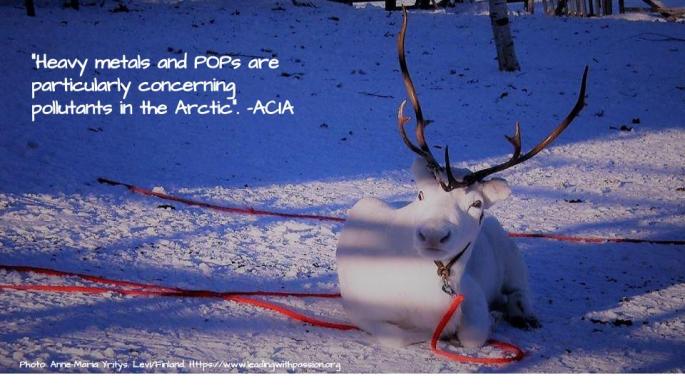
What causes environmental damage in the Arctic? According to ACIA (ACIA Scientific Report 2005, Cambridge University Press), heavy metals and POP´s are especially concerning pollutants in the Arctic region. Especially damaging heavy metals include in the Arctic region include mercury, cadmium and lead (AMAP 2002: Arctic Pollution Issues: A State of the Arctic Environment Report; McConnell* Joseph R. and Edwards Ross. PNAS 2008. vol. 105 no. 34 – Coal burning leaves toxic heavy metal legacy in the Arctic), sources of which were largely unknown until the 1980´s when modern measurements started. Today it is known that industrial activities, including coal burning, emit toxic heavy metals that travel through the atmosphere, ending up deposited in the polar regions (McConnell* Joseph R. and Edwards Ross. PNAS 2008. vol. 105 no. 34).

POP´s (Persistent Organic Pollutants) in the Arctic region, on the other hand, transported through the atmosphere through a number of ways, e.g. air and water, are toxic chemicals that pose severe risks to both human health and the environment worldwide. (The Arctic Institute 2016. Persistent Organic Pollutants in the Arctic – Infographic). Furthermore, according to the Arctic Institute, these POP´s (e.g. PCBs, DDT and dioxins) are especially dangerous due to their persistence and longevity in the environment, posing risks not only to our environment in general, but to the whole food chain. Most of the POP´s originate not from the Arctic but from industrial processes such as municipal and medical waste. (The Arctic Institute 2016. Persistent Organic Pollutants in the Arctic – Infographic).

Learn more about Heavy Metals in the Environment – NRES Seminar Series (Natural Resources and Environmental Sciences Secondary Major at Kansas State University):


Connect with me on Twitter @annemariayritys. For climate/environment-related posts only @GCCThinkActTank. Subscribe to Leading With Passion to receive my latest posts.

Take a step further to create YOUR online business. Learn more about the many benefits of how to create a beautiful website with WordPress.com and how to monetize your blog/website:
WordPress.com – Create A Beautiful Website

Jetpack – The ideal way to experience WordPress – Code-free Customization

WooCommerce – The most customizable eCommerce platform for building your online business

The Arctic Climate is Warming Dangerously Quickly

Arctic (2)

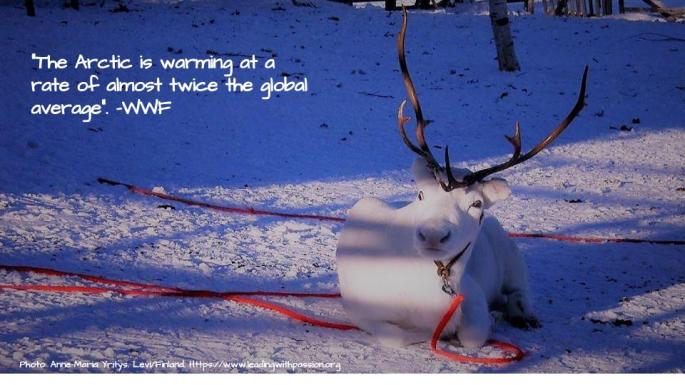
The Arctic climate is warming quickly, at least twice as fast as the climate in the rest of the world. Especially winters are becoming warmer, but the overall effect on the Arctic (and, global) environment is throughout the year. Temperature fluctuations are normal from year to year, however, research-based evidence proves that there are significant changes (i.e. warming) in the average temperatures in the Arctic region. Some may think that warming of the (Arctic) climate is a positive thing, but in reality, it is not.

Why is Arctic warming a major risk not only for the Arctic region, but for the whole world? The warming of the Arctic region poses several serious risks, including:

  • When the Greenland ice sheet melts, we lose majority of the Earth´s fresh water resources. In addition, sea levels rise and the Arctic (and, the whole world) warms at an even faster rate due to the sun´s rays and heat being absorbed increasingly powerfully by the (Arctic) ocean, which in turn ultimately leads to rising ocean temperatures. The overall rise in ocean temperature has been proven to cause stronger and more extreme hurricanes and other extreme weather events.
  • The warming of the Arctic and its oceans leads to risks for all flora and fauna in the Arctic region, including species that need the ice cover, such as polar bears. While being home to thousands of species, the Arctic species are under completely new threats due to the warming climate, loss of ice and snow sheets.
  • A major threat of Arctic warming includes the thawing permafrost, which currently covers an unknown amount of decayed plants and animals. When these come in contact with air (when the permafrost melts), the risks of diseases and greenhouse gases (especially methane) spreading increase manifold.


Watch Yorkshire Wildlife Park´s video “Polar Bears & Climate Change”:


Connect with me on Twitter @annemariayritys. For climate/environment-related posts only @GCCThinkActTank. Subscribe to Leading With Passion to receive my latest posts.

Take a step further to create YOUR online business. Learn more about the many benefits of how to create a beautiful website with WordPress.com and how to monetize your blog/website:
WordPress.com – Create A Beautiful Website

Jetpack – The ideal way to experience WordPress – Code-free Customization

WooCommerce – The most customizable eCommerce platform for building your online business

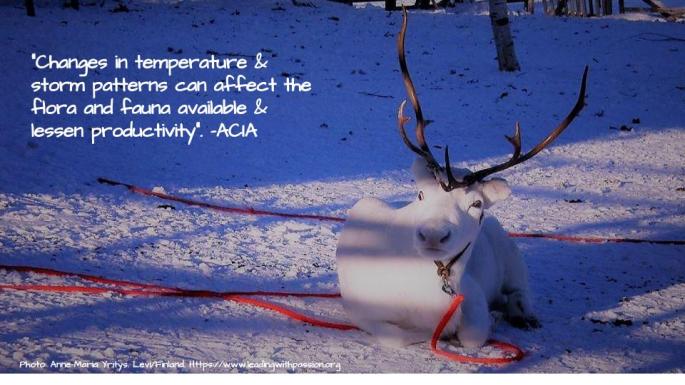
Changes In Temperature & Storm Patterns Affecting The Arctic Life

Arctic (48).jpg

The Arctic region, including the Arctic sea, adjoining seas, Northern Canada, parts of the U.S.A., parts of Russia, Finland, Sweden, Norway, The Faroe Islands, Iceland and Greenland, is warming at a rate much faster than the rest of our world, despite of the fact that according to geoscientists, we are currently living in an ice age. The Arctic warms at an alarming rate, with up to twice as fast as the rest of our planet.

In Celsius degrees, we are talking about an increased rate of at least several degrees Celsius within the past century, from the beginning of the industrialized era, with research evidence upon the fact that this warming has been caused by human activities only – mainly the burning of fossil fuels, releasing carbon dioxide and other harmful greenhouse gases into Earth´s atmosphere. By releasing these greenhouse gases into Earth´s atmosphere, us human beings have built an artificial greenhouse effect on our planet, causing Earth to warm at unhealthy rates, ultimately leading to disastrous risks that will affect all of humanity, and, our flora and fauna upon Earth.

The problem with the fast warming of the Arctic region is that majority of the world´s fresh water resources are melting in Greenland, into salty oceans that causes sea level rise. And, unnecessarily wasting our planet´s already scarce fresh water resources. Another problem, and major risk to all life on Earth, is the melting of the sea ice. Huge areas of sea ice has already melt away, causing the Arctic to become completely ice free during summer months in near future. When this happens, the ice free ocean surface in the Arctic absorbs increasingly much of the sun´s energy and heat, causing our planet to warm at an even faster rate.

Let alone the fact that when Arctic regions warm, permafrost thaws, exposing decayed plants and animals which release further greenhouse gases into our atmosphere – especially methane, which is at least 25 times more powerful as a greenhouse gas compared to carbon dioxide. And, the thawing, decayed animals pose another risk of setting free (yet unknown) diseases. Is this the future we want for our planet? A melting, warming Arctic that causes the rest of the world to suffer from its effects?

Watch Climate State´s video “Climate Change in the Arctic and Model Projections 2017”:


Connect with me on Twitter @annemariayritys. For climate/environment-related posts only @GCCThinkActTank. Subscribe to Leading With Passion to receive my latest posts.

Take a step further to create YOUR online business. Learn more about the many benefits of how to create a beautiful website with WordPress.com and how to monetize your blog/website:
WordPress.com – Create A Beautiful Website

Jetpack – The ideal way to experience WordPress – Code-free Customization

WooCommerce – The most customizable eCommerce platform for building your online business

What is Arctic Climate Change?

Arctic (1)

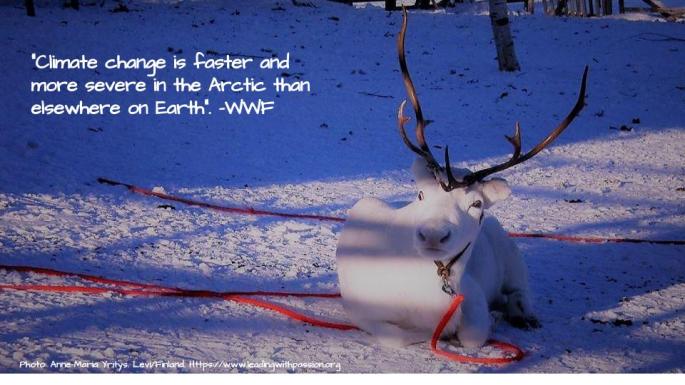
According to research-based evidence, climate change in the Arctic is at least twice as fast as elsewhere on Earth. Numerous organizations and think tanks have internalized this long ago, and work effortlessly to create awareness about what Arctic climate change is, and how it (possibly) affects the rest of the world. Objective sources of media also dedicate more time, and create extra space for bringing these findings into the public, which is of course of great significance to every citizen.

Arctic climate change, naturally, is anthropogenic climate change occurring in the world´s northernmost region, the Arctic, including the Arctic ocean, adjoining seas, Northern Canada, Greenland, parts of Finland, Sweden, Norway, Russia, The Faroe Islands and even parts of the United States of America. Since the Arctic acts as a “refrigerator” for the rest of the world, Arctic climate change and warming, including melting of ice sheets and permafrost, is particularly hazardous and involves a number of partly yet unknown risks.

When the Arctic warms, it of course affects local flora, fauna, and all the livelihood in the region. Sea and lake levels rise, snowfall becomes different, weather patterns in general less predicable, all of which causes changes in the Arctic environments. The rapid changes in the Arctic region also affect the rest of the world: e.g. the melting of ice sheets causes rise in sea levels, increases the amount of floods, and even increases the amount of rainfall in parts of the world. Melting permafrost, on the other hand, increases the risks of additional greenhouse gases, especially methane, being released into Earth´s atmosphere, when decayed plants and animals unfreeze from below the permafrost. The risks of thawing permafrost also includes the release of bacteria and diseases.

Watch the Ocean Scientists “Arctic Ocean Climate Change Impacts” to learn more about what Arctic climate change signifies:


Connect with me on Twitter @annemariayritys. For climate/environment-related posts only @GCCThinkActTank. Subscribe to Leading With Passion to receive my latest posts.

Take a step further to create YOUR online business. Learn more about the many benefits of how to create a beautiful website with WordPress.com and how to monetize your blog/website:
WordPress.com – Create A Beautiful Website

Jetpack – The ideal way to experience WordPress – Code-free Customization

WooCommerce – The most customizable eCommerce platform for building your online business

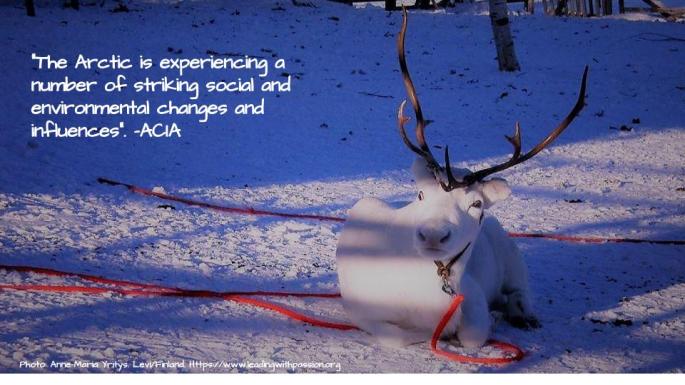
Why is The Arctic Experiencing Social & Environmental Changes?

Do you know what and where the Arctic is situated on our planet? Have you ever visited any of the Arctic regions? If not, you may be surprised at the beauty of the different Arctic regions, its beauty and multitude of flora, fauna and landscapes. The Arctic is the northernmost part of planet Earth, also called the polar north. The Arctic is also the 2nd largest desert in the world, expanding over an area of almost 14 million (14.000.000) square kilometers (km2). As a geographical region, the Arctic includes the Arctic Ocean, adjoining seas, parts of Alaska, Northern Canada, Finland, Greenland, Iceland, Norway, Russia and Sweden. Geographically the Arctic lies between 66.5°N and the North Pole.

As a comparison, Tampere, where I currently live, is situated at 61.5°N. Each degree of latitude is approximately 111 km apart, so I live 5 x 111 km = 555 km south from the Arctic. In fact, the arctic/polar circle in Finland is in Rovaniemi, which lies approximately 600 km north from Tampere by flight. An hours domestic flight from Tampere to Rovaniemi. If not otherwise familiar to you, Rovaniemi is where Santa Claus lives with his reindeers and helpers. It is also where Mika and Marketa Häkkinen (née Ramesova) were wedded just before Christmas 2016.

Alternatively, several hours by bus or train, or by car it takes almost half a day since we have only little highways in Finland, and during winter months speed limits are lower due to weather conditions, something that is of course also better for the environment. If you travel across Finland by car you will notice how little traffic there is e.g. in comparison with Central Europe, e.g Germany and Italy. Of course, since we are a sparsely populated country. The further north you travel in Finland, the less people will you meet: most of population lives in southern Finland.

But how and why does the Arctic experience social and environmental changes? What I know about these changes is mainly through what I read, and hear from relatives living in Finnish Lapland. My father comes from Kittilä, a small municipality situated not far from several tourist resorts, such as Levi/Sirkka and Ylläs. Having spent many holidays in Lapland from childhood on, the region is of course near my heart. Despite of population declining in many sparsely populated areas in Finland, Lapland is perhaps our number one tourist destination, both for domestic and international visitors. Tourism is continuously expanding and growing in Lapland, and Levi/Sirkka has changed/expanded tremendously in the past couple of decades.

A growing tourism is of course beneficial for a region in many ways, especially in terms of economic value. A growing tourism may also have its setbacks, e.g. in terms of maintaining sustainability, taking care of the environment and ecological well-being.

In general, what comes to social and environmental changes and impacts in the whole Arctic region includes:

  • The Arctic is home to indigenous people, who have long traditions of living in accordance with nature without as little as possible destruction, if any at all. These indigenous Saami people now report how the climate is changing in the Arctic, e.g. in terms of warming, and weather patterns becoming less predictable.
  • Snowfall and snow quality is becoming different, with more icy snow. Sea ice is declining, and water levels in many lakes are dropping.

Learn more about the reported/studied climatic changes in the Arctic by reading e.g. following articles:

GreenFacts (Facts on Health and the Environment)

The Arctic as it is known today is almost certainly gone (The Economist April 29, 2017).

Also watch this short video by NASA – The Arctic and the Antarctic Respond in Opposite Ways:


Connect with me on Twitter @annemariayritys. For climate/environment-related posts only @GCCThinkActTank. Subscribe to Leading With Passion to receive my latest posts.

Take a step further to create YOUR online business. Learn more about the many benefits of how to create a beautiful website with WordPress.com and how to monetize your blog/website:
WordPress.com – Create A Beautiful Website

Jetpack – The ideal way to experience WordPress – Code-free Customization

WooCommerce – The most customizable eCommerce platform for building your online business

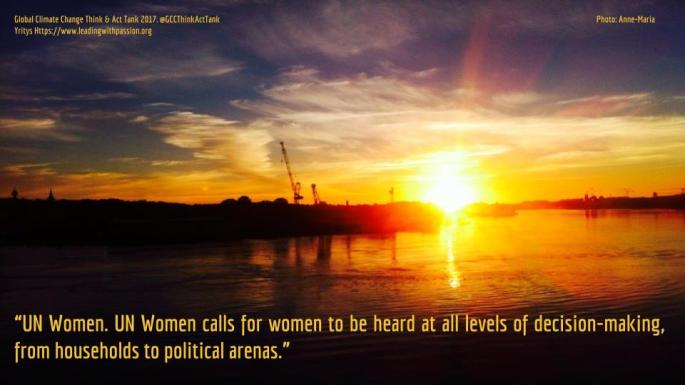
UN Women: Women To Be Heard When Tackling Climate Change

Global Climate Change (99).jpg

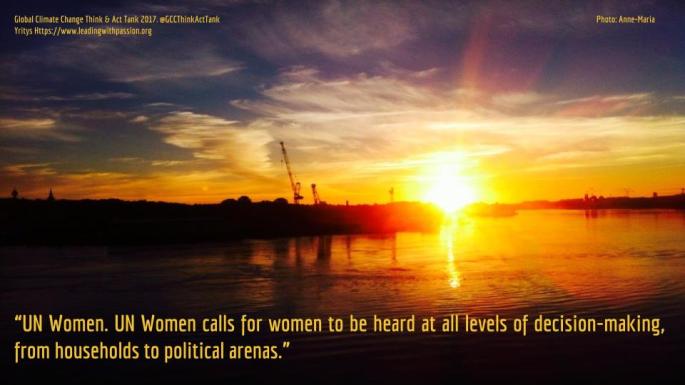
“UN Women. UN Women calls for women to be heard at all levels of decision-making, from households to political arenas.”

===============================================================

On October 24th is the annual United Nations Day which marks the anniversary of the UN Charter that entered into force in 1945. On this day, it is worthwhile to remember WHY the United Nations was established in the first place. Do you know WHY the UN was established?

The original purpose of the United Nations, as an intergovernmental organization, was to ensure peace (and, peaceful resolution of conflicts) after World War II. Gradually, the organization grew its original role from maintaining peace to the protection of human rights, the promotion of social and economic development, and disaster aid/relief in times of famine, natural disasters and armed conflicts. (United Nations Day, 24 October).

Furthermore and inclusive to the protection of human rights, the United Nations organization UN Women is dedicated to enhancing and protecting the rights of girls and women around the world, with a focus upon campaigning especially for and in regions where girls and women´s rights need attention and ought to be developed and improved e.g. through legislation and enabling equal rights for girls and women in terms of education and work life opportunities.

Even developed countries, including Finland, have work to do in order to ensure 50/50, i.e. complete gender equality. Every country on this planet has work to do in terms of gender equality, be it eradicating domestic violence or ensuring that human beings have equal rights e.g. in terms of equal payments/ salaries. Iceland will be the first country in the world to end salary inequality and discrimination through changing its legislation to enable this.

UN Women is one of the leading organizations worldwide driving gender equality issues, including the fact that girls and women should be heard and involved concerning climate change issues equally much as boys and men. It is important to enable this,  allow women to participate, and empower women especially in developing countries to get their voices heard on every level in the society. Only by giving women the possibility to use their knowledge, resources, and take the lead in terms of climate change related activities can we reach our goals to end anthropogenic climate change and create sustainable change across societies worldwide.

Watch International Labour Organization´s video “Why gender matters in climate change financing”:


Connect with me on Twitter @annemariayritys. For climate/environment-related posts only @GCCThinkActTank. Subscribe to Leading With Passion to receive my latest posts.

Take a step further to create YOUR online business. Learn more about the many benefits of how to create a beautiful website with WordPress.com and how to monetize your blog/website:
WordPress.com – Create A Beautiful Website

Jetpack – The ideal way to experience WordPress – Code-free Customization

WooCommerce – The most customizable eCommerce platform for building your online business