If you talk, you repeat what you already know. If you listen, you may learn something new. ~ The Dalai Lama
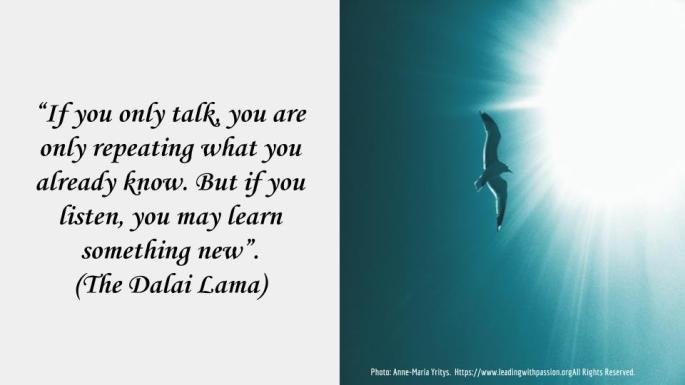

If you talk, you repeat what you already know. If you listen, you may learn something new. ~ The Dalai Lama
If light is in your heart, you will find your way home. ~ Rumi

Empty your mind. Be formless, shapeless, like water. ~ Bruce Lee

Communication in relationships is like oxygen to life.
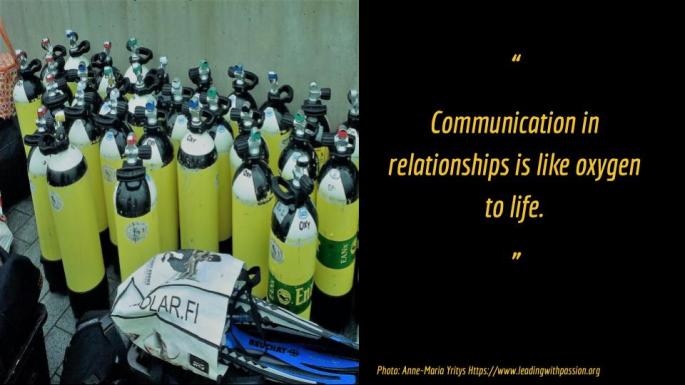
Be stubborn about your goals and flexible about your methods.

Act Like a Lady. Think Like a Boss.

A stumbling block to the pessimist is a stepping stone to the optimist. ~ Eleanor Roosevelt
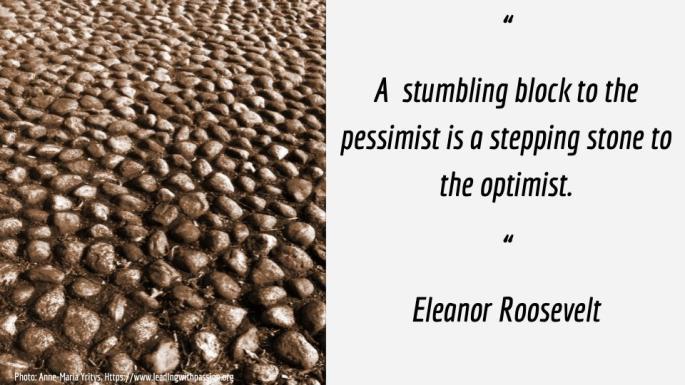
A lake that is noisy cannot reflect anything. ~Robert Adams
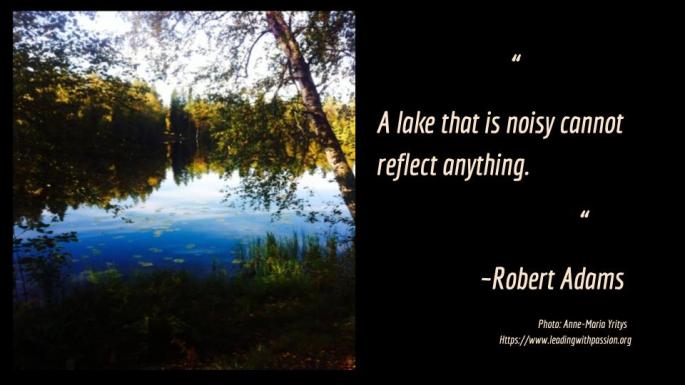
The Best Leaders Are the Best Followers
LinkedIn, as the world´s most expansive, and largest online professional network, has currently a limitation for its professional users: Any professional can currently reach a maximum direct, 1st contact level of 30.000 professionals. How do I know this? Well, I do know this because I spent an X amount of hours expanding, and growing my personal network through a number of means, until I reached the limit of 30.000 direct, 1st level contacts on LinkedIn. Back then, in 2013, having 30.000 contacts was not yet so common globally – some individuals, from a variety of industries (mainly HR/headhunting/recruiting), had made the efforts and actually achieved their goal to reach the maximum potential of direct LinkedIn contacts. Today, the number of professionals globally with a 30K LinkedIn contact network is no longer rare, but what does it actually take to 1) build such a large network on LinkedIn and 2) what are the benefits?
Building a large network on LinkedIn, and reaching the current maximum amount of 30.000 contacts on this professional site, and the benefits from a large LinkedIn network:
A huge professional network alone is no guarantee for business, or for professional success. Yet, the advantages are far more important than the disadvantages, with one of the advantages being that you in fact always are six degrees from separation to any professional/individual in the world. The larger your LinkedIn network, the easier it is for you to get in touch with people who do matter. But, after all, EVERY single individual in your network does matter, regardless of their current professional role, situation, or title. Always remember to treat people fairly, and with respect.
Despite of its shallow aspects in terms of growing large networks, and the lack of “real” F2F communication, LinkedIn has so much to offer for its active users. A large network alone is no guarantee for increased business, entrepreneurial, or job seeking and finding success, but yet a targeted activity for any business/non-profit professional can bring much value to those who in fact do take the time and effort to invest in the correct activities, depending upon the goals. For a personal/business consultation upon these, always feel free to get in touch with me.
– Official LinkedIn Influencers are leaders, business owners, and experts in their field of industry around our globe who have been officially selected and contacted by LinkedIn, and who have accepted the request from LinkedIn to become an official Influencer. At the time being, it is not possible to send LinkedIn an application to request becoming an official Influencer on LinkedIn. If LinkedIn determines that you are a suitable candidate for such a “position”, they will most certainly contact you. As a LinkedIn Influencer, you must fulfill their criteria for the “nomination”.
Since LinkedIn now has enabled public publishing for every user, the amount of published posts (and, active writers) has grown rapidly, giving business professionals around the world an additional possibility of a) growing their professional network and b) growing their amount of following on LinkedIn. Every single post you publish on LinkedIn, either on behalf of your private business as an entrepreneur, or as an employee for an organization, is content marketing, enabling you to grow your audience in line with your business activity. Your posts getting featured on one of the official LinkedIn Pulse Channels is another way of growing your following because, individuals and professionals who do enjoy reading your posts, will most likely either send you a direct contact request or, click the follow button and start following you on LinkedIn.
If you want to go fast, go alone. If you want to go far, go together (African Proverb)
ALL leaders want to focus upon POSITIVITY, including positive affirmations and positive behavior in both our personal lives and careers, but also in our day-to-day interactions with people and circumstances that DO affect the behavior(s) of those around us. We do know that positivity creates more positivity, and that negative behavior and thinking is poison not only for our bodies, but also for our souls. Despite the fact that we should ALWAYS focus upon positive, meaningful communication, leaders in all possible areas of life and in every industry do need to recognize the negative patterns both in their personal leadership style, but also the possible negative aspects and characteristics in people around them (you).
As a leader, you learn far more from negative leadership than from positive leadership. You learn how not to do it. Instead, you learn HOW TO DO IT. (Norman Schwarzkopf)
On your personal (and professional) leadership path, you will face all kinds of behavior. Most importantly, you have to learn how to balance your personal behavior, stay calm and objective no matter how demanding the situation is. Balance is key to everything, including the capability of stepping above the problem(s), and remembering that we all in fact, deep within ourselves, are humane, no matter how thick-skinned and hard on the surface. As a successful leader, please remember to retain your integrity and use soft communication and negotiation skills when in complex, demanding leadership situations, and while “penetrating” under the skin of your counterpart, i.e. the individual you are facing. Great leaders always respect ALL people, regardless of the situation, and regardless of the background and actions that another individual has taken previously. Great leaders always seek to listen, and to understand the deeper meaning behind the behavior of individuals/groups.
Being positive in a negative situation is not naïve. It is called leadership. (Ralph Marston)
Any emotionally intelligent, self-confident leader, should avoid a number of behavioral patterns, including:
Leadership, and a leadership position, should always be taken seriously – do not misunderstand the message being conveyed here. Nevertheless, serious leaders do lead because it is their calling, and because it makes fun and challenges them to be a positive role model, and a source of inspiration for others. As soon as a leader thinks of themselves as something superior to the people they lead, it is time to have a long look in the mirror and to question the purpose of their leadership. This is also true if a leader feels that he/she is irreplaceable, i.e. does not understand the fact that every individual with certain characteristics can be developed into a great leader.
All great leaders have learned that prejudice and judging behavior only leads to misunderstandings and increasingly poor communication, and behavior. No matter how difficult the circumstances, great leaders always seek to remain objective and humane. In addition, they do have the capability of putting things into perspective, and seeing everything from the other person’s point of view.
As a leader, no one of us can afford either to gossip, or neglect the people around us. If we do, it is time for some serious self-reflection. Especially if you are running your own company, and leading people – but of course, in any organization or business. Successful leaders always make sure to have integrity and CARE about their employees/people in the organization.
Leaders should always be capable of demonstrating in practice their demands upon their employees/people, and capable of serving as an example and a role model. Leaders should always walk the talk, and seek to understand the circumstance and field of business/industry they operate in/lead, before placing any excessive demands upon the shoulders of their people. Leaders MUST seek the truth, and also remain reasonable in their demands – based upon experience, knowledge, understanding, and wisdom.
There are countless negative behaviors and patterns that leaders have the risk of falling into. Make sure not to fall into these leadership traps personally. These traps include:
– Lack of experience => not necessarily always a problem since a humble leader who is willing to learn from his/her employees/people is open to development in all circumstances.
– Lack of dedication and interest => If you have a lack of these in your daily leadership activities, please ask yourself why this is the case, and try to analyze the reasons behind your behavior and feelings. We all face challenges and difficulties in both professional and private life, and lack of motivation is something that every leader should take seriously. If a leader lacks motivation, and is uninspired, it will most definitely affect the whole team, and the complete organization.
 Anne-Maria Yritys
You must be logged in to post a comment.