Paris Agreement 2015/Art 7. 1 “Parties hereby establish the global goal on adaptation of enhancing adaptive capacity, strengthening resilience and reducing vulnerability to climate change, with a view to contributing to sustainable development and ensuring an adequate adaptation response in the context of the temperature goal referred to in Article 2.” (United Nations 2015. Adoption of the Paris Agreement).
Paris Agreement 2015/Art. 6. 1 “Parties recognize that some Parties choose to pursue voluntary cooperation in the implementation of their nationally determined contributions to allow for higher ambition in their mitigation and adaptation actions and to promote sustainable development and environmental integrity.” (United Nations 2015. Adoption of the Paris Agreement).
Paris Agreement 2015/Art.5 1 Parties should take action to conserve and enhance, as appropriate, sinks and reservoirs of greenhouse gases as referred to in Article 4, paragraph 1 (d), of the Convention, including forests.” (United Nations 2015. Adoption of the Paris Agreement).
Paris Agreement 2015/Art. 4. 19 “All parties should strive to formulate and communicate long-term low greenhouse gas emission development strategies, mindful of Article 2 taking into account their common but differentiated responsibilities and respective capabilities, in the light of different national circumstances.” (United Nations 2015. Adoption of the Paris Agreement).
“Paris Agreement 2015/Art. 2. 1(c) Making finance flows consistent with a pathway towards low greenhouse gas emissions and climate-resilient.” (United Nations 2015. Adoption of the Paris Agreement).
“Paris Agreement 2015/Art. 2. 1 (b) Increasing the ability to adapt to the adverse impacts of climate change and foster climate resilience and low greenhouse gas emissions development, in a manner that does not threaten food production; and.” (United Nations 2015. Adoption of the Paris Agreement).
“Paris Agreement 2015/Art. 2 1(a) Holding the increase in the global average temperature to well below two (2) degrees Celsius above pre-industrial levels and pursuing efforts to limit the temperature increase to 1.5 degrees Celsius above pre-industrial levels, recognizing that this would significantly reduce the risks and impacts of climate change.” (Source: UNITED NATIONS 2015. Adoption of the Paris Agreement).
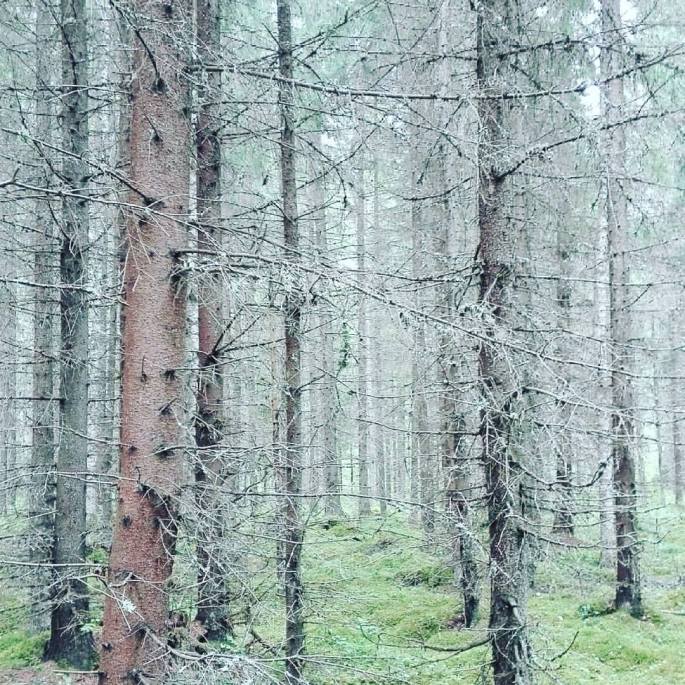
Dead trees in a forest in Tampere, Finland. Photo: Anne-Maria Yritys 2017. All rights reserved.
According to The Finnish Forest Association , the state of Finland owns around 26% of all the forests in Finland while private persons own the rest. As a forest owner in Finland you basically have the obligation to take care of the forest you own. As an individual, whether living in Finland or visiting the country as a tourist, you have the right to walk around in any forest in Finland which I currently do almost daily. On my walks I see lots of dead forest/trees that seem neglected.
Someone asked me why something like this happens to trees. To be honest, I do not know the answer. What I know for a fact (and personally see) is that garbage is being dumped in our forests. Every time I walk around/hike, I collect some trash thrown into our nature but I cannot clean up every piece of dirt/trash that is being thrown into nature.
I see all kinds of garbage being dumped into nature, and into our forests, including hazardous waste, such as motor oil. Some of the findings include plastic bottles/other plastic, aluminium cans/other metal objects, glass bottles, old chairs, even mattresses and old tires. It is a horrible sight!
If there is one book I recommend for you to read this year is the non-fiction thriller “Gomorra”, written by Italian journalist Roberto Saviano. It is a true story about how Saviano himself got infiltrated into the Italian mafia in Southern Italy, and his observations over several years. Not only does this non-fiction include quite horrible details about how the mafia operates around the world, but also how they have monopolized the recycling and waste industry in Italy, and how they have dumped poisonous materials/waste into the environment.
I recently received an e-mail from a New York-based executive search firm with a note that they received my details by an outside talent source firm, stating that they are looking to fill C-level positions for one of their client´s recent acquisitions, and if I possibly would be interested in learning more.
Since the e-mail was sent to one of my many e-mail addresses, and not my primary e-mail, it took me a week before I even noticed it. Instead of sending them my resume and based upon my earlier experiences, I sent a response by e-mail asking them if they could give me details about the talent sourcing firm that had referred me, who their client is, and where these roles would geographically be located. Within only a few hours they got back to me, per e-mail, stating that they cannot give any details about their client until a non disclosure agreement has been signed.
As a response, I sent them the links to my website, my LinkedIn and Twitter profiles with a brief note that they can find my resume there. I have grown aware of recruiting firms and headhunters collecting people´s CV´s and resumes, many of whom lack the effort of doing their job well, i.e. fail in ever getting back to their customer/s. Be really careful/selective about who you send your CV/resume/other personal data to, since many recruitment firms seem only to be interested in gathering people´s personal data rather than actually having a purpose of really filling out a position. Which is why I am, these days, extremely selective about sending out my CV/resume to anyone, if at all!
I know loads of professionals in the headhunting/recruitment industry and have inside information. With the professional networks that I have online, I could even start my own headhunting/recruiting firm but quite honestly, I have seen too much in order to be willing to do so.
In Finland, most jobs get filled either through sourcing internal candidates or by other means, rather than through online/offline announcements. Most of the work announcements online and offline have mainly a purpose of serving the recruitment firm as an advertisement. In Finland, the vast majority of all roles are filled in other ways than sourcing candidates through job announcements. In Finland there is also a legislation that says that recruitment firms cannot keep applicants data for no more than six months in their data bank, but who checks this?
Moreover, referring to the New York-based executive search firm that approached me, I have gathered many experiences in dealing with professionals from around the world, including New York. Many of those that I have dealt with from New York seem to use an elbow tactic, so if you ever deal with them in business, make sure that THEY first deliver their part of the possible deal, before doing anything for them.
Further on, in 2015, I was contacted by a NY based recruitment industry startup on LinkedIn. They basically had an expectation of me to a) make PR for them for free b) find a way of transferring my LinkedIn data (the professional details of 30.000 individuals) to their database, sending me a non disclosure contract trying to offer me WARRANTS as a payment. I was smart enough to consult an international lawyer at that stage. Shortly after having installed their software on my computer, it broke down. I still have no idea why, but I suspect it happened due to their software. I never found out, just brought my broken laptop to recycling and bought a new one. I also blocked these people from my personal online networks. Whether they installed a virus/malware through their software on my computer is still unclear to me.
Be really careful about what you do online, and who you trust. It is not paranoia to use common sense in business. I have personally learned some very valuable lessons through my online business activities.
Have you taken the time to ponder upon what YOU can do to prevent/stop human-caused climate change? As a suggestion, take the time to research the topic, e.g. starting by learning what the Paris Agreement says.
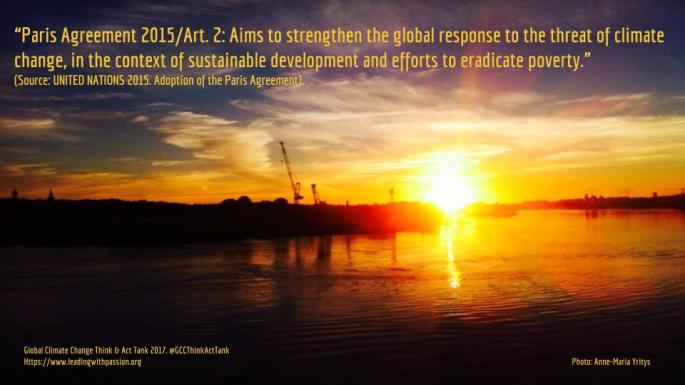
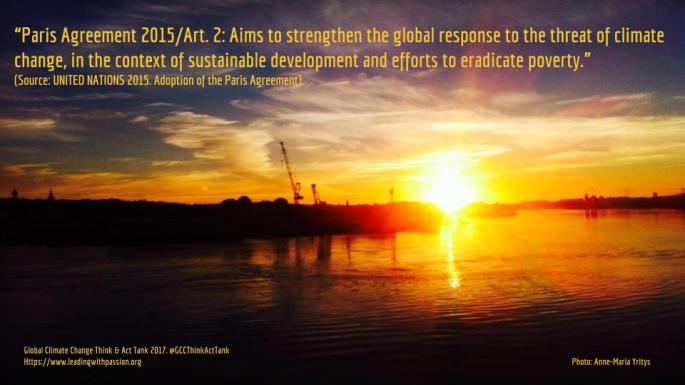
An excerpt from The Paris Agreement 2015/Art. 2: “Aims to strengthen the global response to the threat of climate change, in the context of sustainable development and efforts to eradicate poverty.” (UN 2015. Adoption of the Paris Agreement).




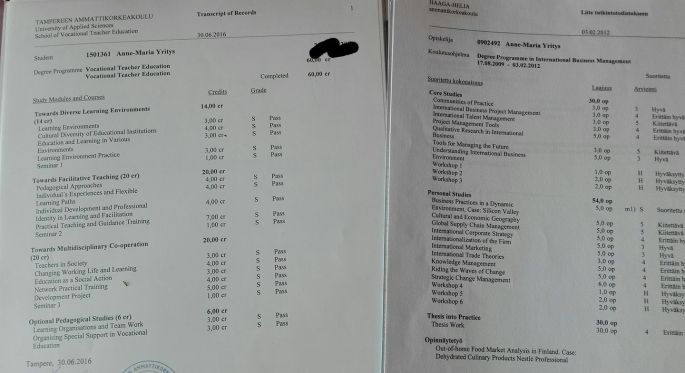
 Anne-Maria Yritys
You must be logged in to post a comment.